Explore documented NASA and international space missions, spacecraft, engineering milestones, and launch histories. Follow each mission's scientific objectives and connect its story to live satellite tracking.
Different missions. One connected history of exploration.
Each record explains what a mission set out to accomplish, how it was designed, and why its results matter. Select a mission to read its story.
Mission
Infrared Observatory, Deep Space and the Early Universe
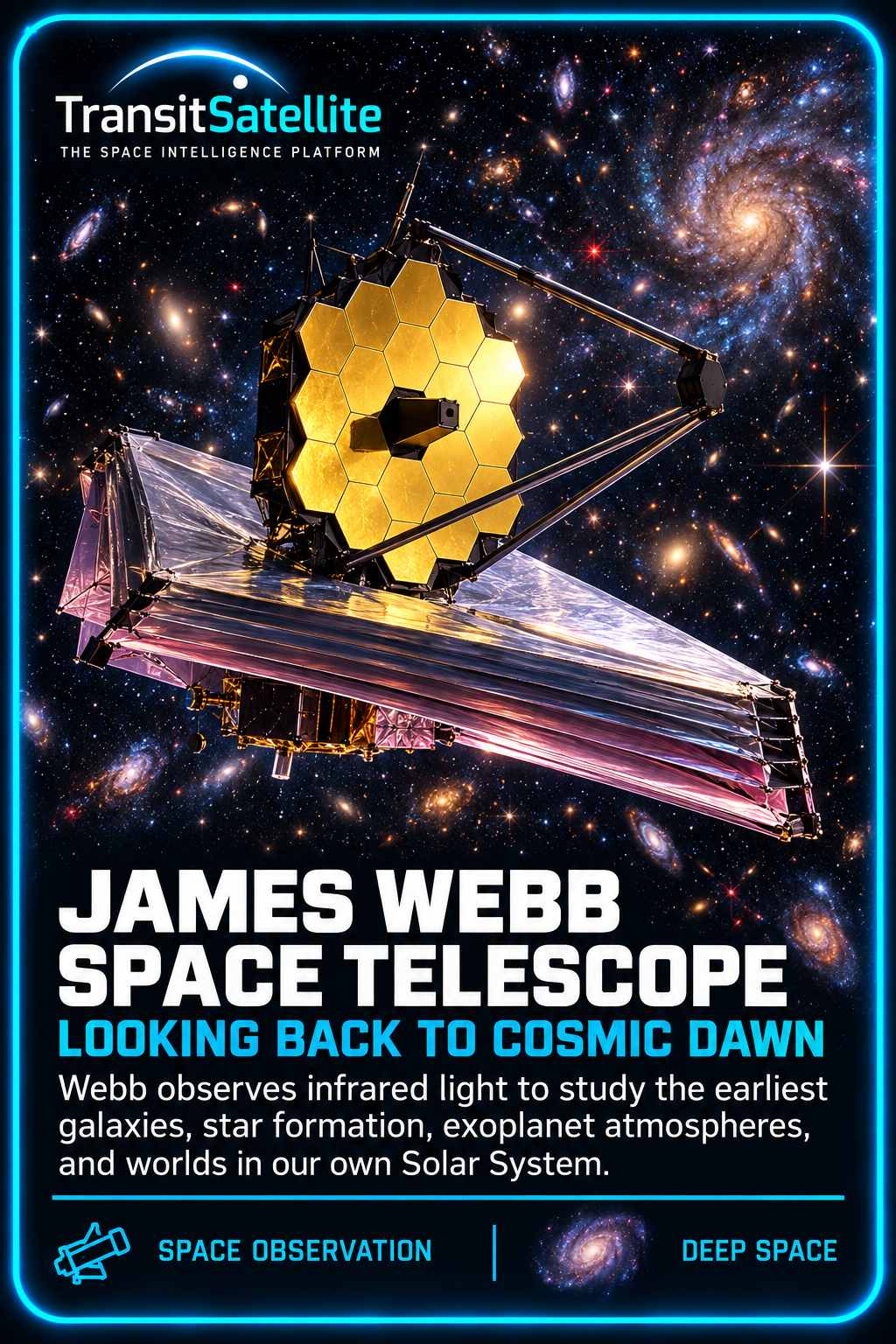
James Webb Space Telescope
Missions
Webb is a deployable infrared observatory operating around the Sun–Earth L2 region. Its science program studies early galaxies, star formation, and exoplanet atmospheres.
Interstellar Space, Outer Planets and the Pale Blue Dot
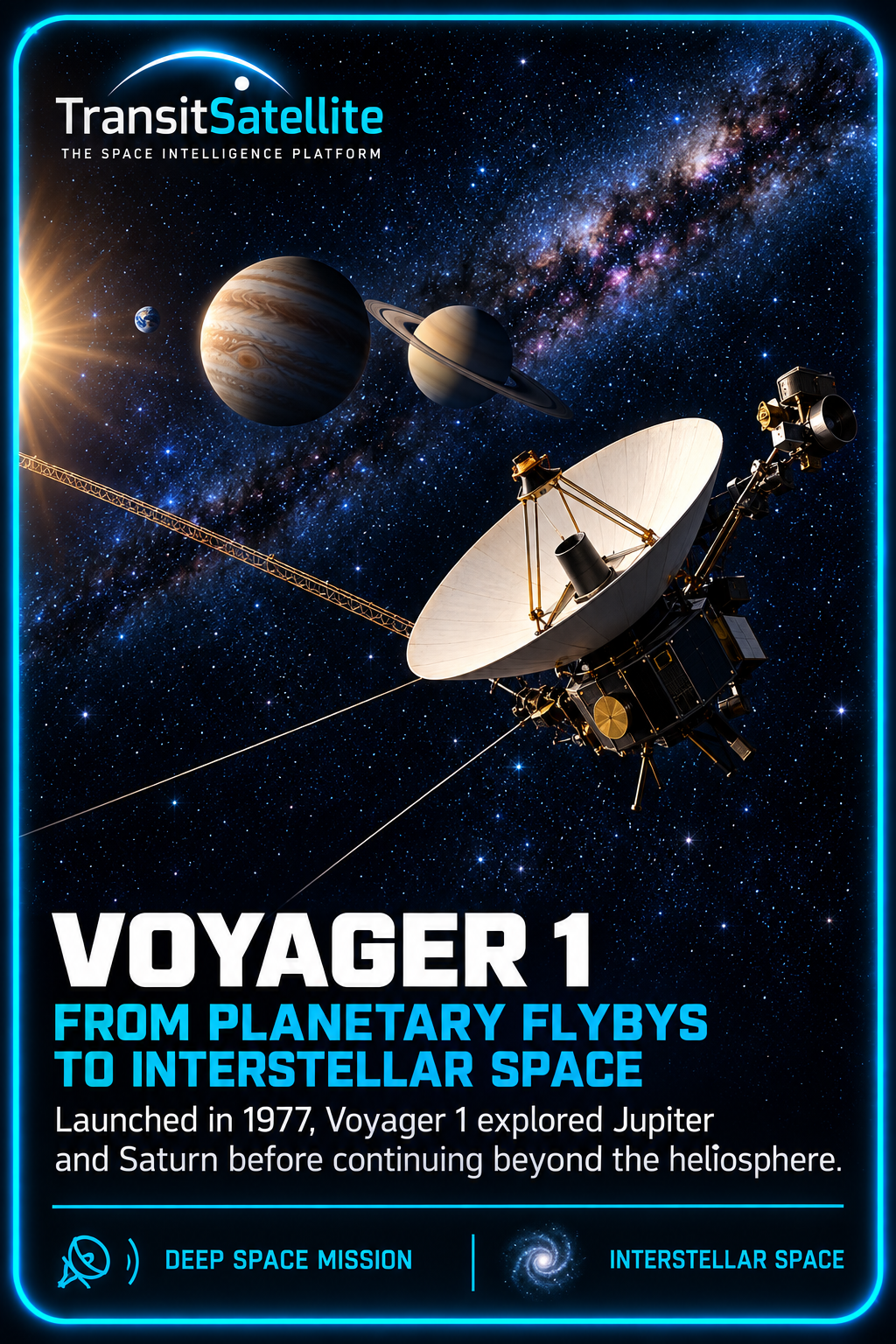
Voyager 1
Missions
Voyager 1’s original mission was close investigation of Jupiter and Saturn, with a trajectory selected for a close Titan encounter. The later Voyager Interstellar Mission studies plasma, particles, and magnetic fields beyond the heliosphere.
Grand Tour, Uranus, Neptune and Interstellar Mission
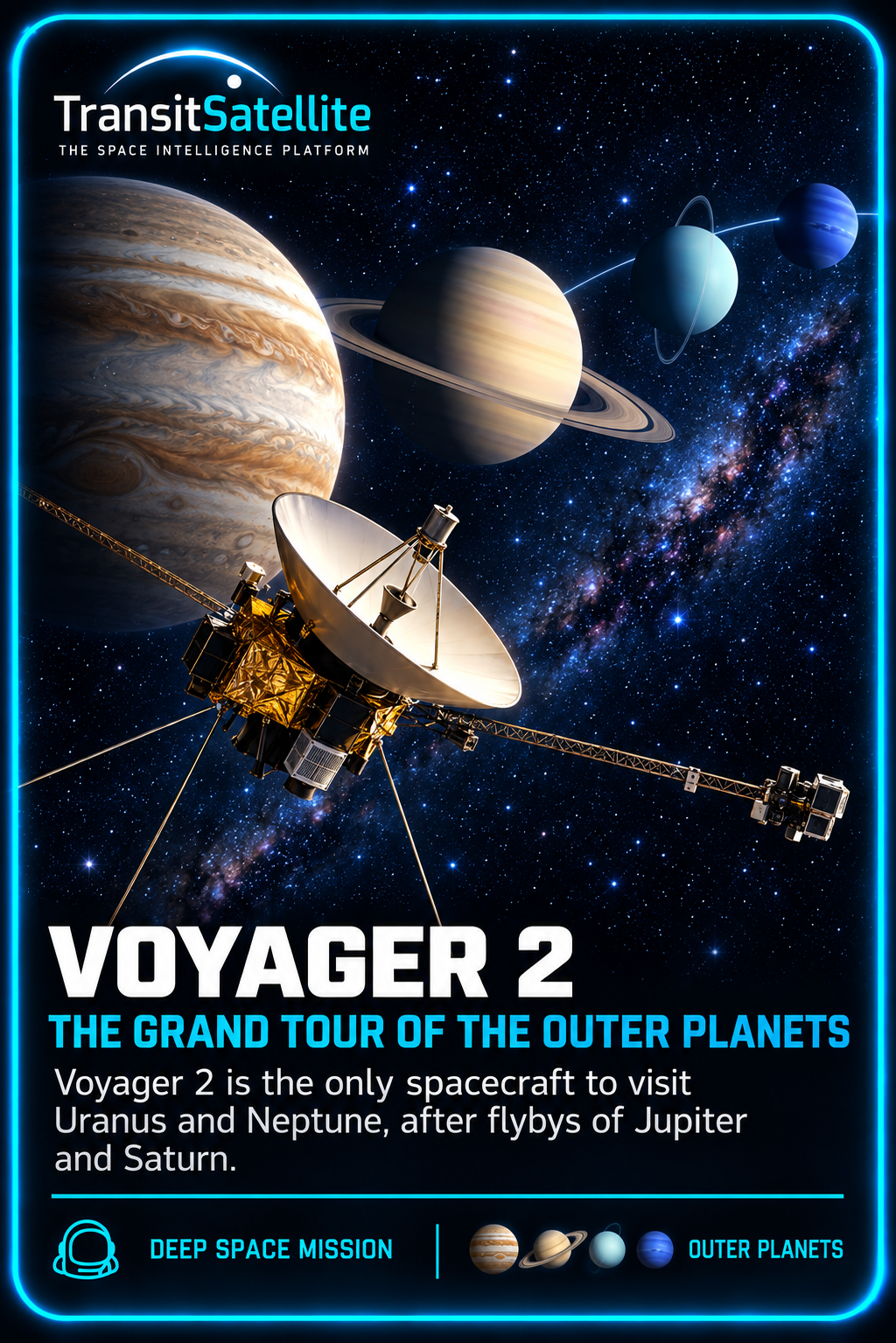
Voyager 2
Missions
Voyager 2 explored Jupiter and Saturn, then used carefully timed planetary encounters to become the only spacecraft to visit Uranus and Neptune; its extended mission later crossed the heliopause.
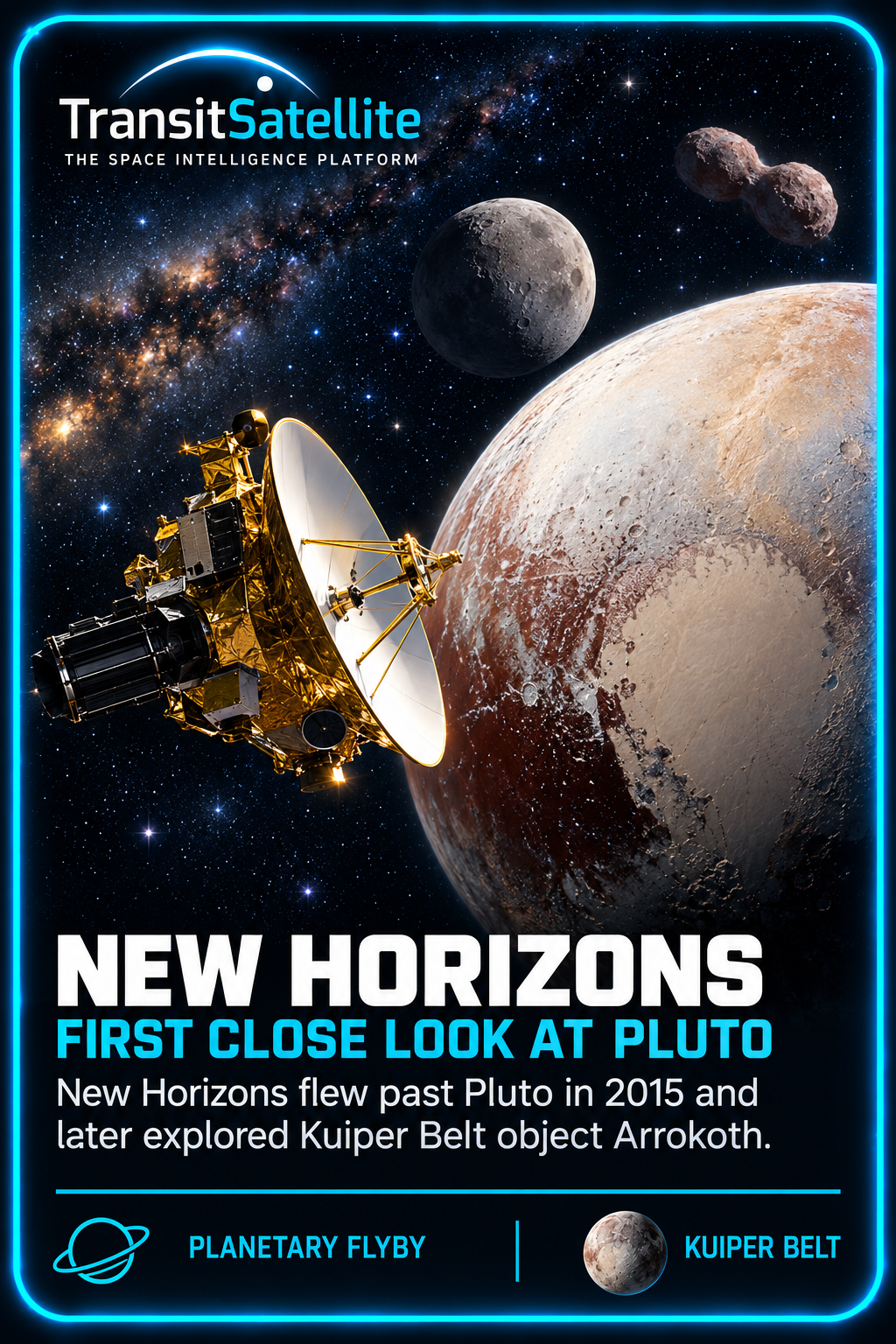
New Horizons flew past Pluto in 2015, returning the first close-up geology and atmosphere observations, then continued to the Kuiper Belt object Arrokoth in 2019.
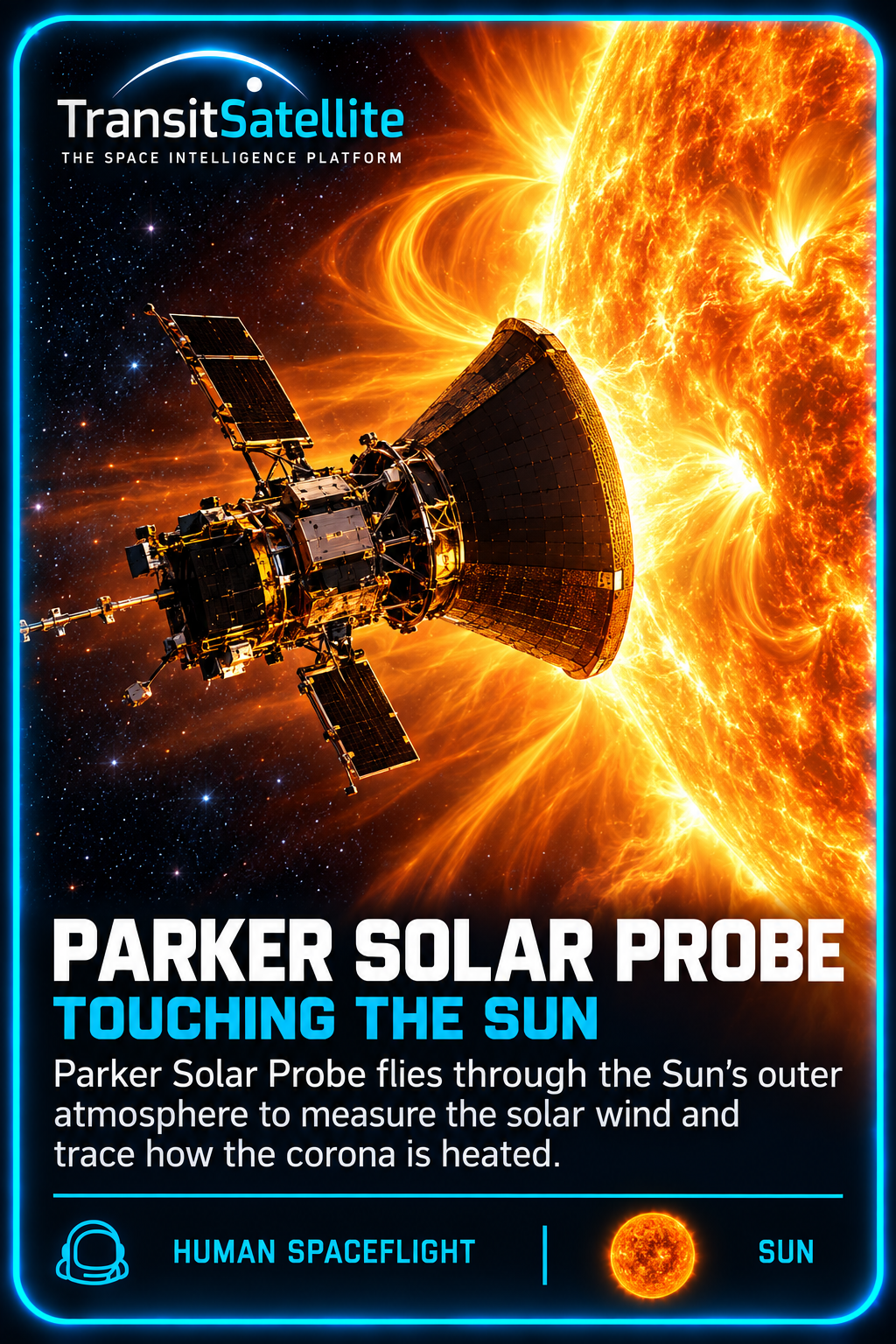
Parker Solar Probe repeatedly dives through the Sun’s outer atmosphere to measure the solar wind and coronal environment in situ, using a heat shield to protect its instruments.
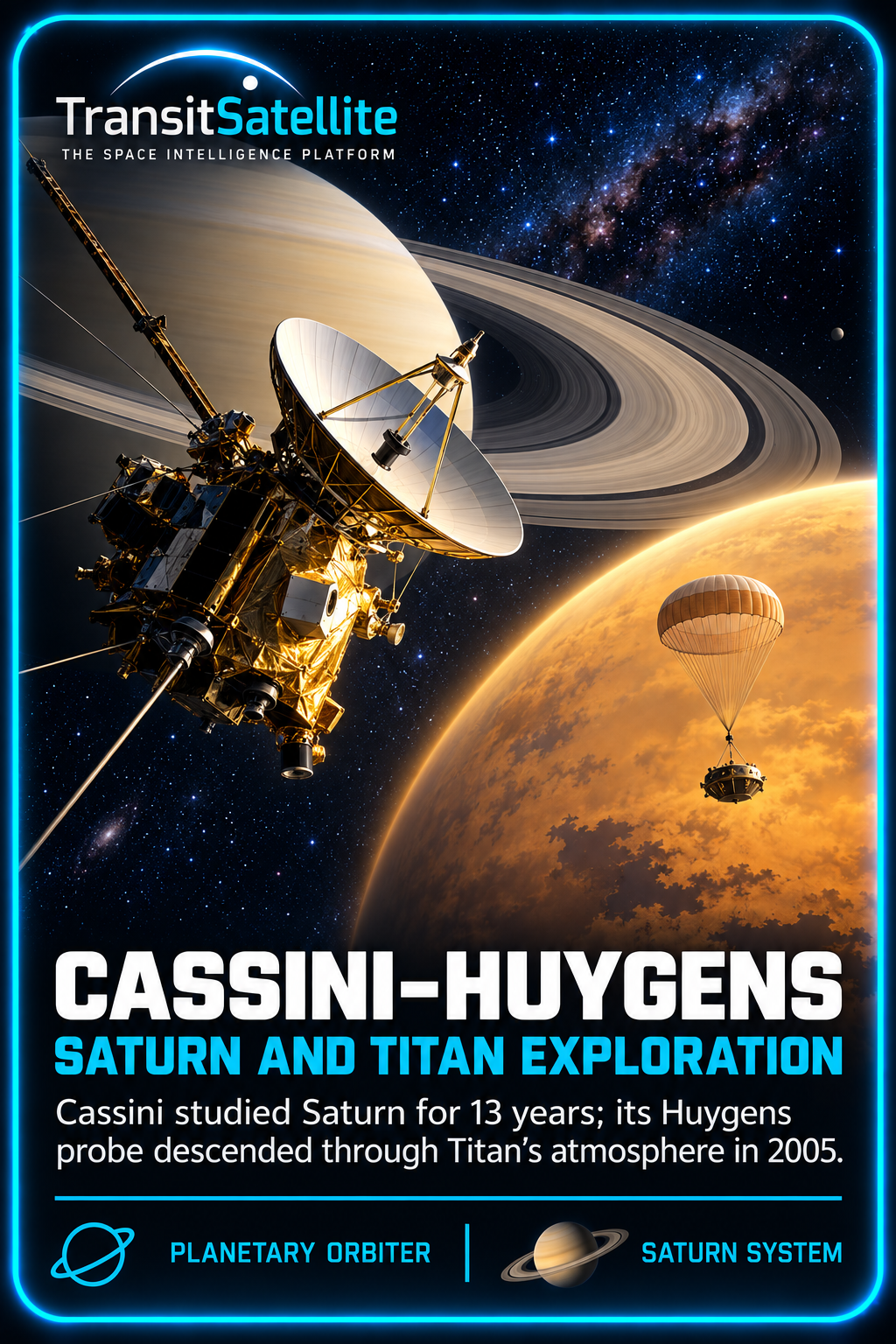
Cassini orbited Saturn for more than a decade while the Huygens probe descended through Titan’s atmosphere in 2005; the mission ended with a planned Saturn atmospheric entry in 2017.
Jupiter Orbiter, Atmospheric Probe and Galilean Moons
Galileo Spacecraft
Missions
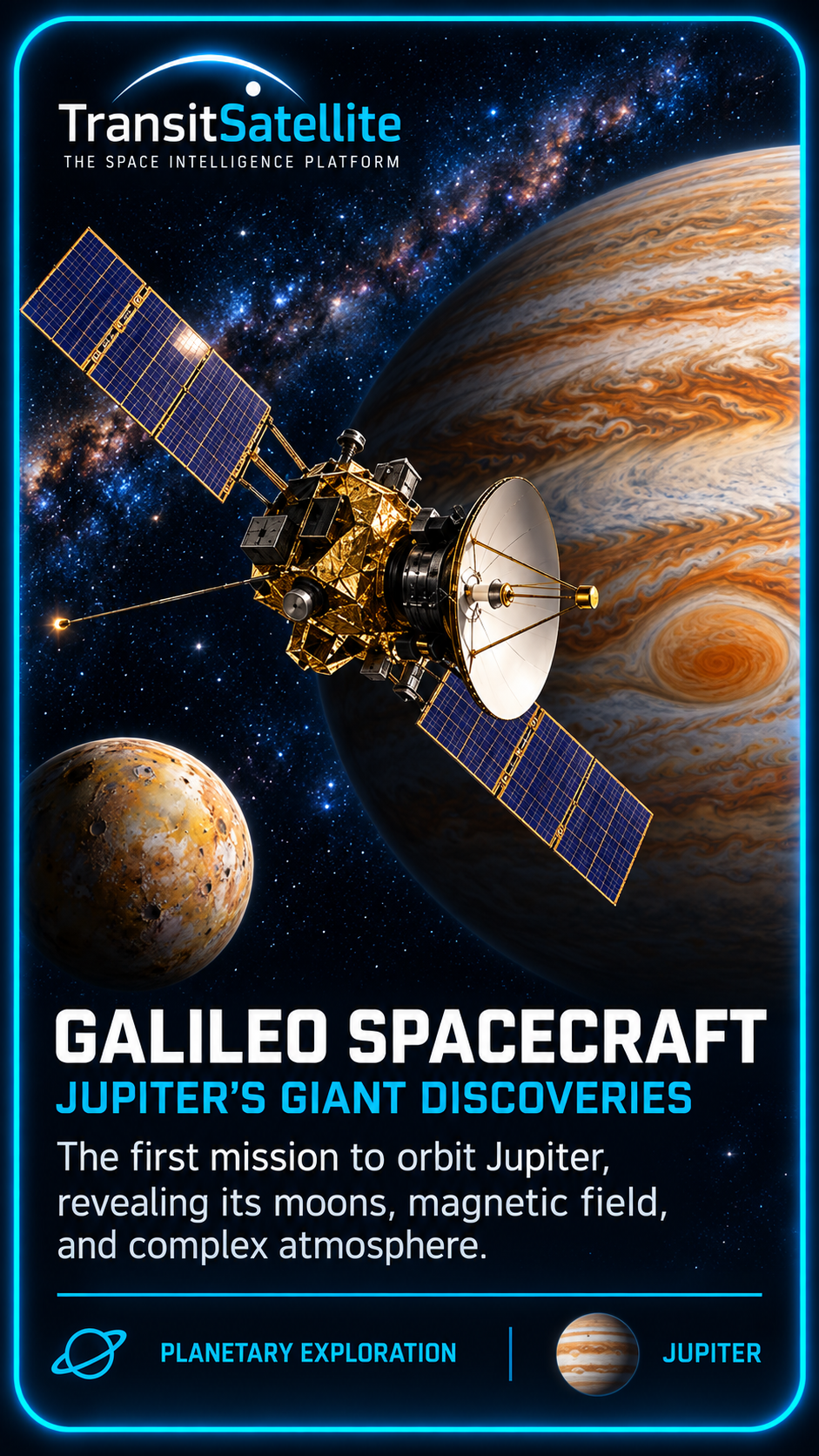
Galileo entered orbit around Jupiter in 1995 and released an atmospheric probe; the orbiter then examined Jupiter’s atmosphere, magnetosphere, rings, and major moons.
Jupiter, Polar Orbits and the Giant Planet's Interior
Juno
Missions
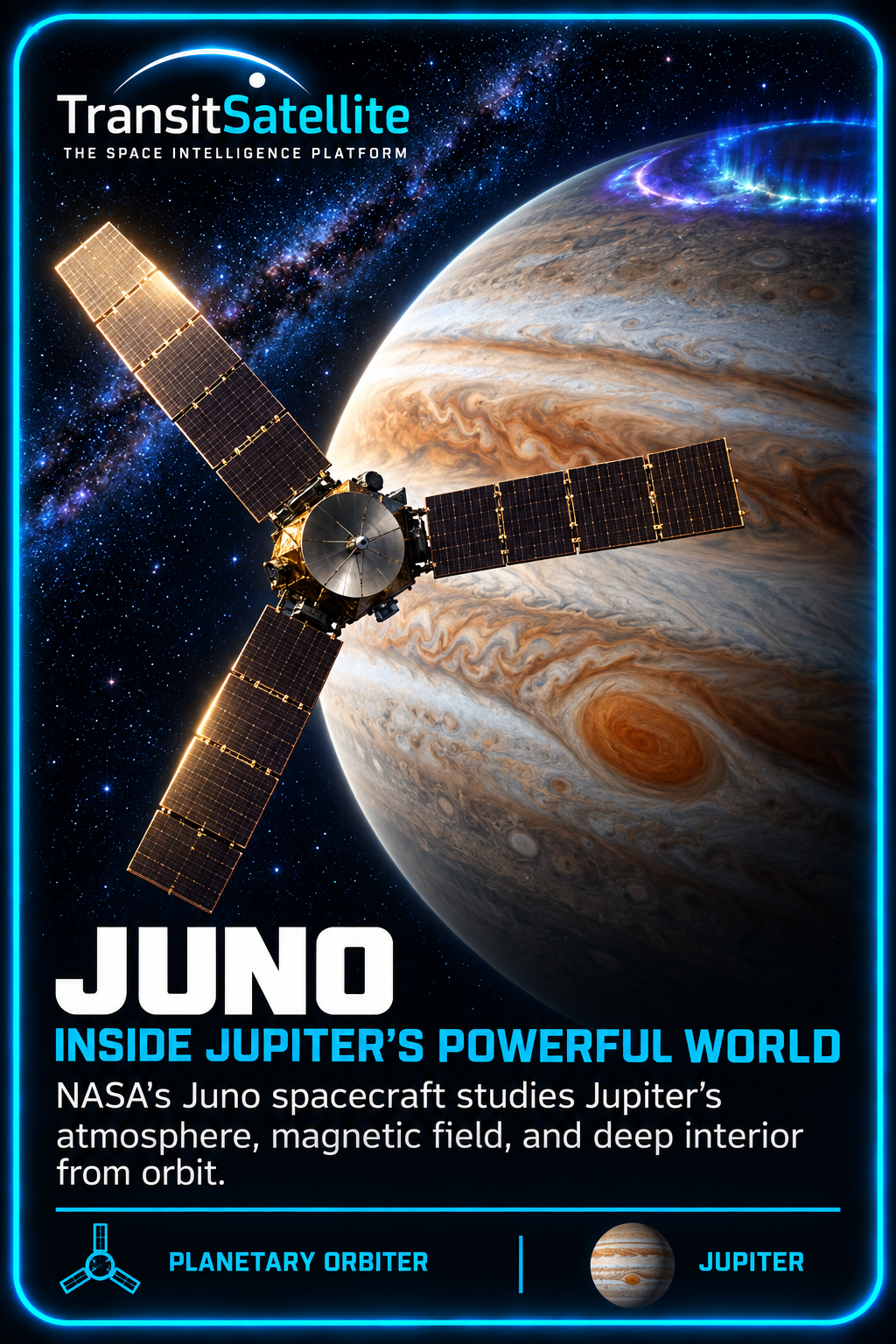
Juno follows a highly elliptical polar orbit around Jupiter and measures gravity, magnetic fields, and microwave emissions to investigate the giant planet’s interior and atmosphere.
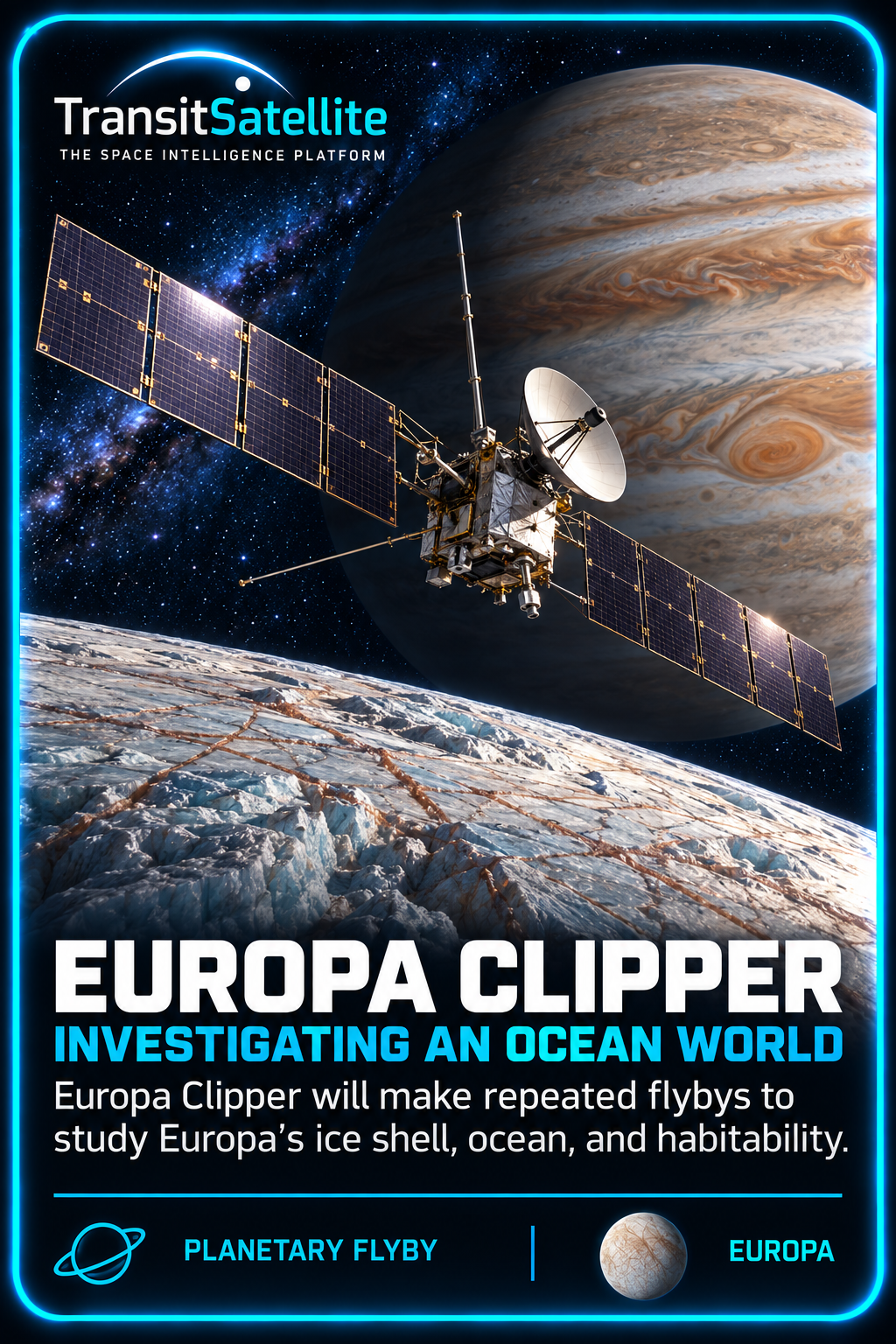
Europa Clipper is designed to make repeated close flybys of Europa, using remote sensing and geophysical instruments to assess the moon’s ice shell, ocean, and habitability conditions.
Asteroid Bennu, Sample Return and Planetary Defense
OSIRIS-REx
Missions
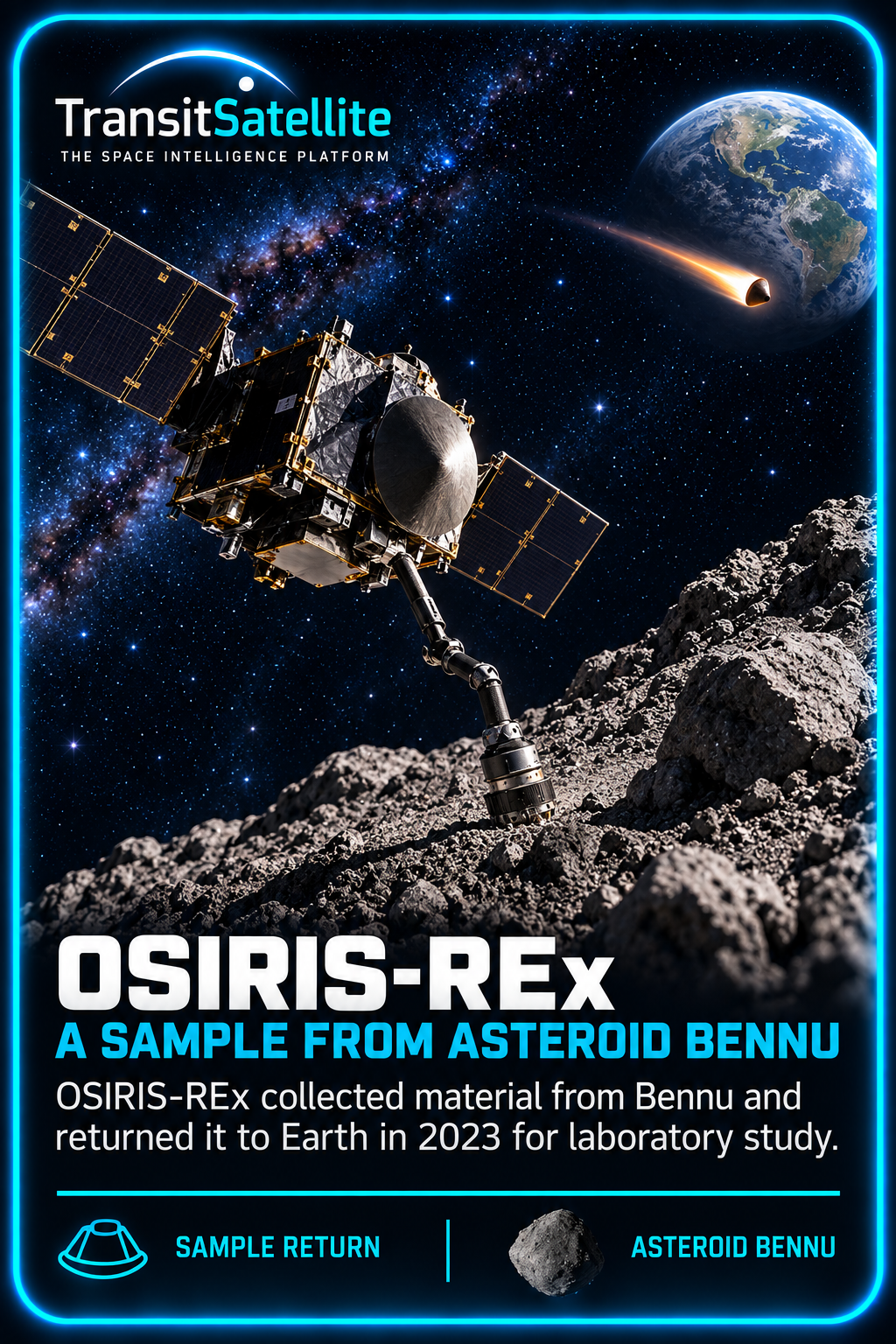
OSIRIS-REx mapped asteroid Bennu, collected a sample by touch-and-go in 2020, and returned it to Earth in 2023; the spacecraft then continued as OSIRIS-APEX.
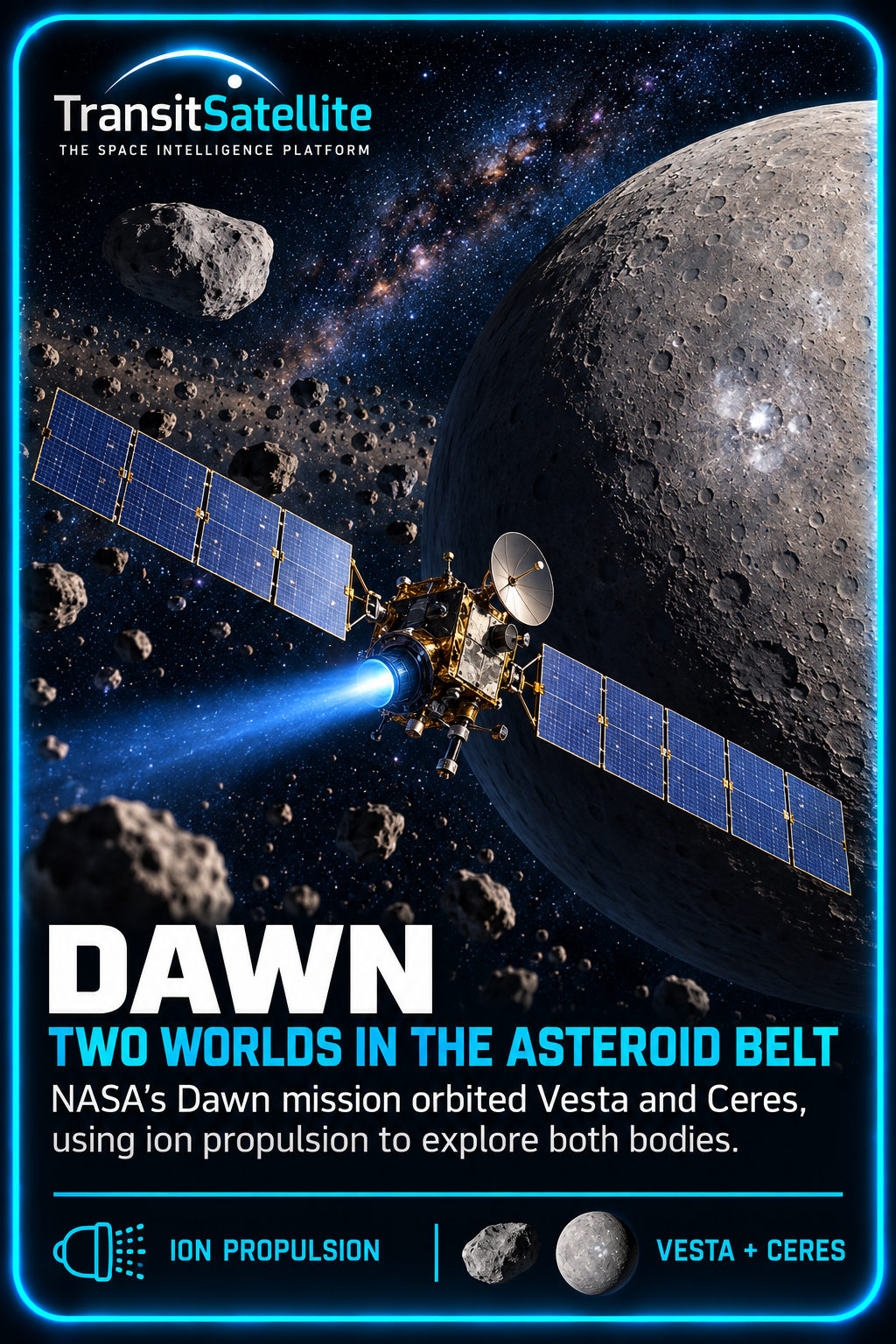
Dawn used solar-electric ion propulsion to orbit Vesta and then Ceres, comparing two differentiated bodies in the asteroid belt rather than conducting a single flyby.
Mars Landing, Surface Images and Early Planetary Science
Viking 1
Missions
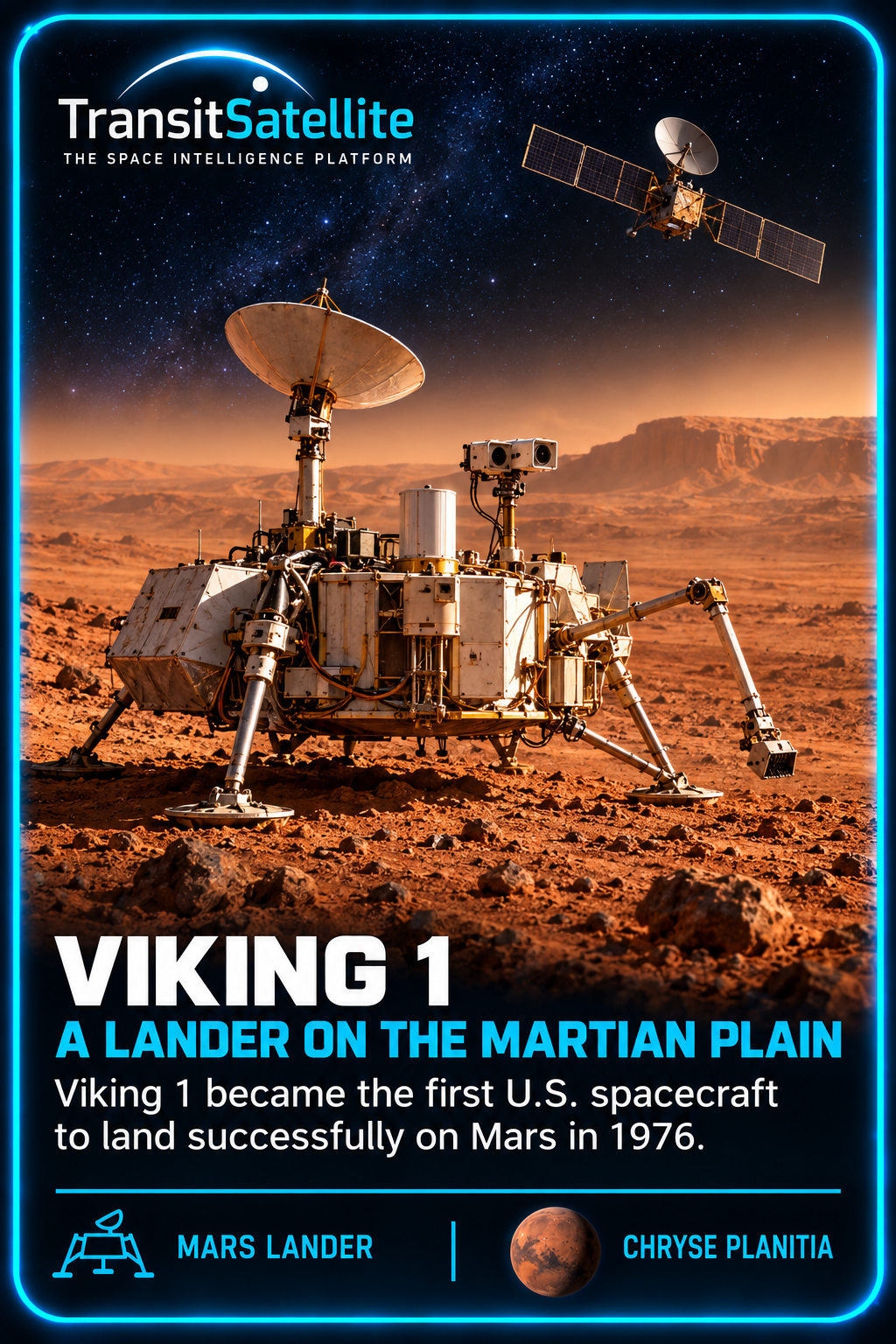
Viking 1 combined an orbiter and stationary lander; its lander reached Chryse Planitia in 1976 and performed imaging, meteorology, and life-detection experiments.
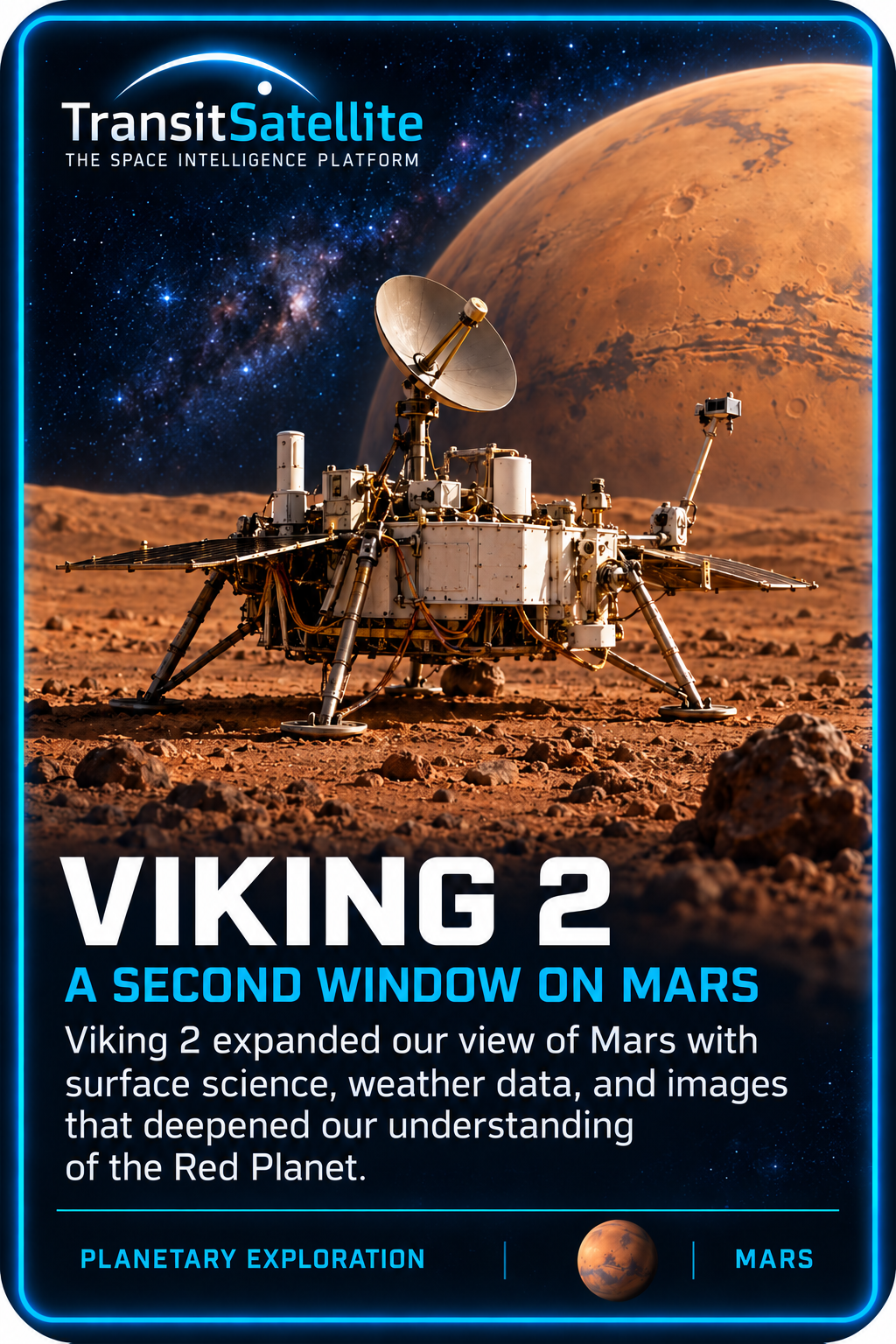
Viking 2 repeated the orbiter–lander architecture at Utopia Planitia, adding a second location for Mars surface measurements and life-detection experiments.
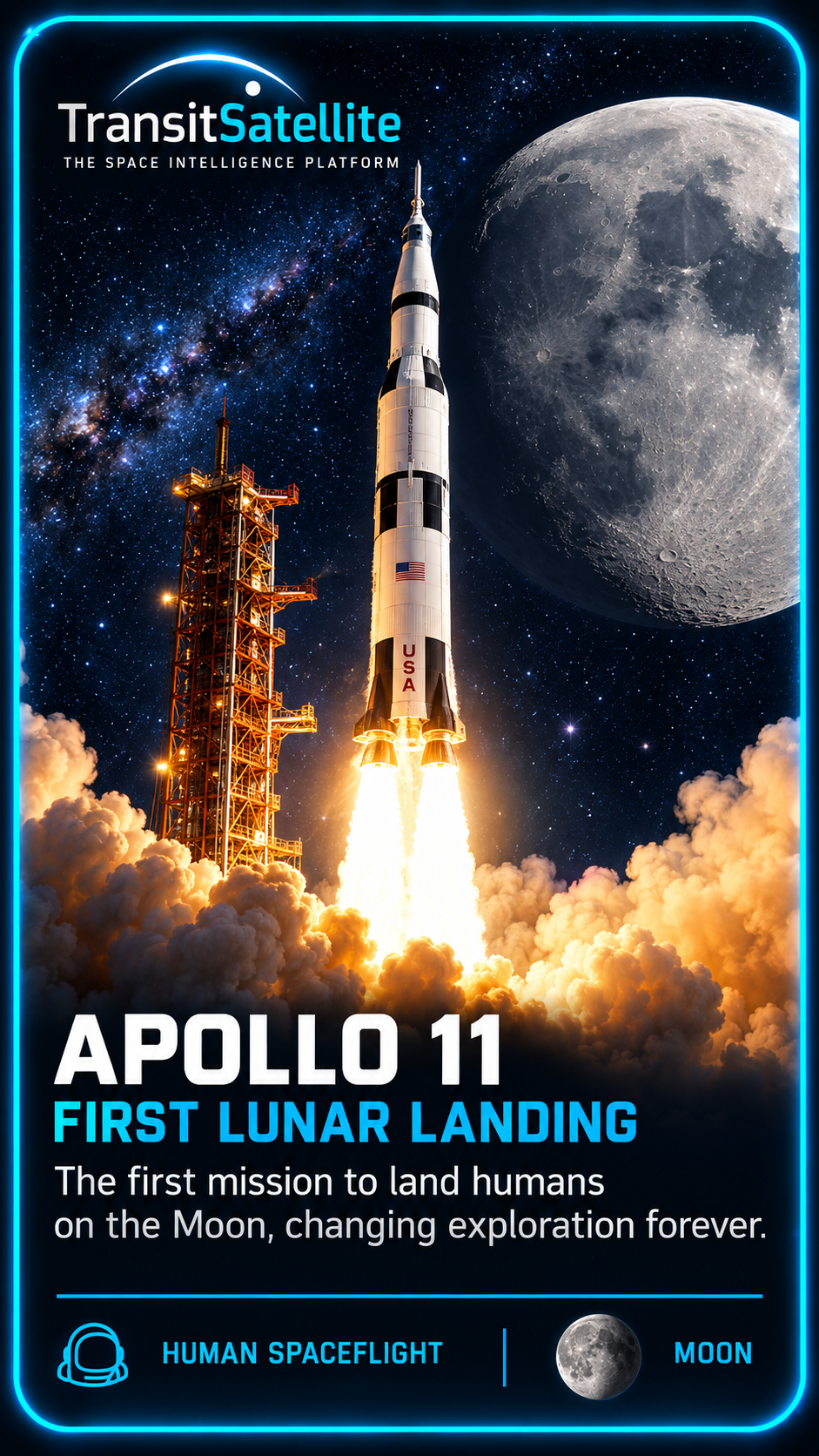
Apollo 11’s objective was to land astronauts on the Moon and return them safely. The mission used lunar-orbit rendezvous, a two-stage lunar module, and a command module that remained in lunar orbit.
Early Navigation Satellite and the Birth of Satellite Positioning
Transit 1B
Missions
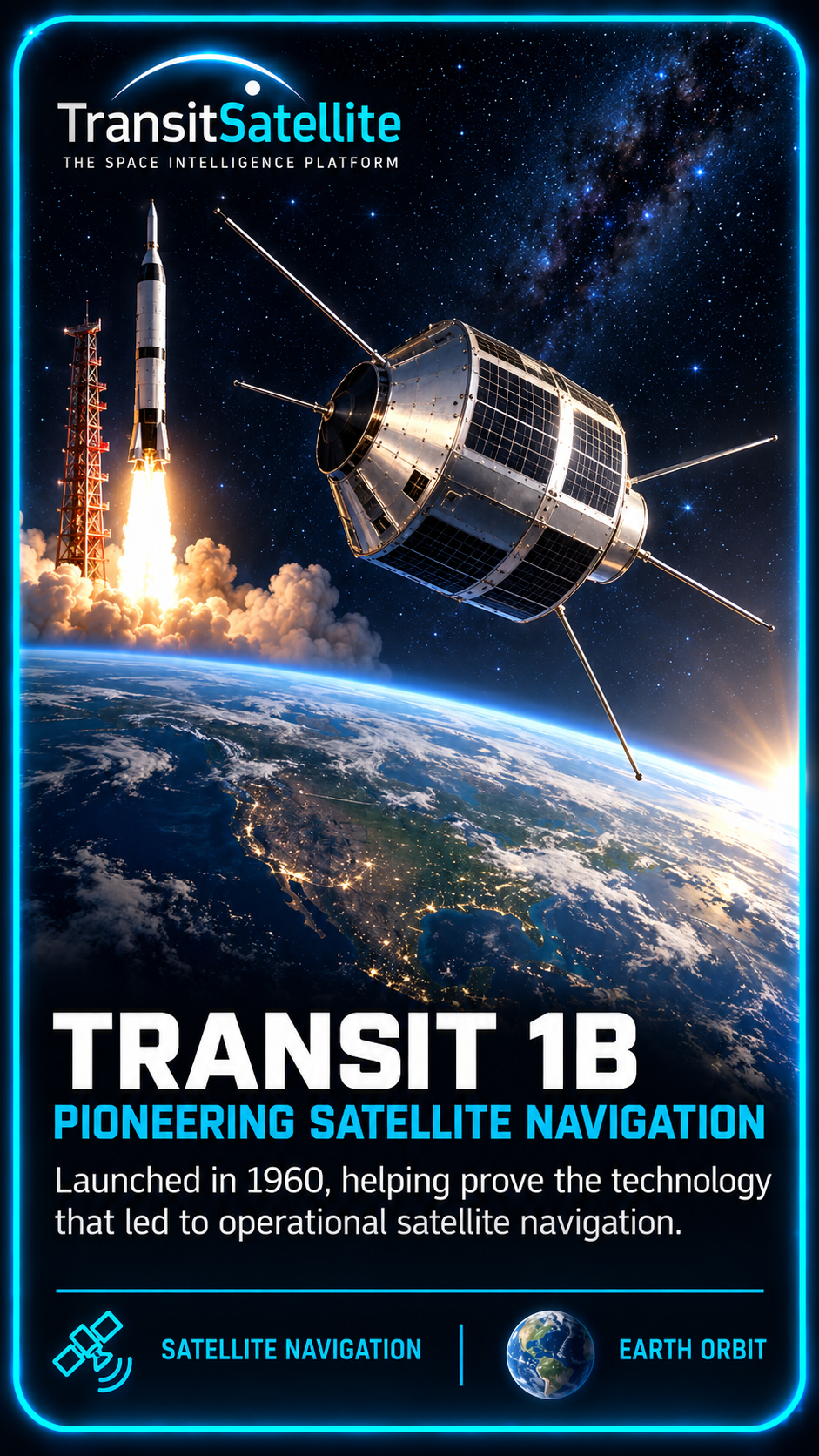
Transit 1B was an early U.S. Navy navigation satellite that demonstrated the basis of Doppler satellite positioning; its successor program developed into the operational Transit navigation system.
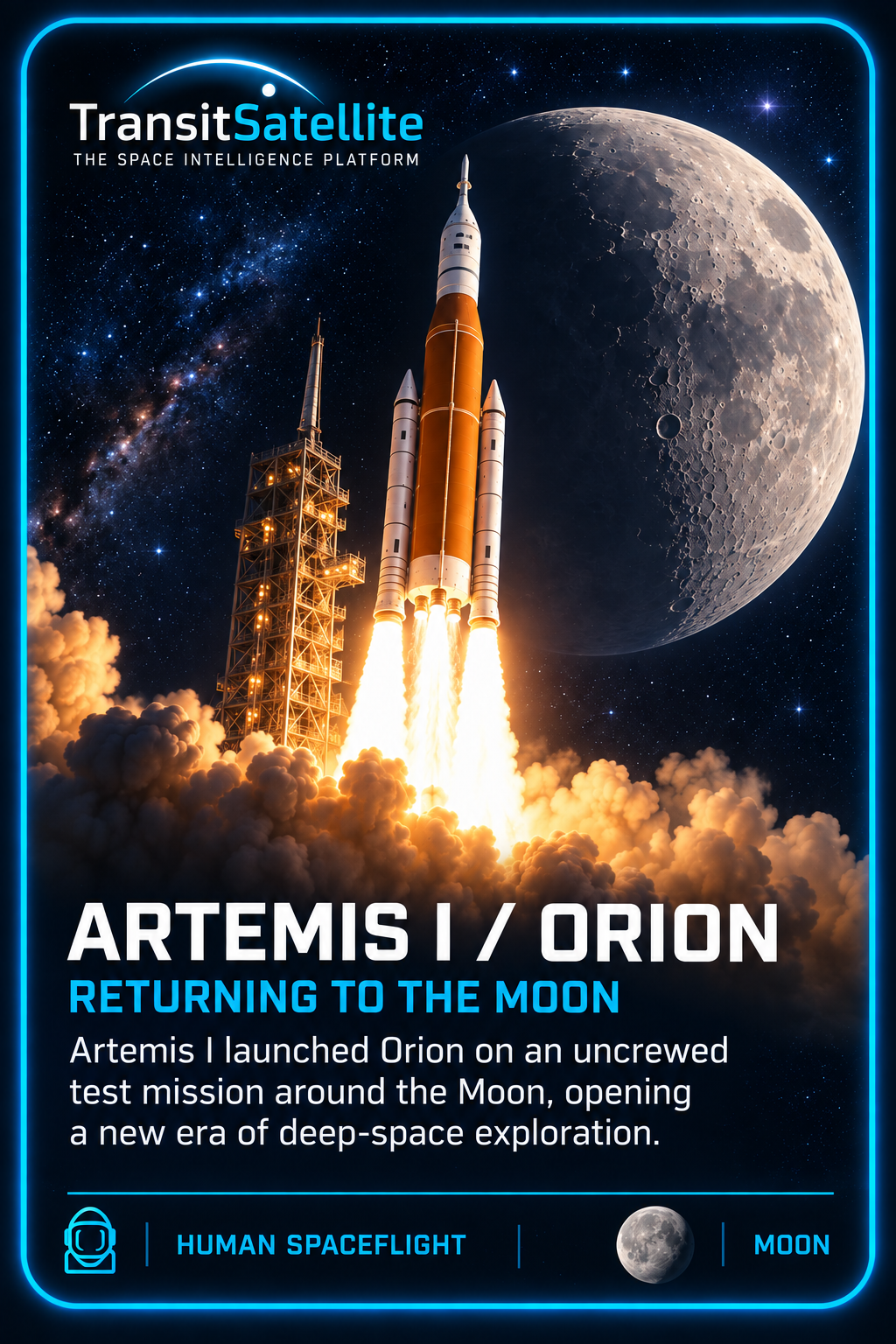
Artemis I was an uncrewed integrated flight test of SLS and Orion: Orion traveled beyond the Moon, returned to Earth, and tested systems needed for later crewed missions.
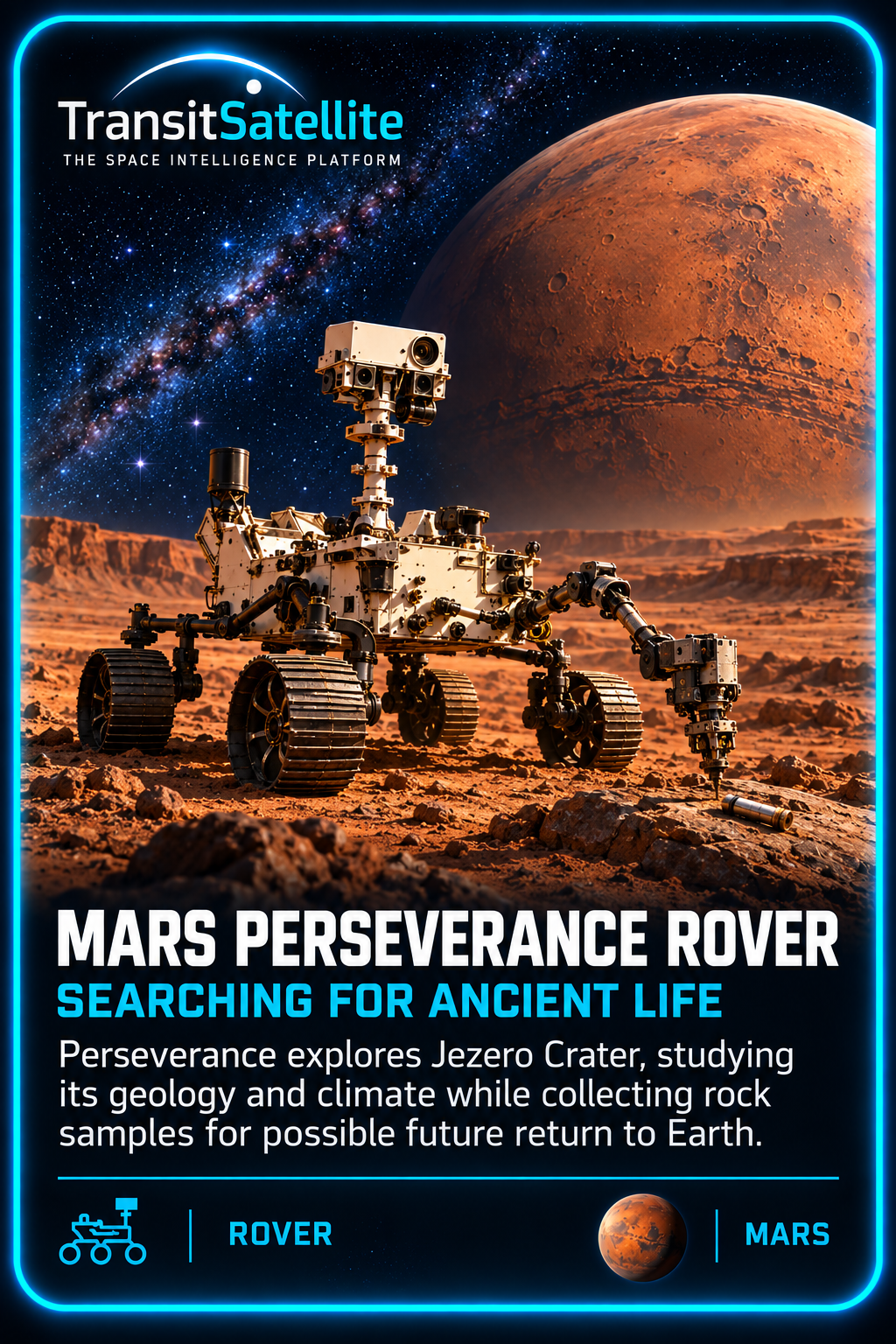
Perseverance landed in Jezero Crater to study ancient environments and collect sealed rock and soil samples for possible future return; Ingenuity provided a separate flight-technology demonstration.
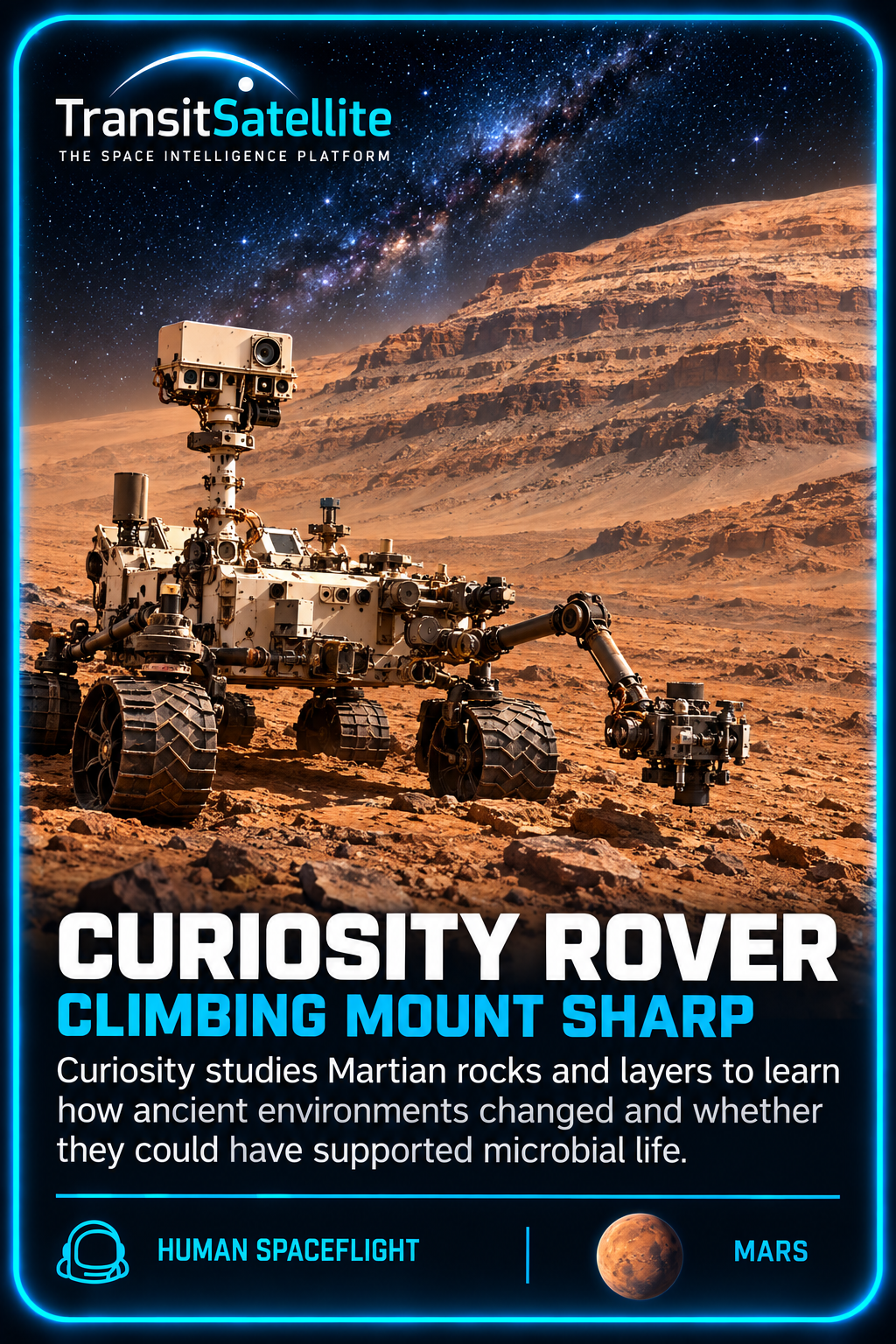
Curiosity’s mission asks whether Gale Crater once had environmental conditions capable of supporting microbial life; it examines rocks, soil, and atmosphere with a mobile analytical laboratory.
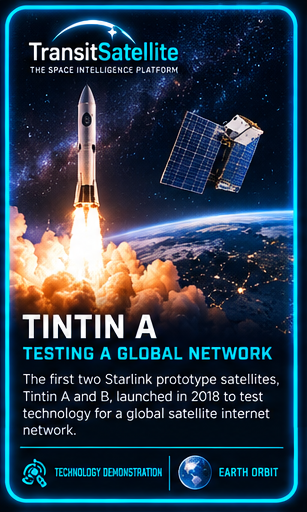
Tintin A was one of two 2018 Starlink demonstration spacecraft used to test early low-Earth-orbit broadband technology before operational constellation deployment.
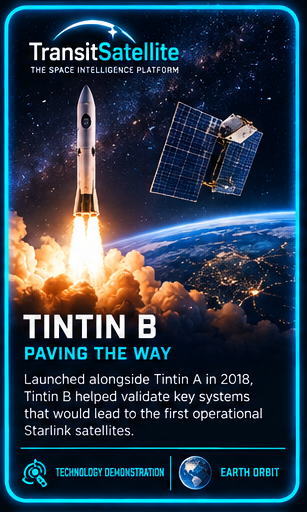
Tintin B flew alongside Tintin A as a paired Starlink technology demonstrator, providing early on-orbit tests of spacecraft, links, and network operations.
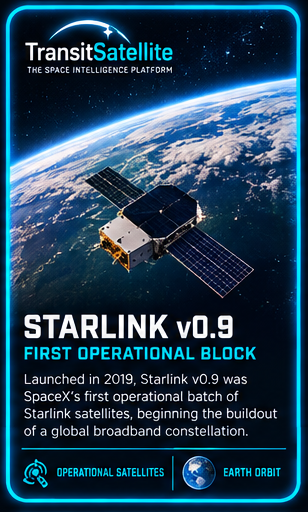
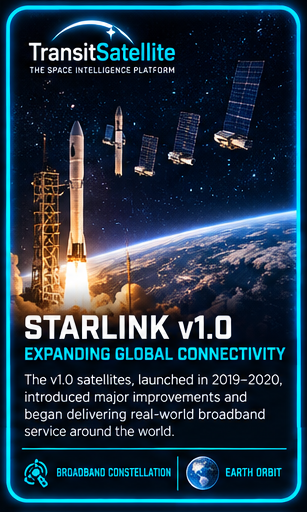
The first large Starlink demonstration deployment placed 60 satellites in orbit in 2019 to test spacecraft operations and the broadband constellation architecture.
Brightness Testing, Astronomy and Satellite Design
DarkSat
Missions
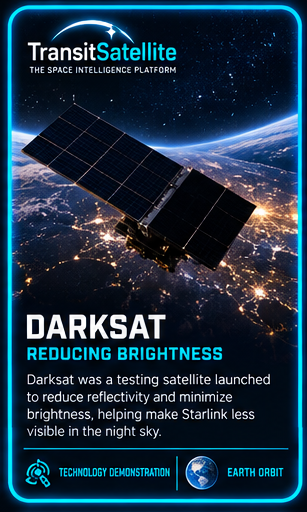
DarkSat was an experimental Starlink spacecraft with a darkened surface treatment intended to reduce reflected sunlight and address astronomical visibility concerns.
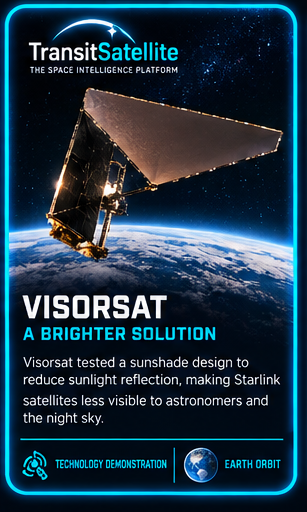
VisorSat tested a deployable sunshade intended to limit sunlight reflected from parts of a Starlink satellite; it was an engineering response to brightness measurements.
Laser Crosslinks and a More Connected Constellation
Starlink v1.5
Missions
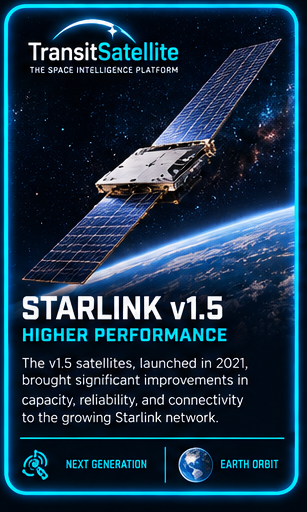
Starlink v1.5 introduced inter-satellite laser links on selected spacecraft, allowing data to route between satellites without immediately passing through a ground gateway.
Direct to Cell and Satellite-to-Phone Connectivity
Starlink V2 Mini Direct to Cell
Missions
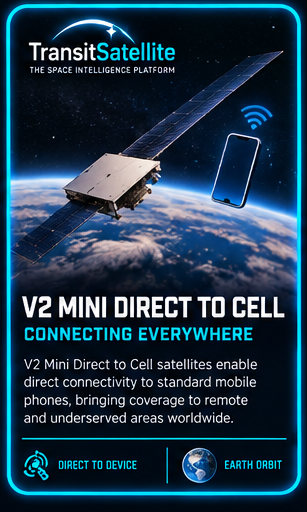
The Direct to Cell configuration adds cellular-band payload capability so compatible phones can connect through satellites, subject to service, spectrum, and handset constraints.
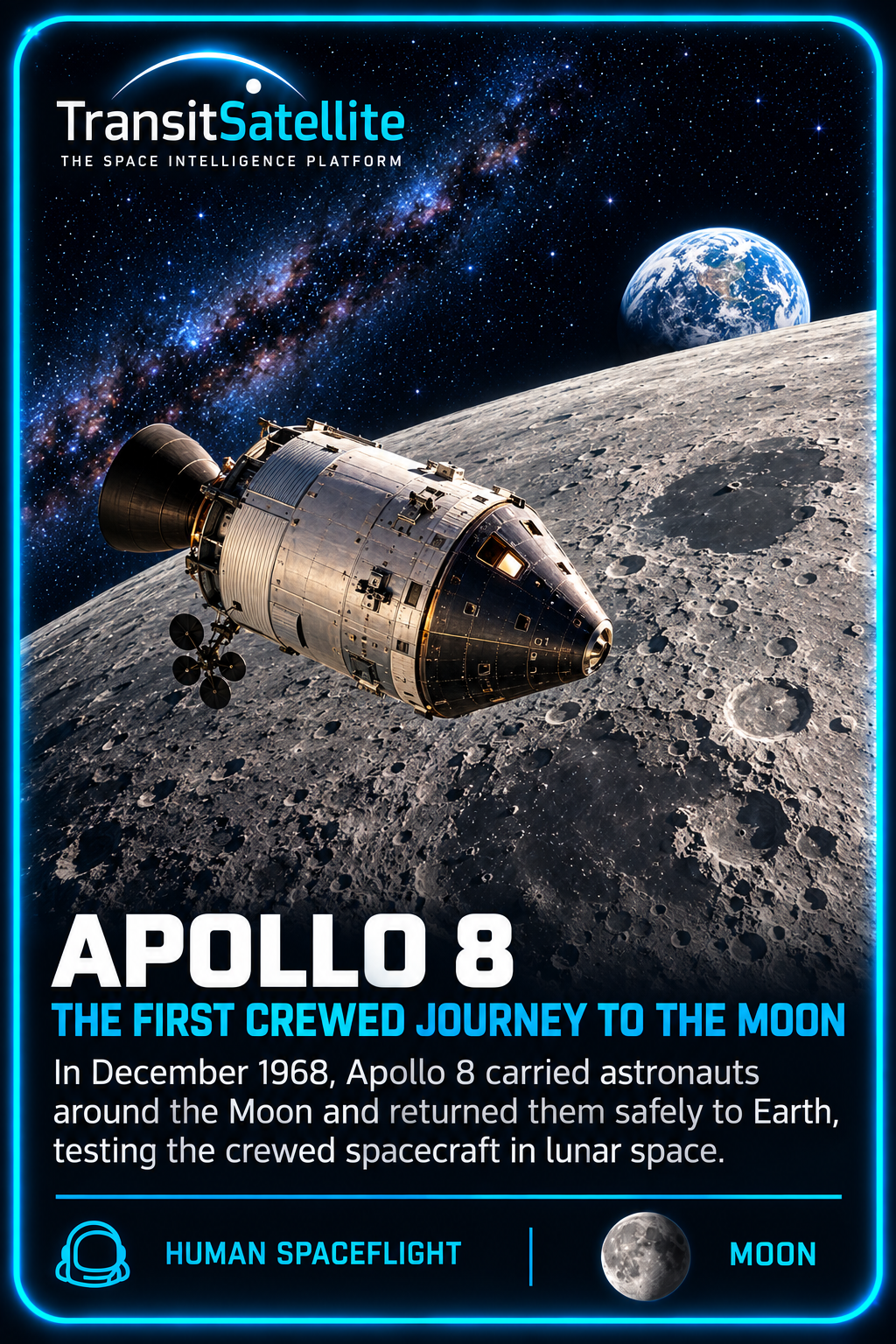
The first crewed flight to leave Earth orbit and circle the Moon tested the command-service module, navigation, and crew operations before a landing attempt was made.
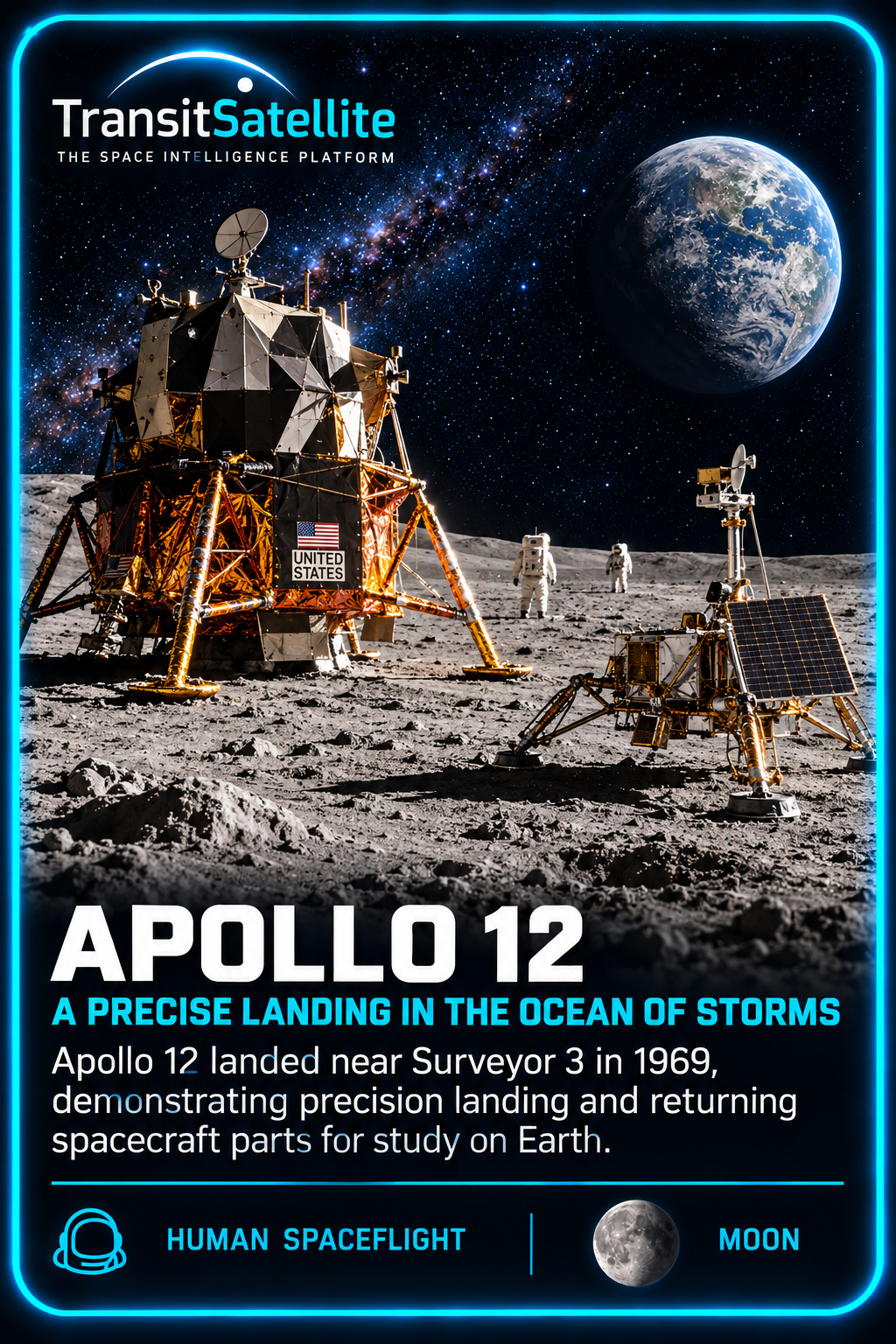
Apollo 12 made a precision landing near Surveyor 3, allowing astronauts to inspect the earlier robotic lander and collect samples from the Ocean of Storms.
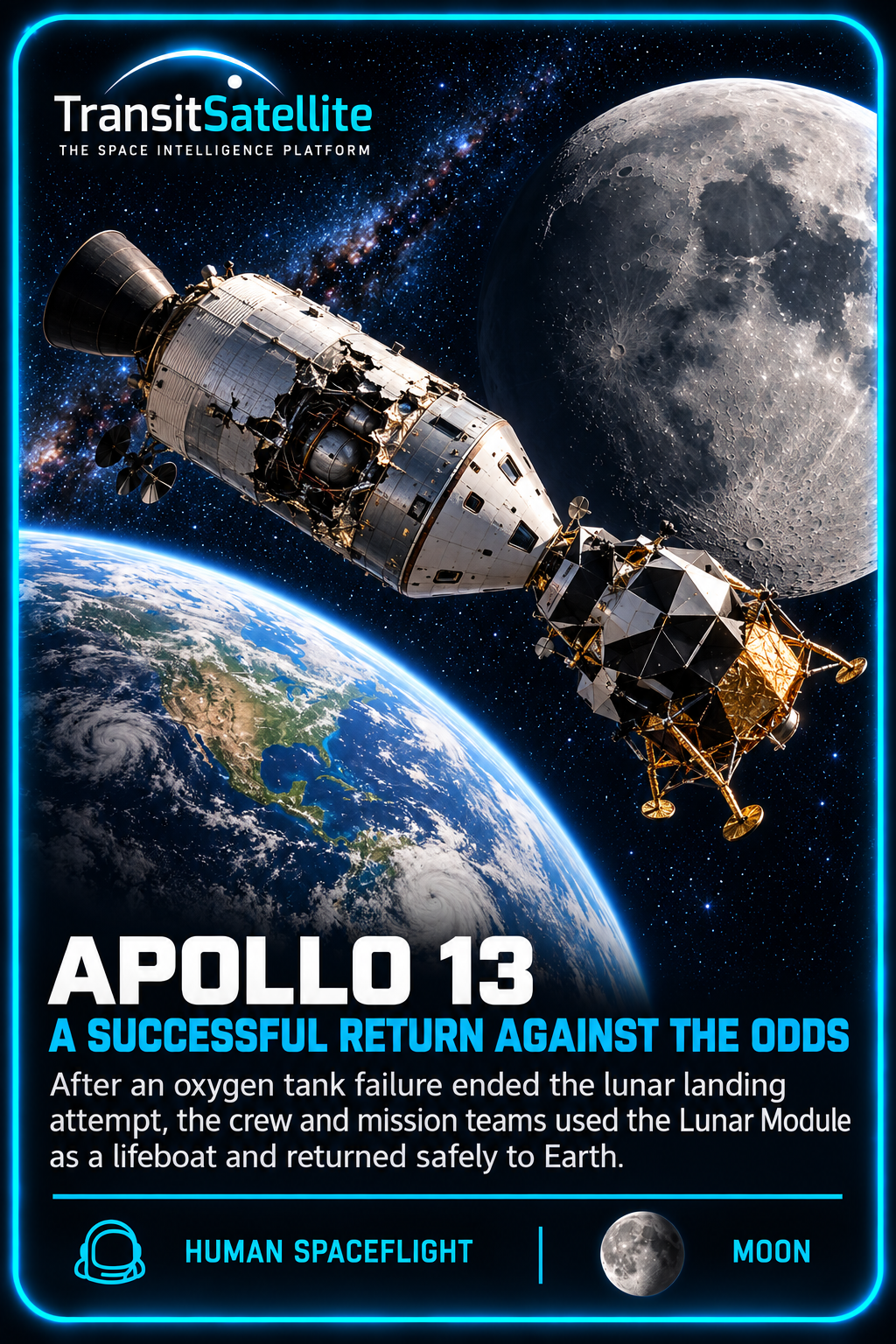
An oxygen-tank failure forced the crew to abandon the planned lunar landing; the mission became a survival and recovery operation using the lunar module as a lifeboat.
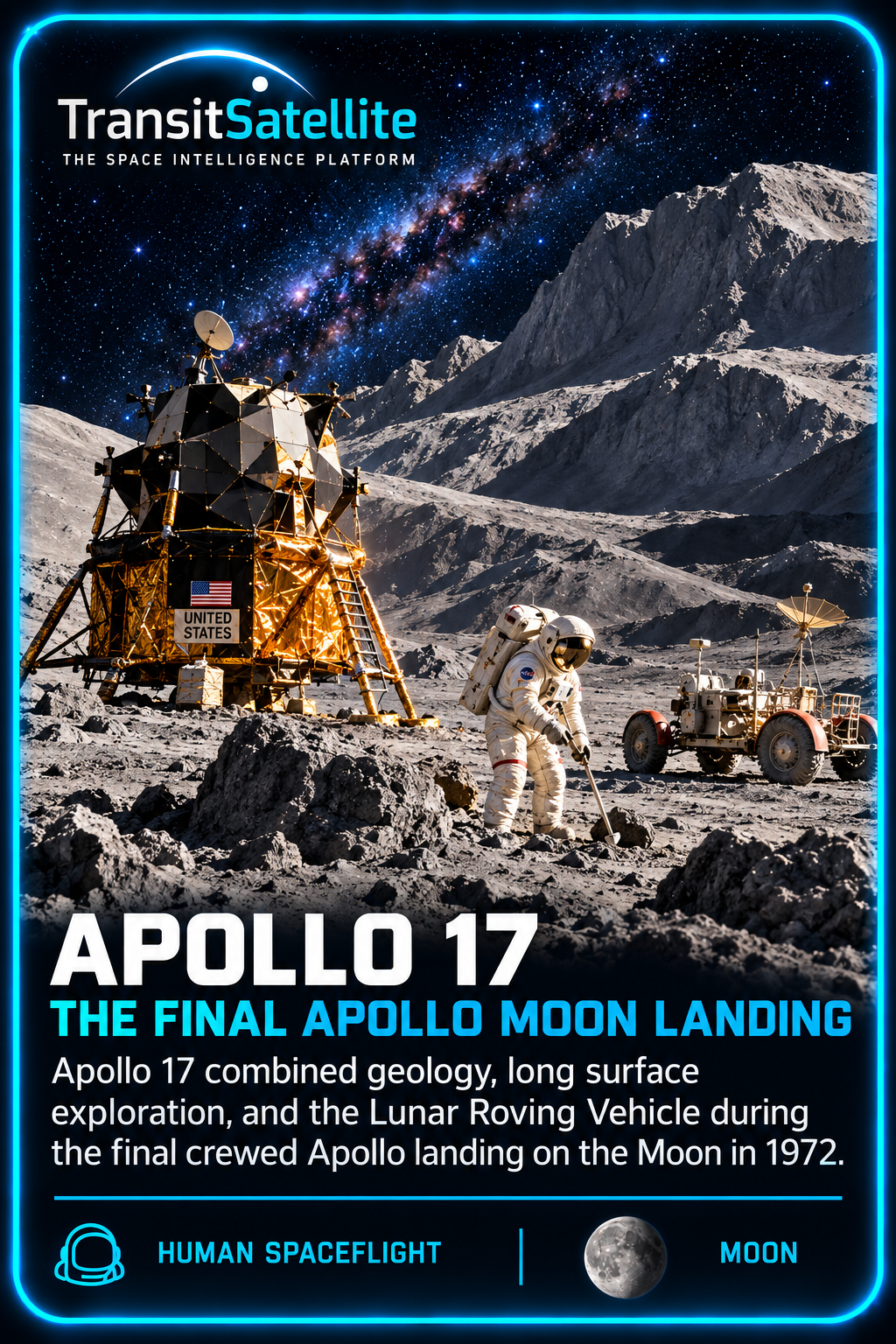
The final Apollo lunar landing paired a rover-enabled field campaign with the first professional geologist to work on the lunar surface, Harrison Schmitt.
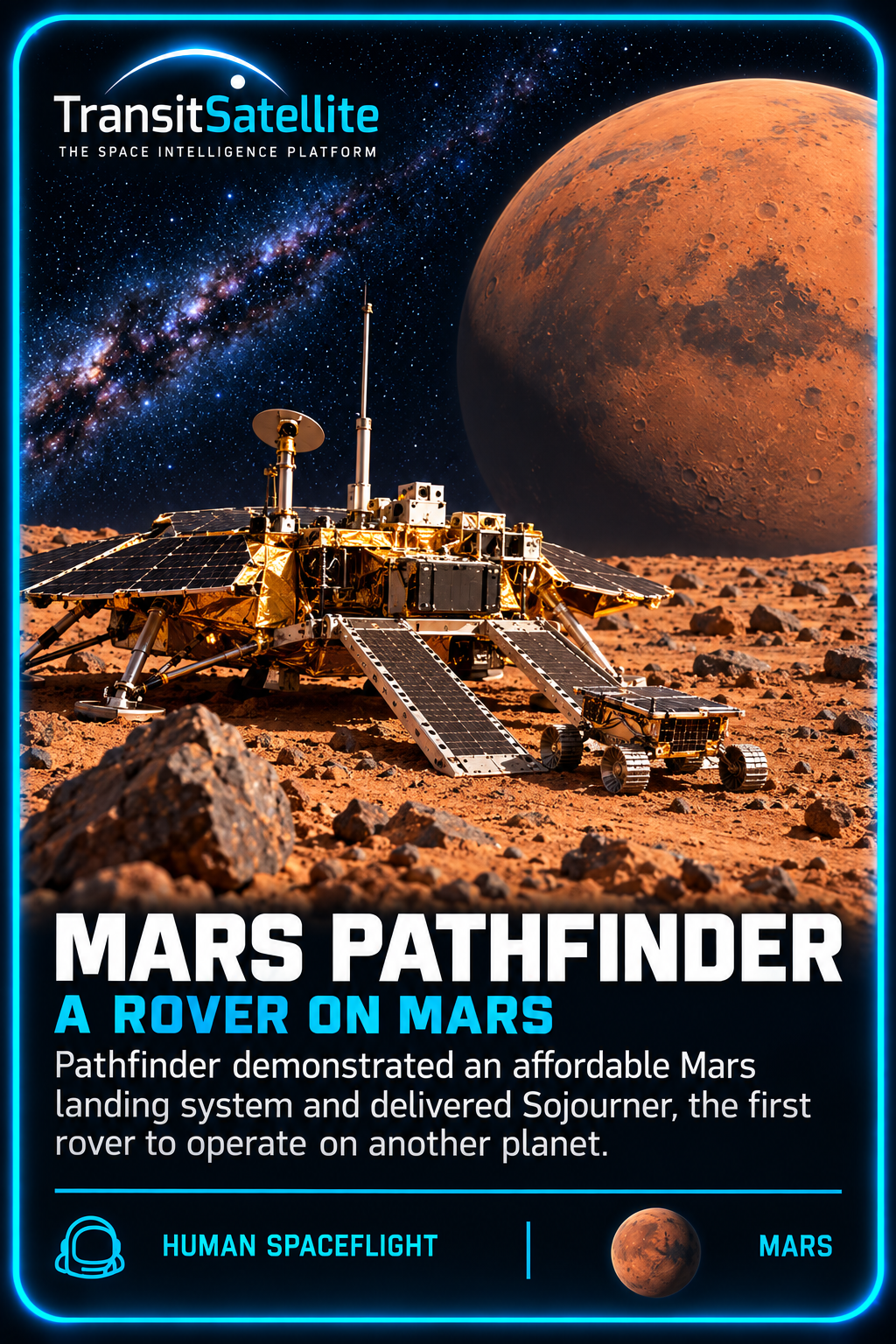
Pathfinder demonstrated a lower-cost Mars landing architecture using airbags, then deployed the small Sojourner rover to examine nearby rocks and soil.
Mars lander and rover technology-demonstration mission
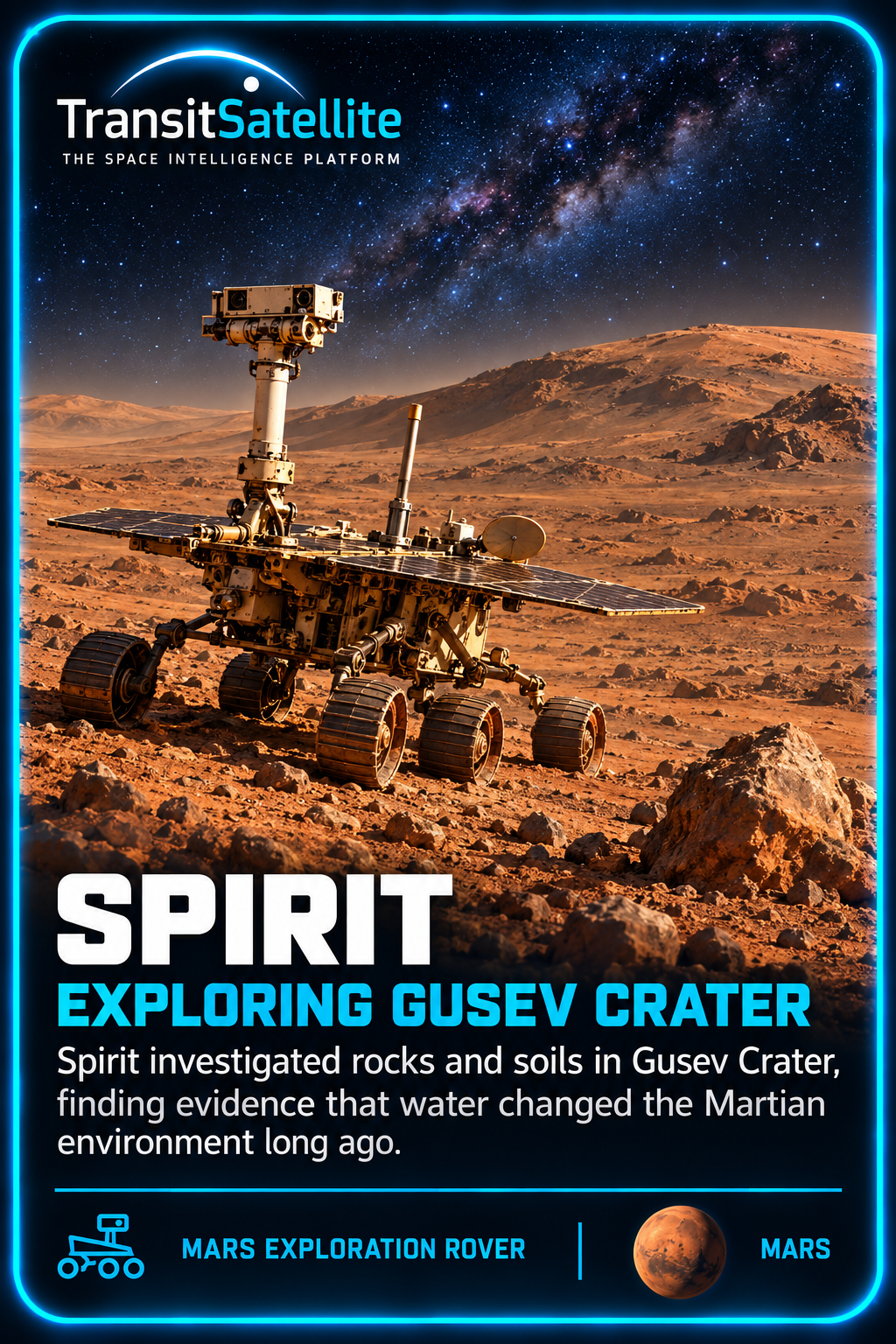
Spirit explored Gusev Crater as one half of NASA’s twin Mars Exploration Rover mission; its geology work found evidence that water altered Martian rocks.
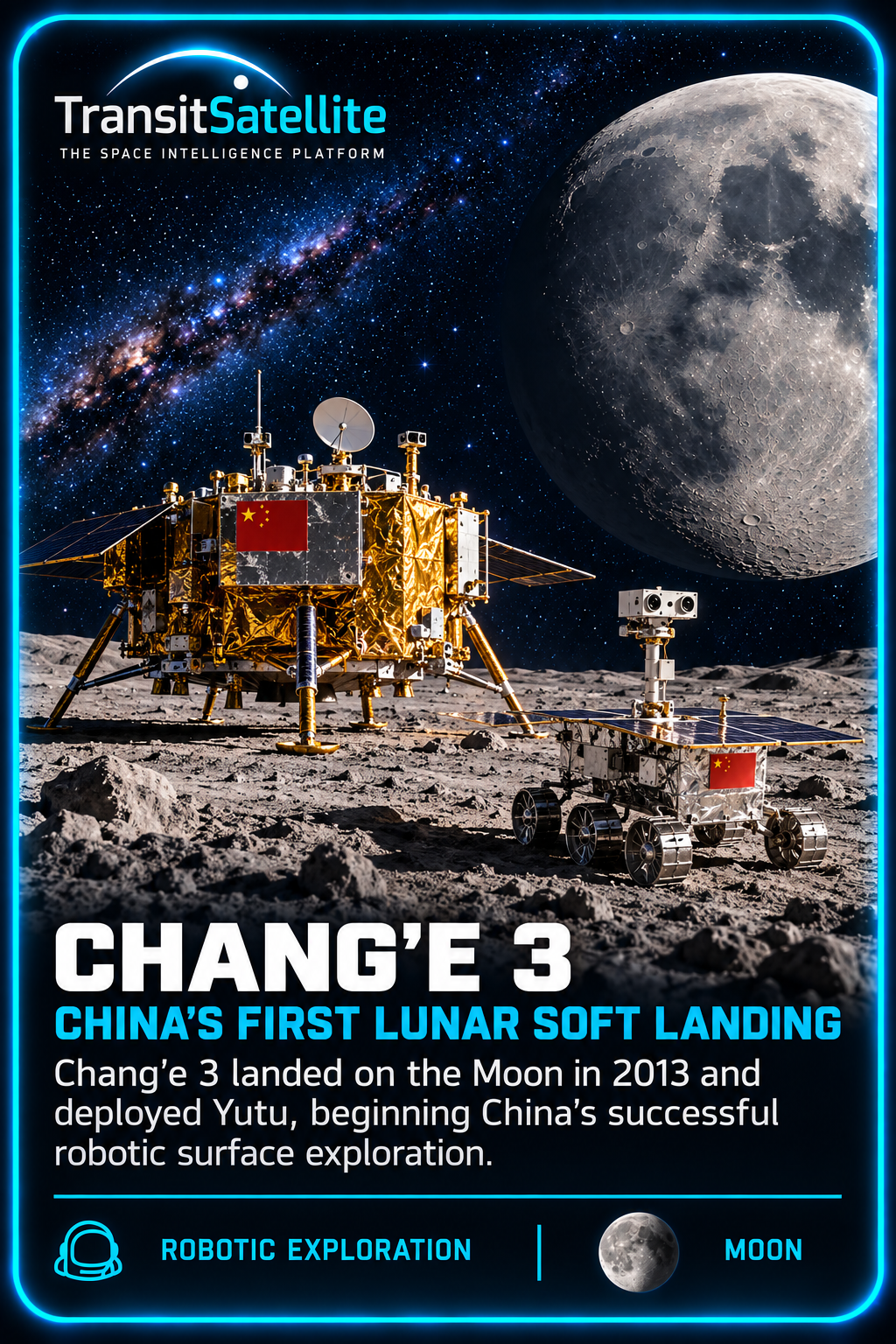
Chang’e 3 delivered a lander and Yutu rover to the Moon in 2013, beginning China’s successful lunar soft-landing sequence after a long gap in such landings.
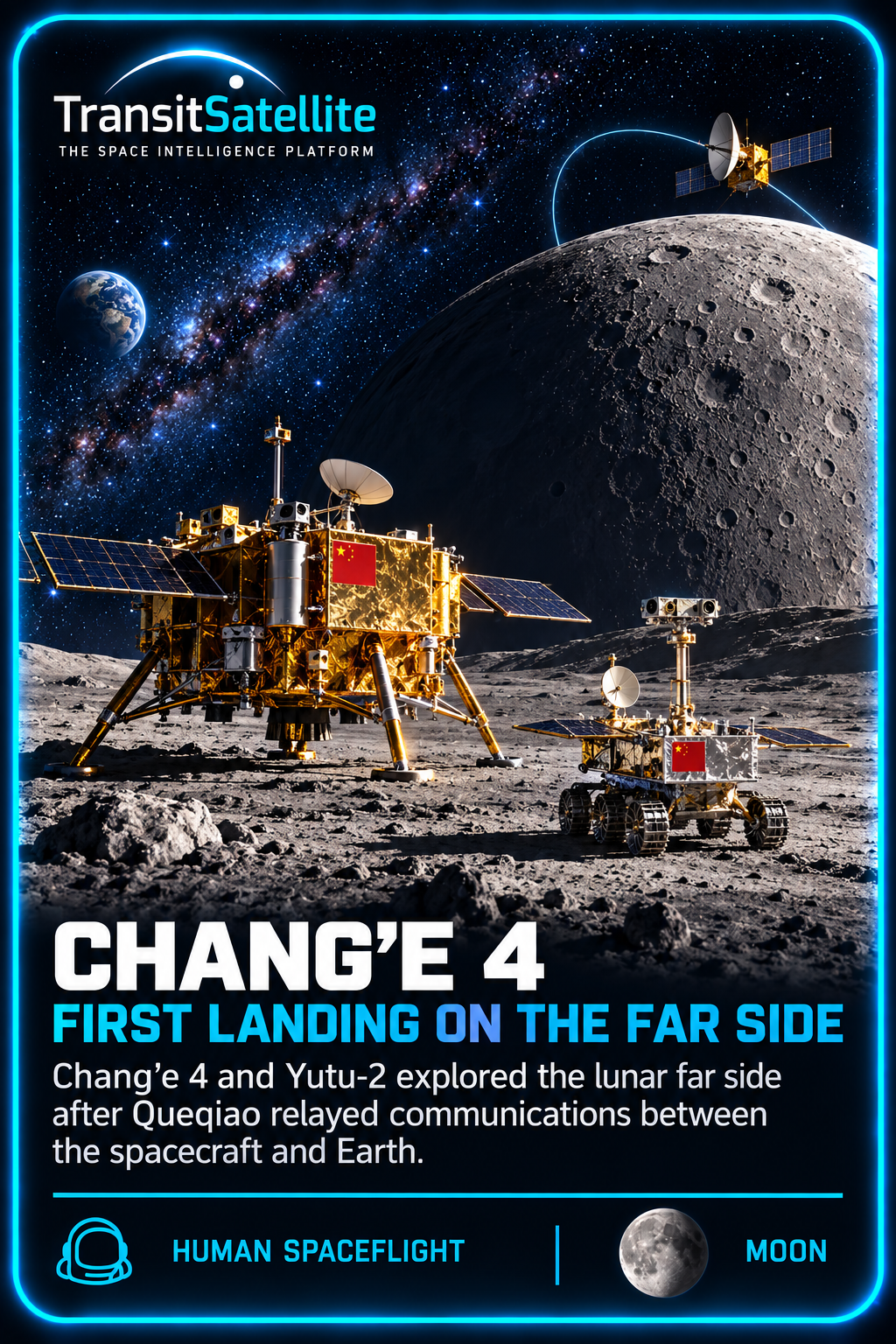
Chang’e 4 made the first soft landing on the lunar far side; the Queqiao relay spacecraft was essential because the landing site cannot communicate directly with Earth.
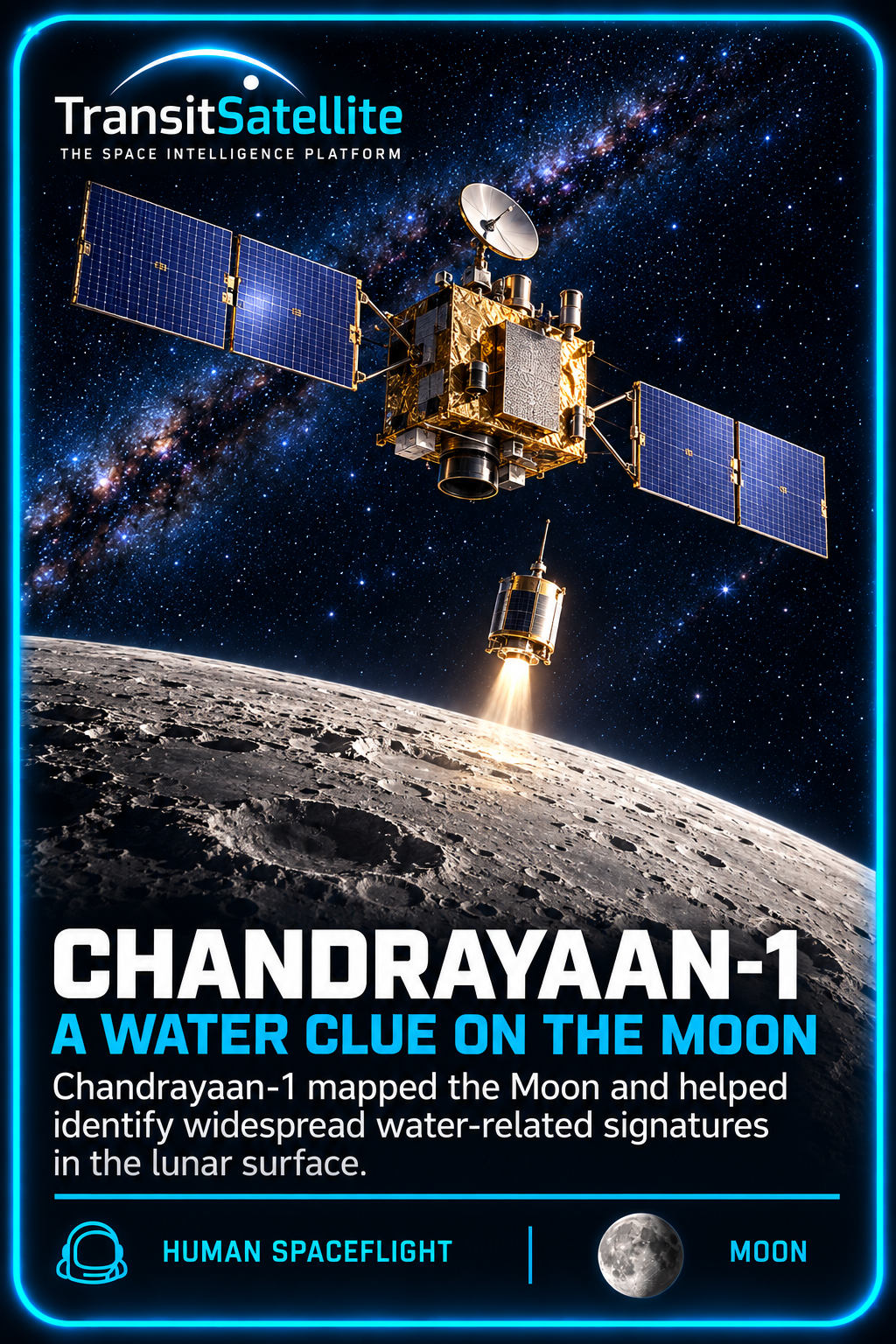
India’s first lunar mission combined an orbiter with impact probes; its instruments helped establish evidence for water molecules in the lunar environment.
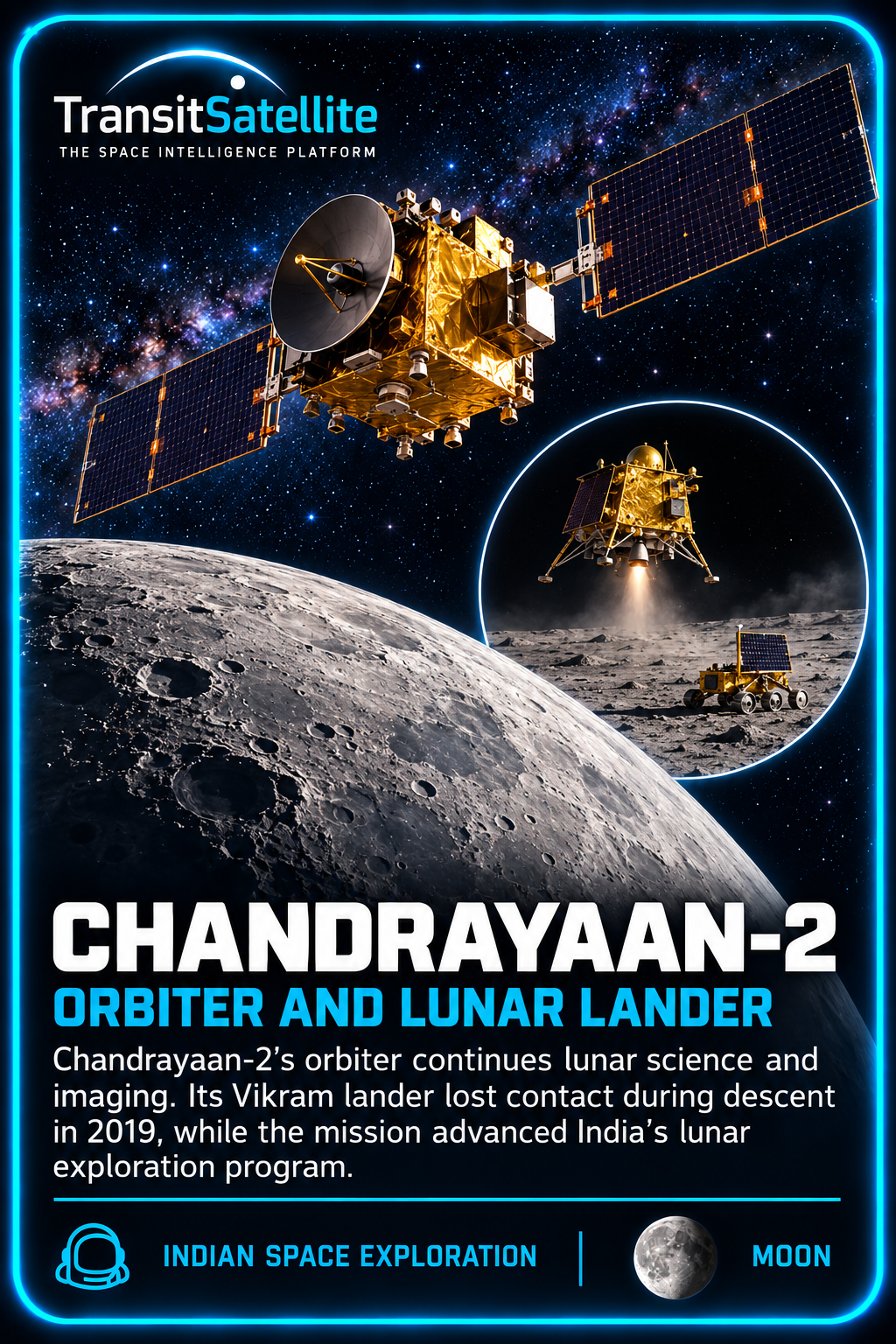
Chandrayaan-2’s orbiter entered lunar orbit and continued remote sensing after the Vikram lander was lost during descent; the mission therefore had distinct outcomes by element.
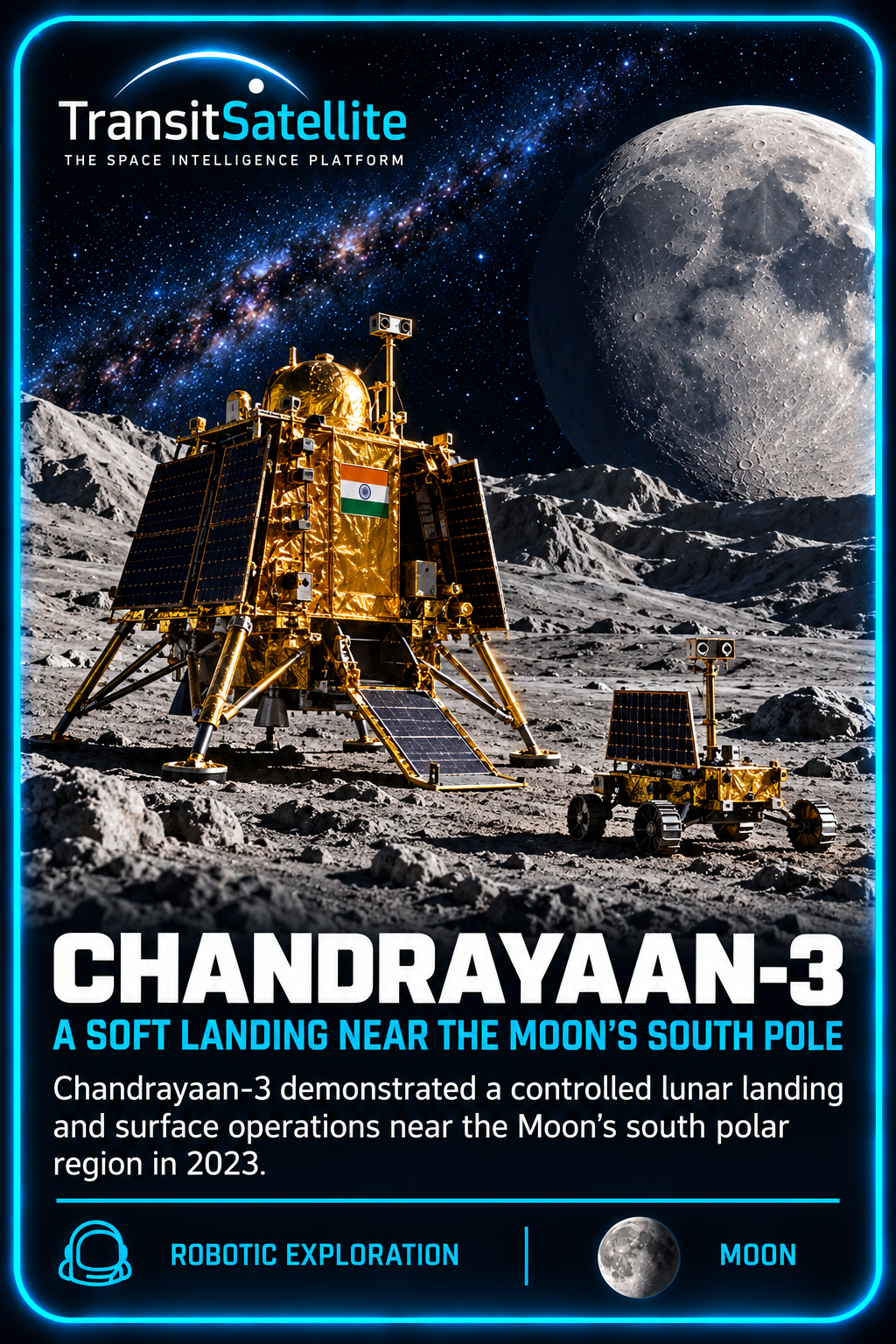
Chandrayaan-3 demonstrated a controlled lunar landing and rover deployment in 2023, making India the first country to land near the Moon’s south polar region.
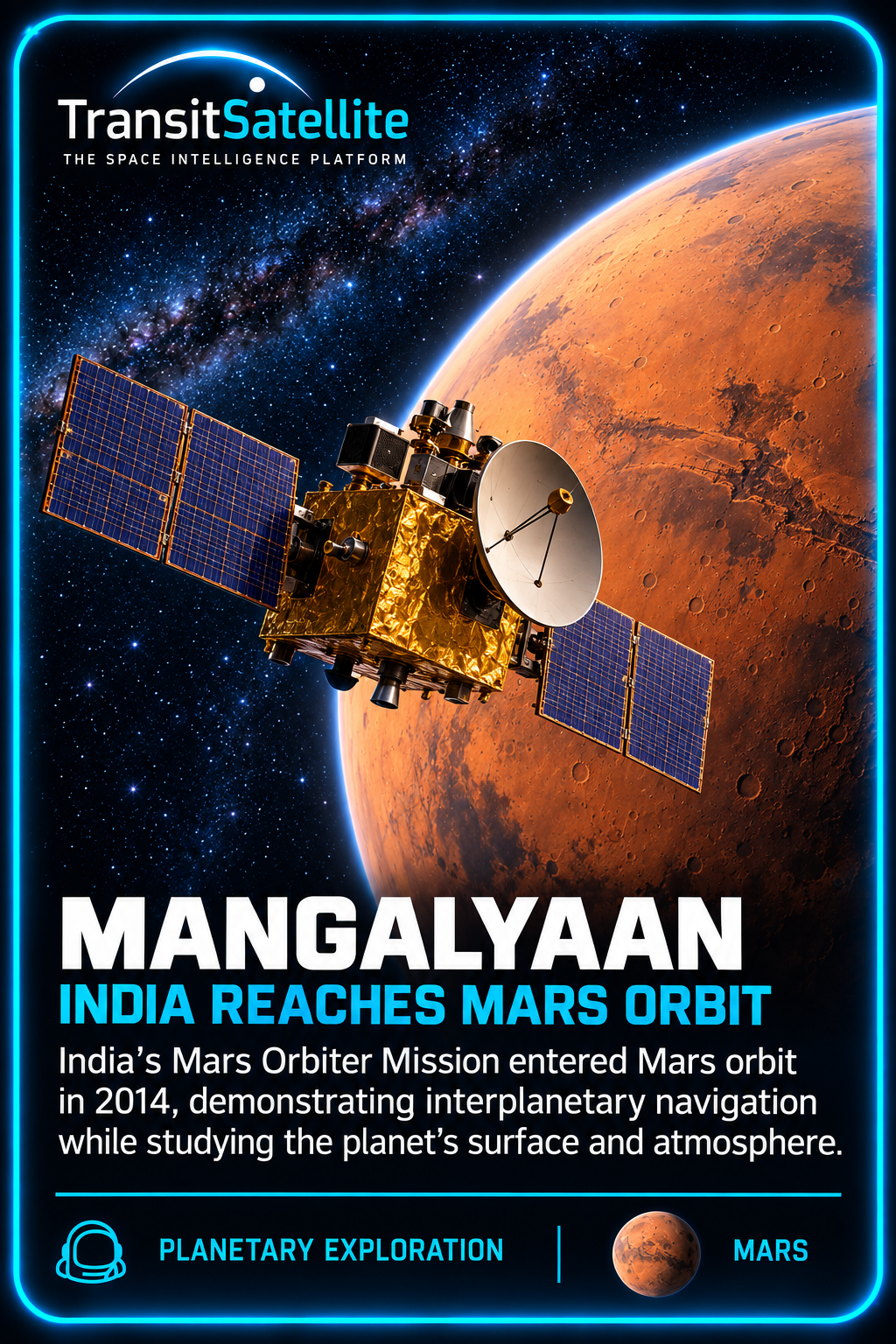
The Mars Orbiter Mission was India’s first interplanetary spacecraft and reached Mars orbit on its first attempt in 2014, carrying science and technology-demonstration payloads.
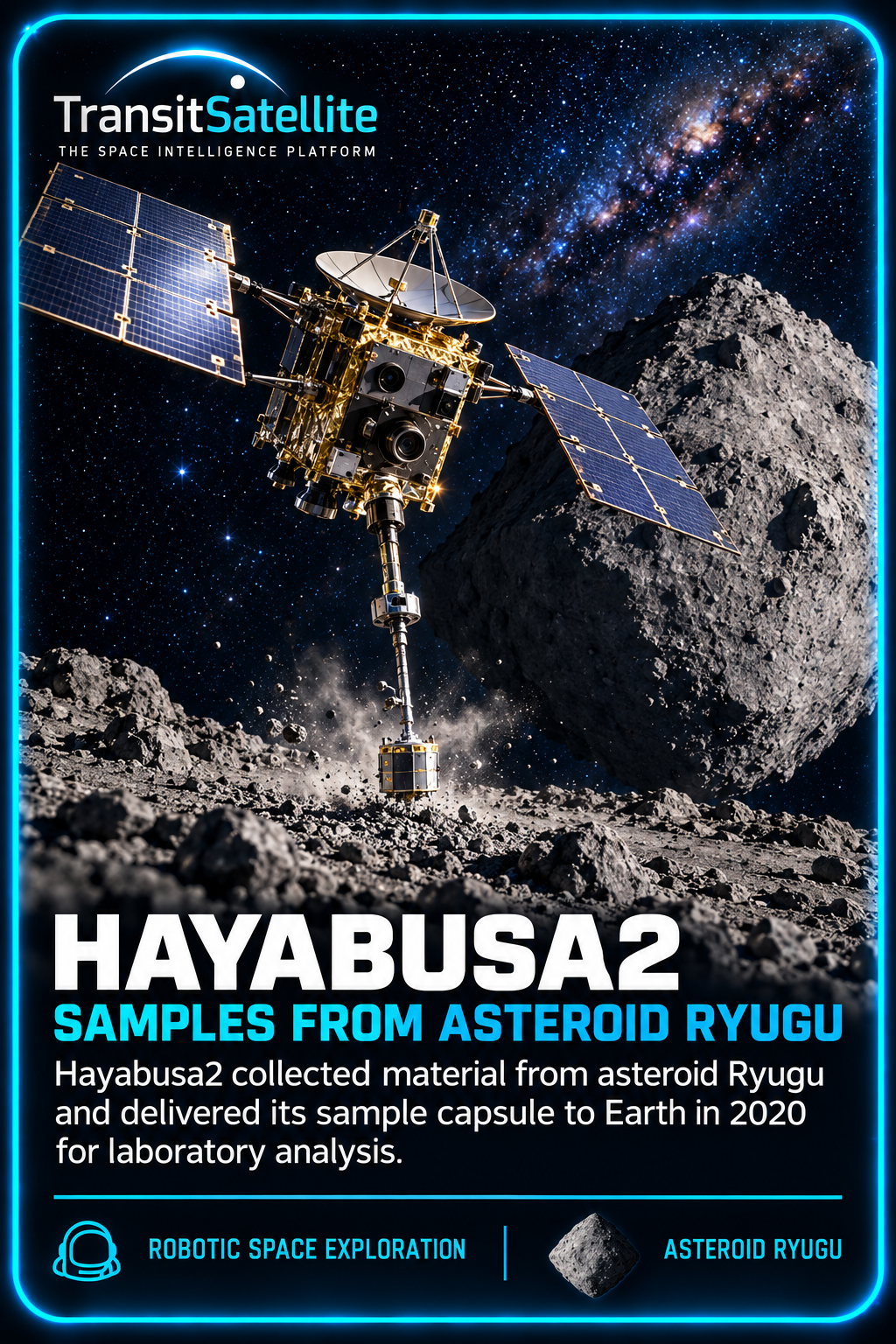
JAXA’s Hayabusa2 collected material from asteroid Ryugu, returned a capsule to Earth in 2020, and continued on an extended mission after sample delivery.
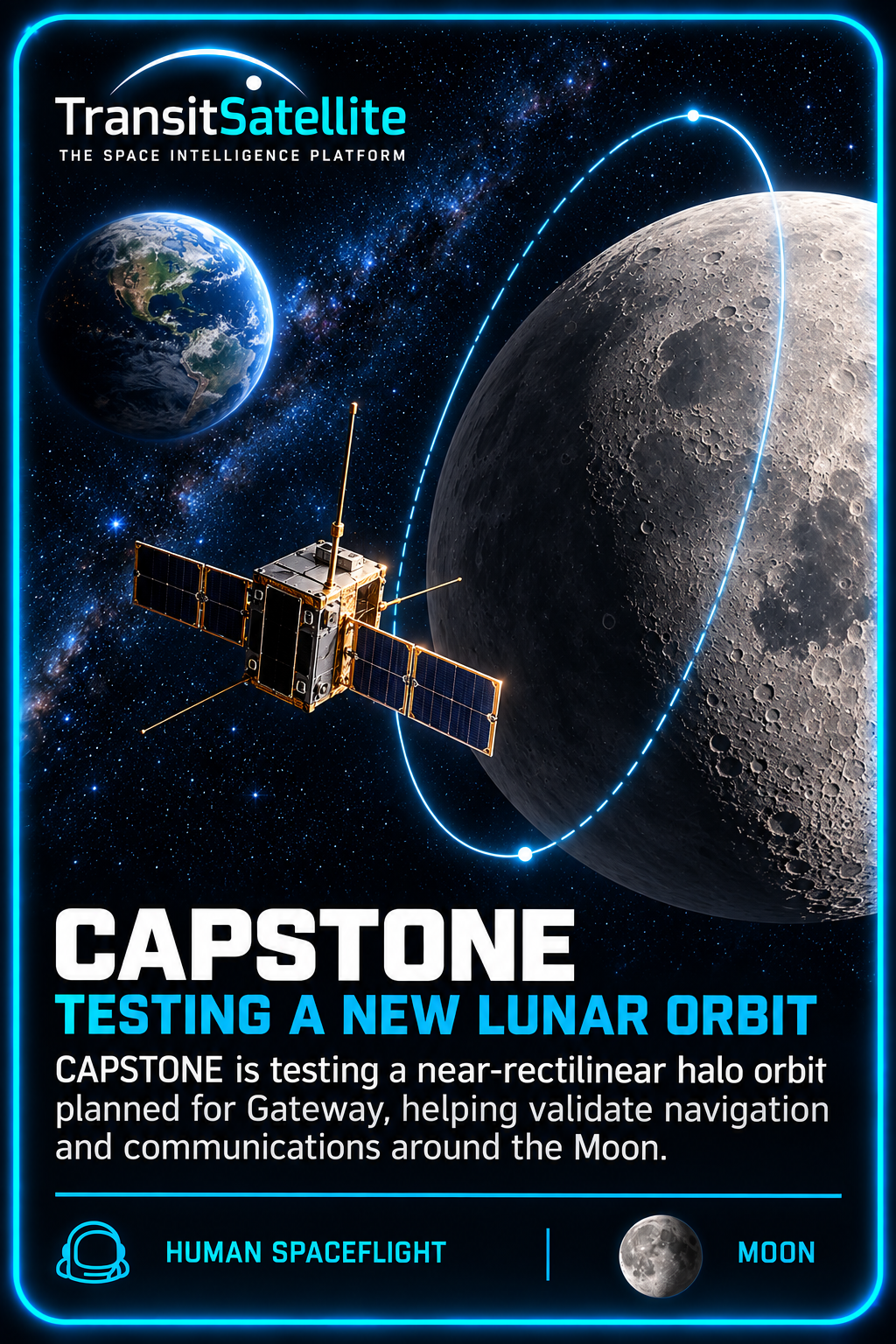
CAPSTONE was designed to test a near-rectilinear halo orbit around the Moon and demonstrate navigation and communications strategies relevant to cislunar missions.
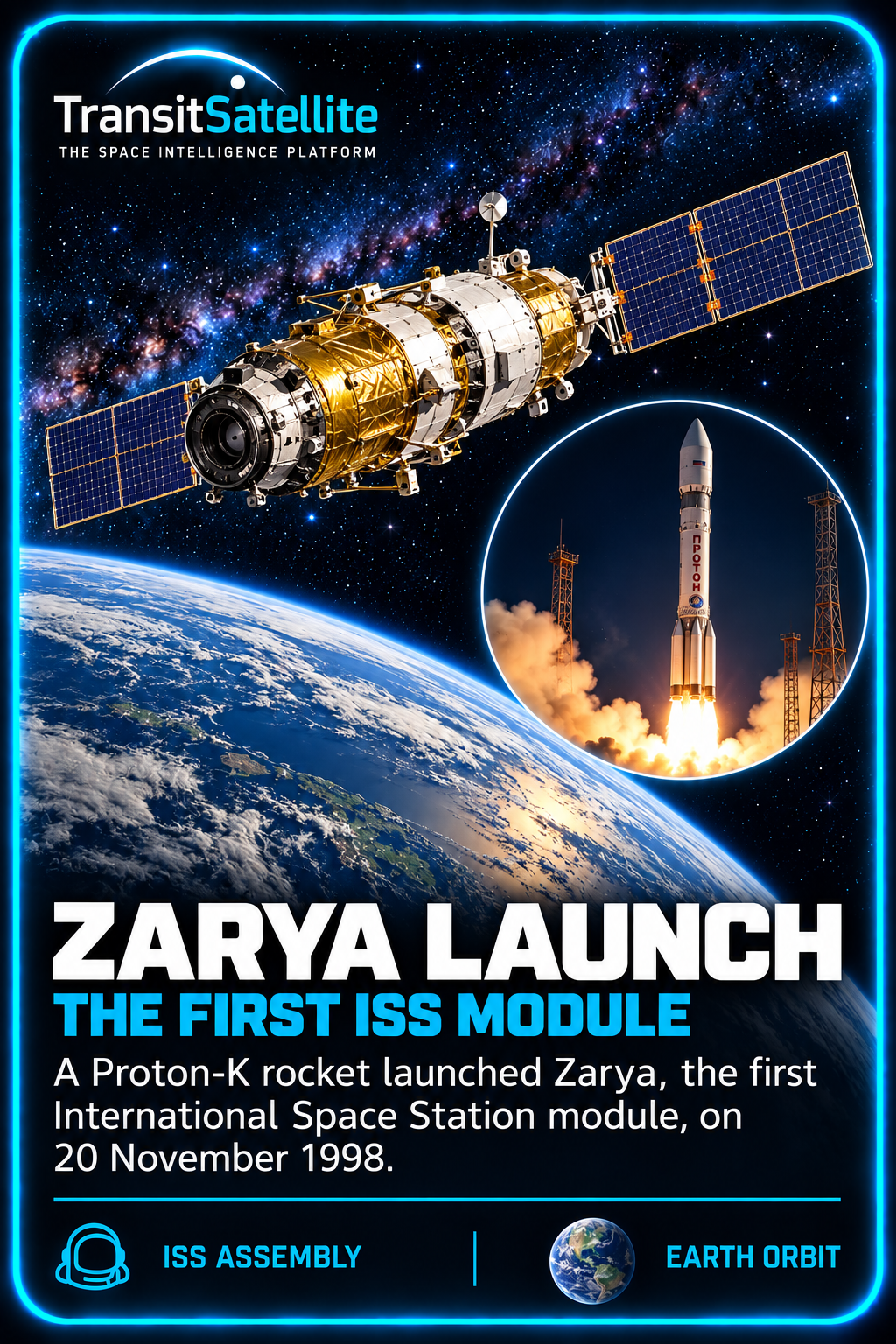
Zarya launched from Baikonur on a Proton rocket on November 20, 1998, beginning assembly of the International Space Station and providing early power, propulsion, communications, and control.
Unity, Zarya and the First Shuttle Assembly Flight
STS-88
Missions
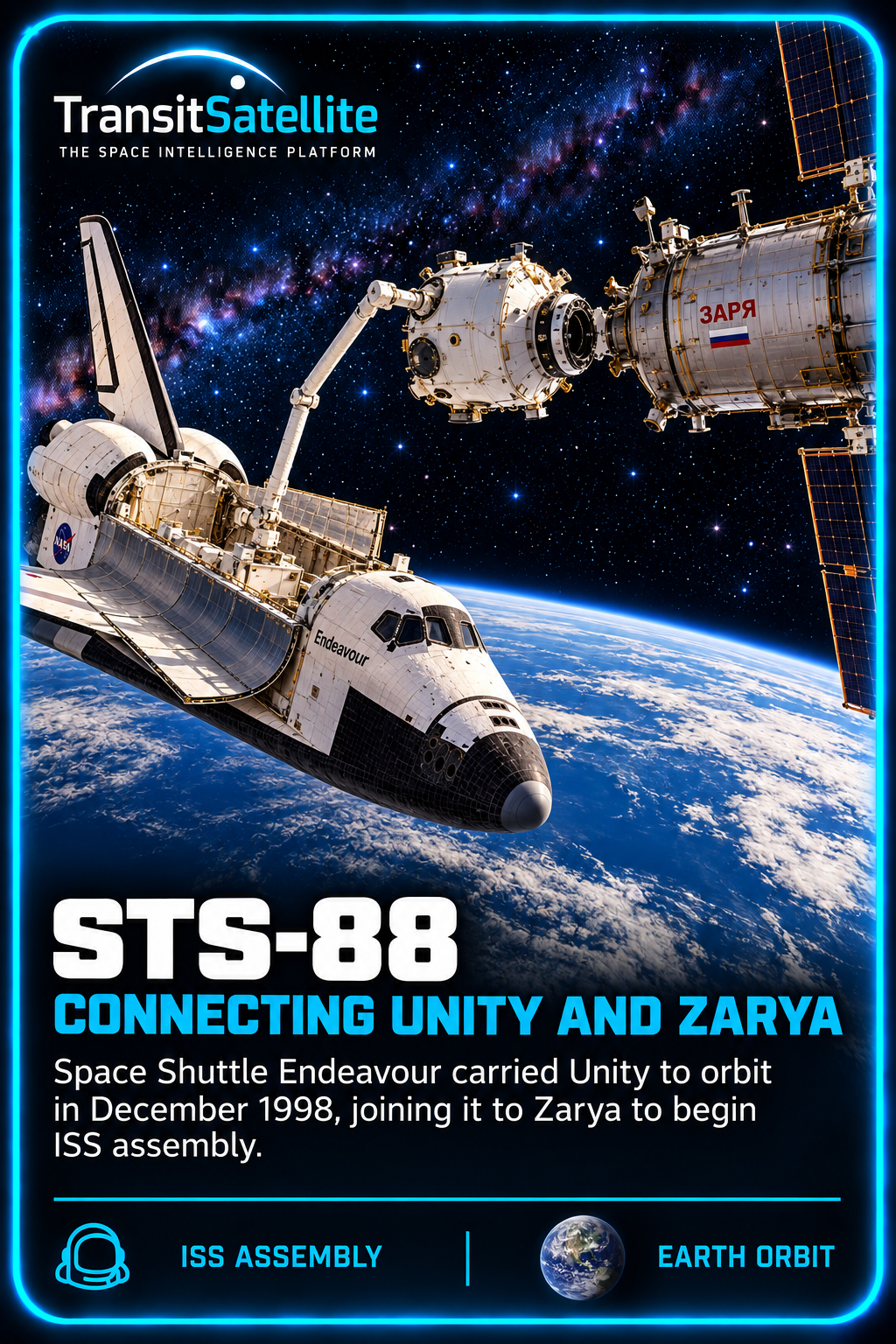
STS-88 was the first Space Shuttle mission to the International Space Station. Endeavour carried Unity to orbit, captured Zarya, and joined the first two ISS modules together.
Zvezda Service Module and the Path to Permanent Crews
Zvezda Launch
Missions
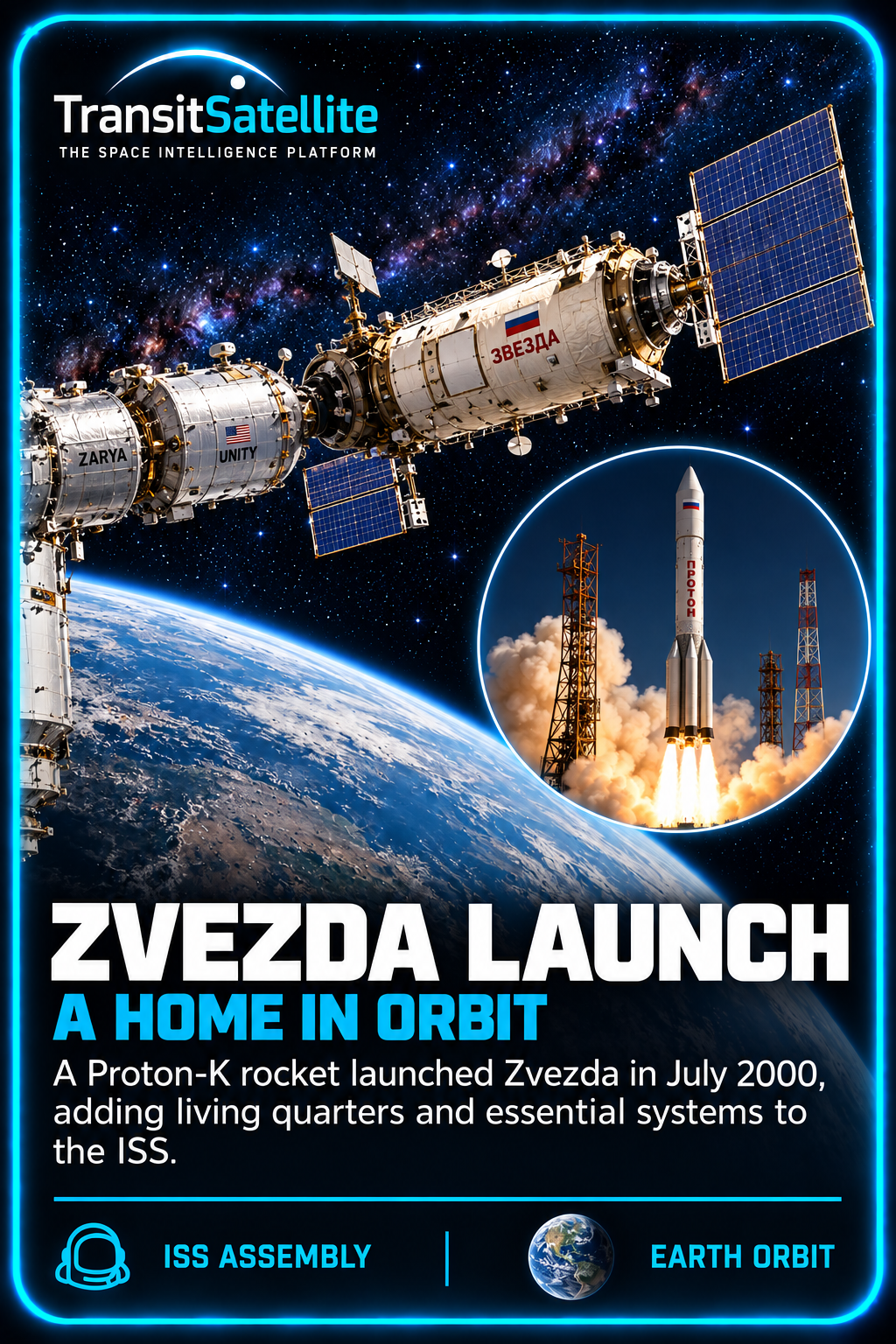
Zvezda launched from Baikonur on July 12, 2000, and docked with the ISS on July 26, adding living quarters, propulsion, communications, environmental systems, and station-control capability.
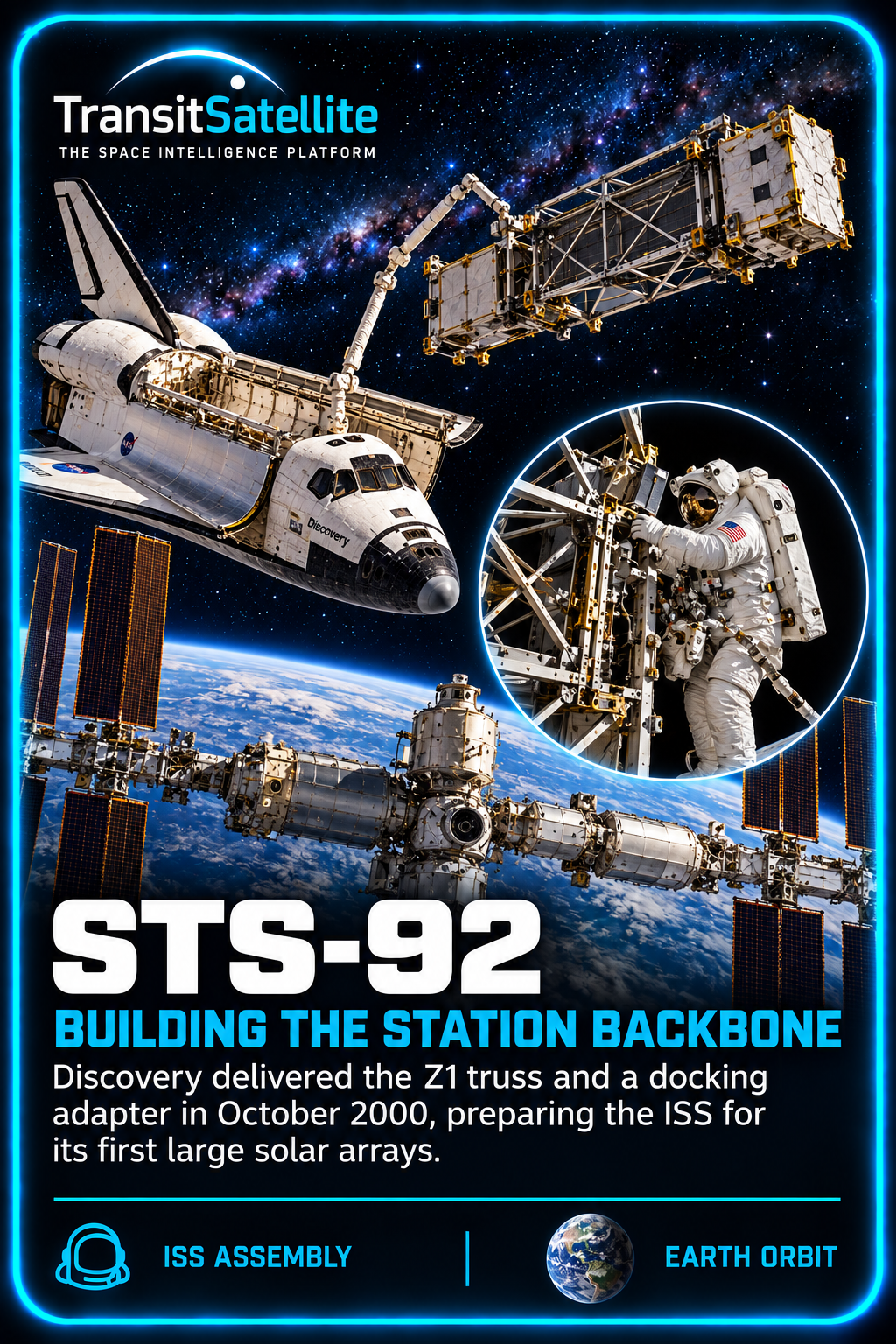
STS-92 delivered and installed the Z1 truss and Pressurized Mating Adapter 3, expanding the station's external structure and preparing the ISS for later power-system and docking additions.
P6 Truss and the Station's First Large U.S. Solar Arrays
STS-97
Missions
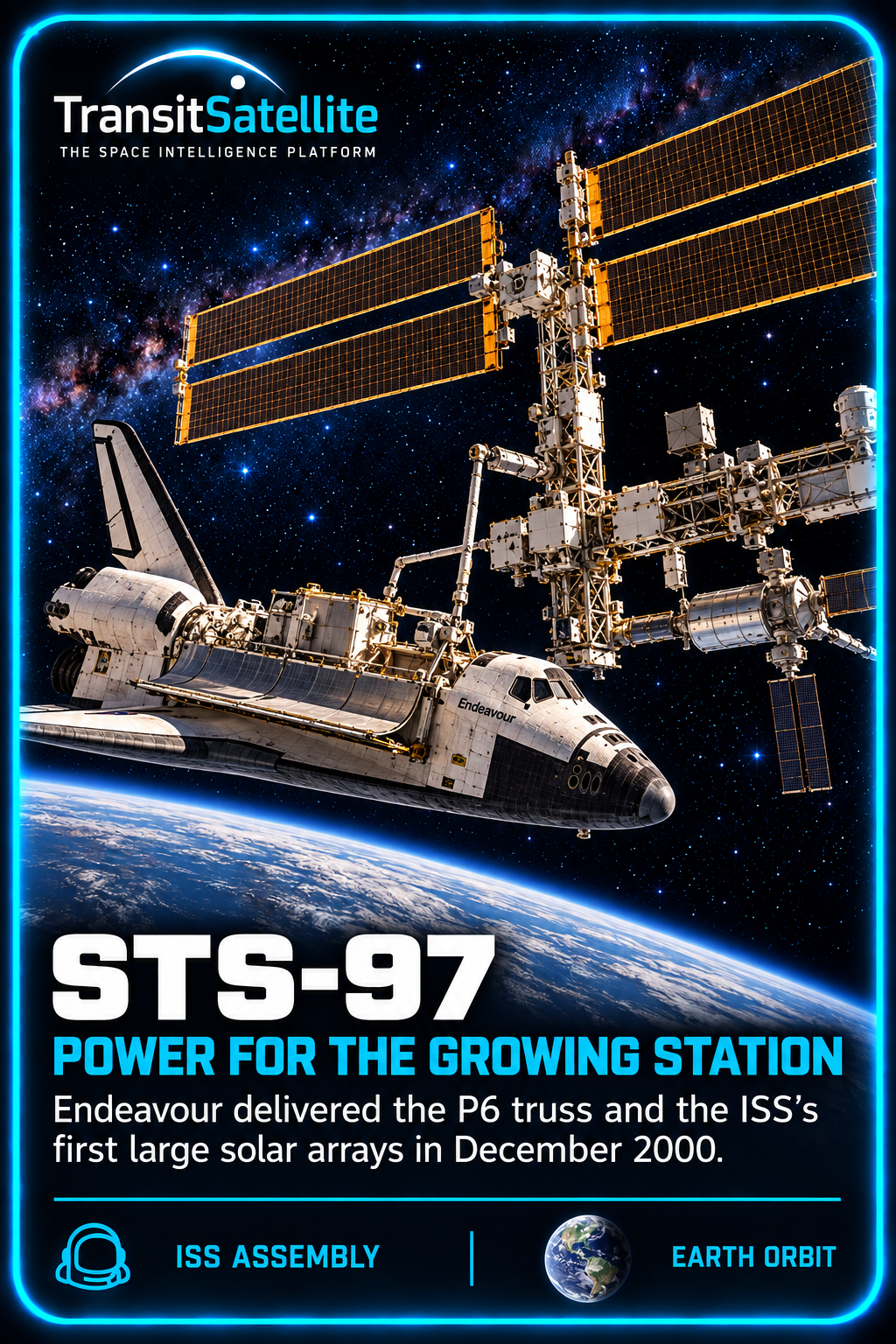
STS-97 carried the P6 Integrated Truss Segment and its solar arrays to the ISS, dramatically increasing the electrical power available to the growing orbital laboratory.
Destiny Laboratory: A Permanent U.S. Science Facility in Orbit
STS-98
Missions
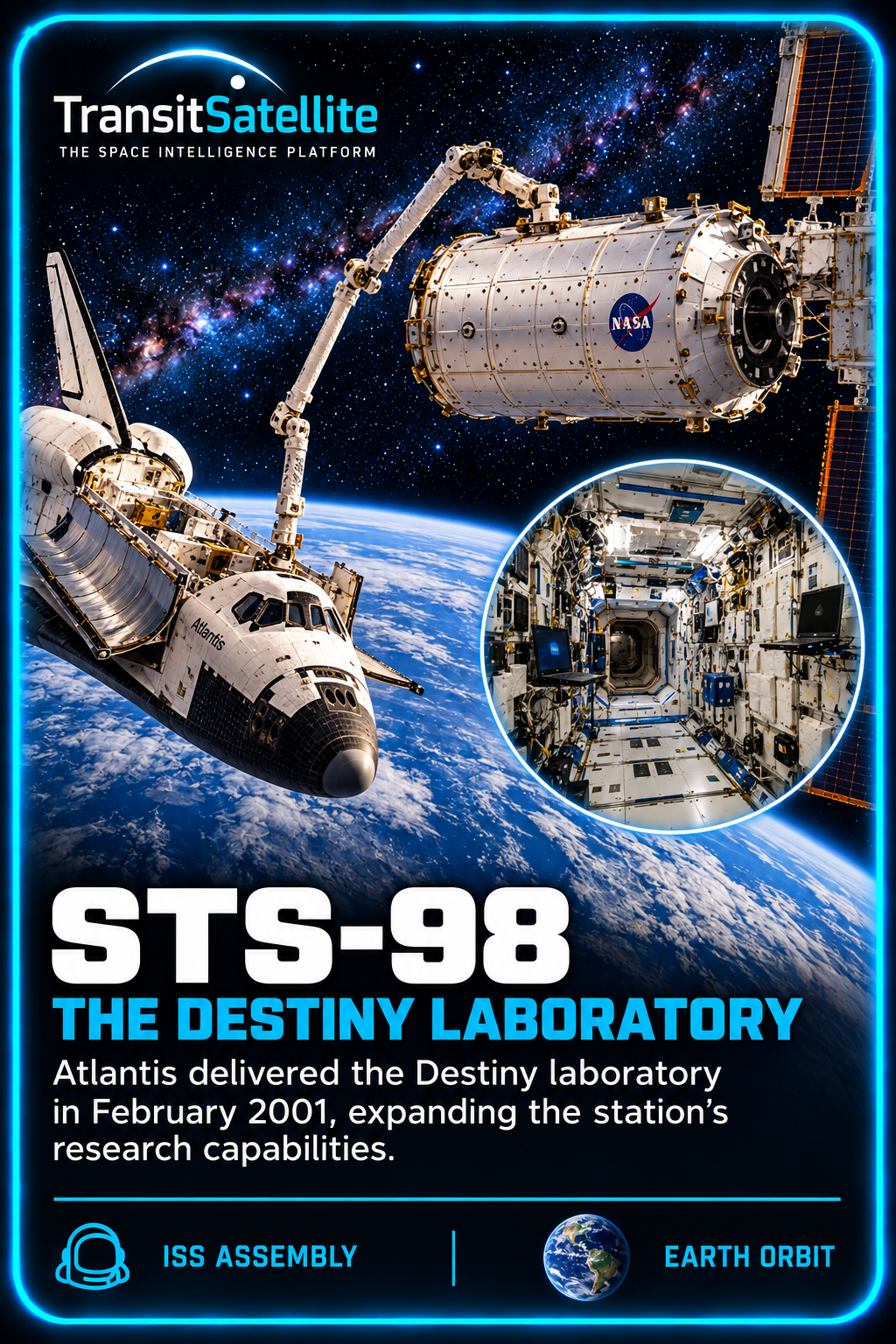
STS-98 delivered and installed the Destiny U.S. Laboratory, giving the International Space Station a major pressurized research facility and a central element of the U.S. orbital segment.
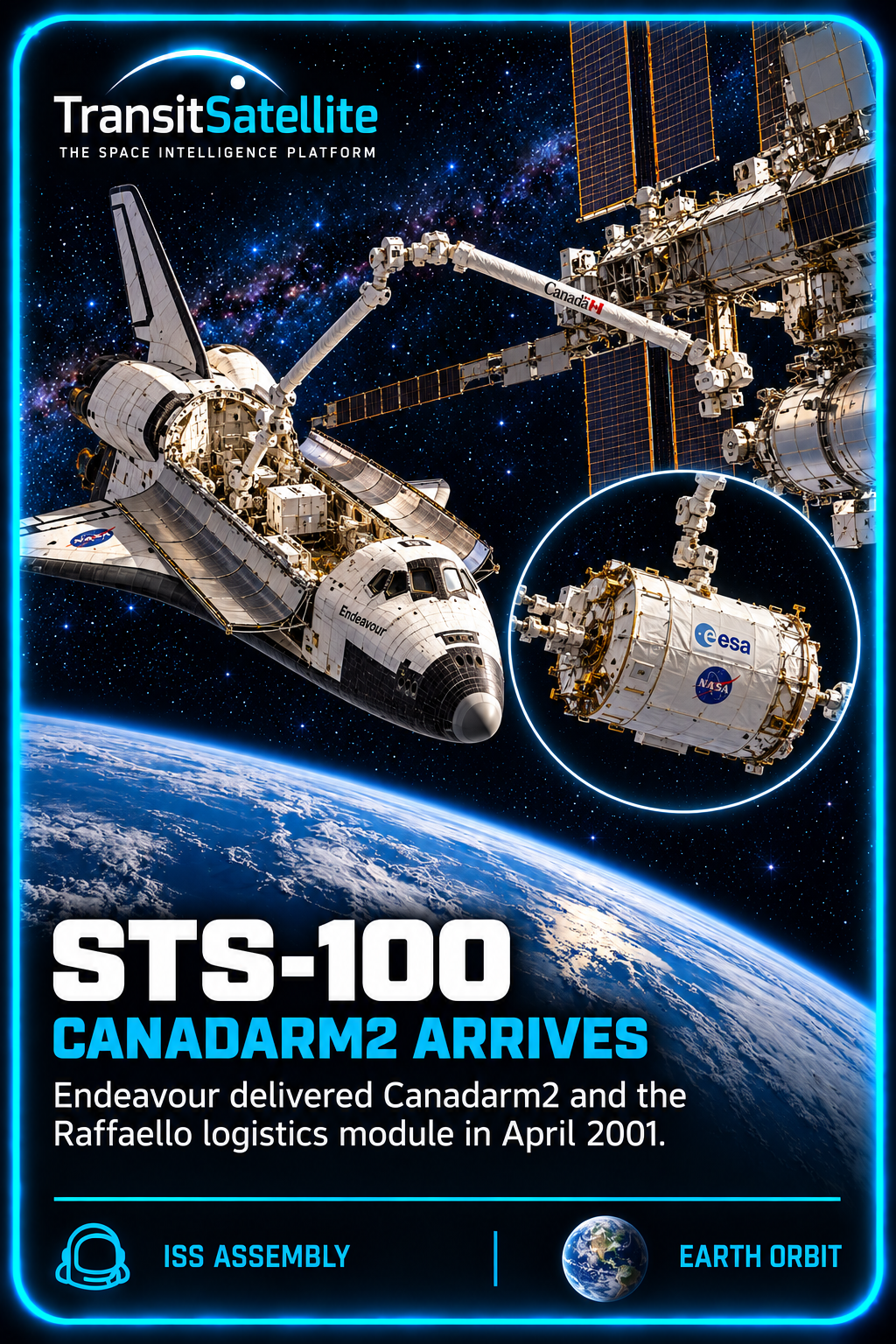
STS-100 delivered Canadarm2, the station's large mobile robotic arm, and demonstrated the complex robotic handoffs needed to assemble and maintain the ISS.
Quest Joint Airlock and Independent ISS Spacewalk Capability
STS-104
Missions
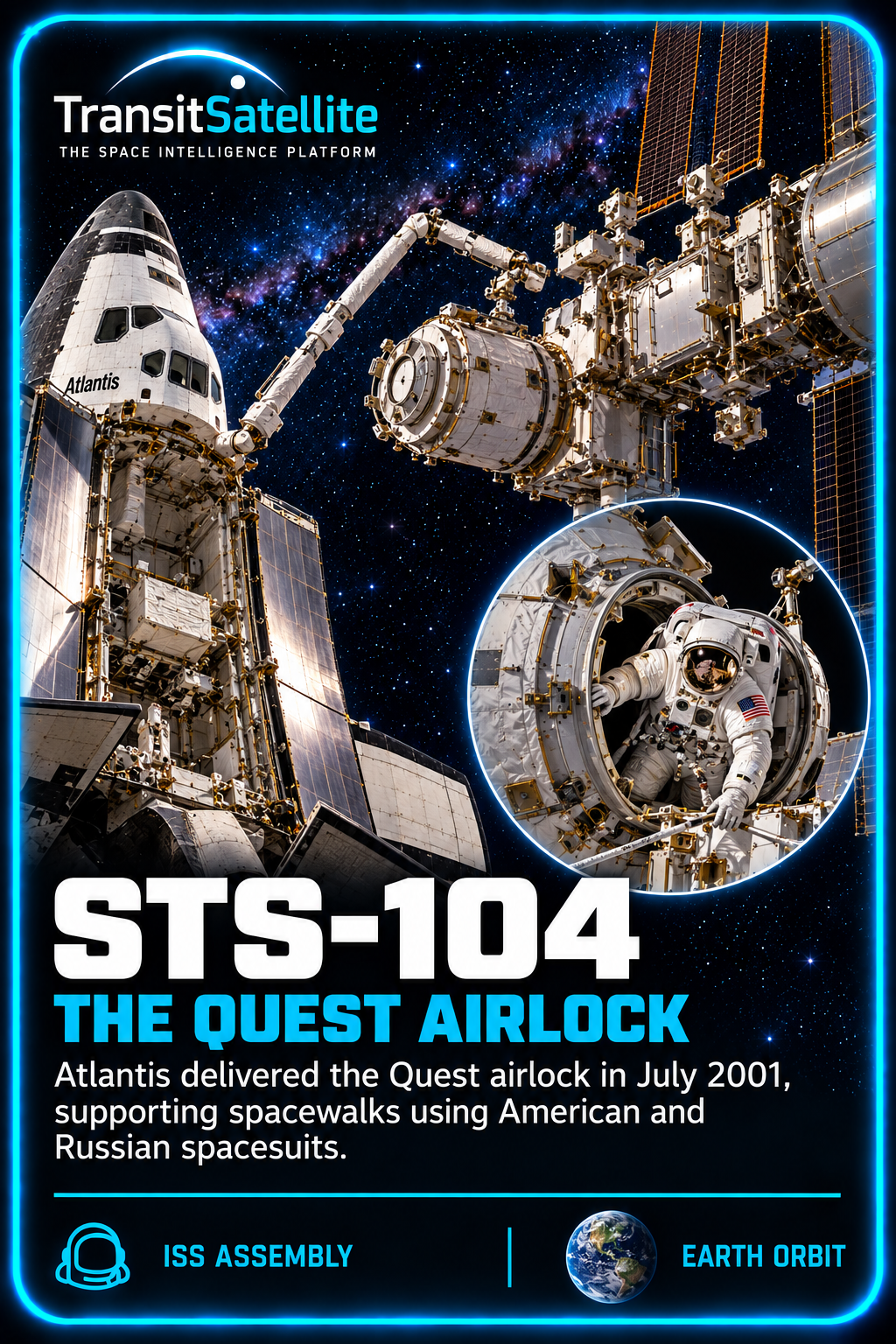
STS-104 delivered and installed the Quest Joint Airlock, giving the station a dedicated U.S.-segment facility for spacewalk preparation and extravehicular activity.
S0 Truss and the Beginning of the Station's Main Backbone
STS-110
Missions
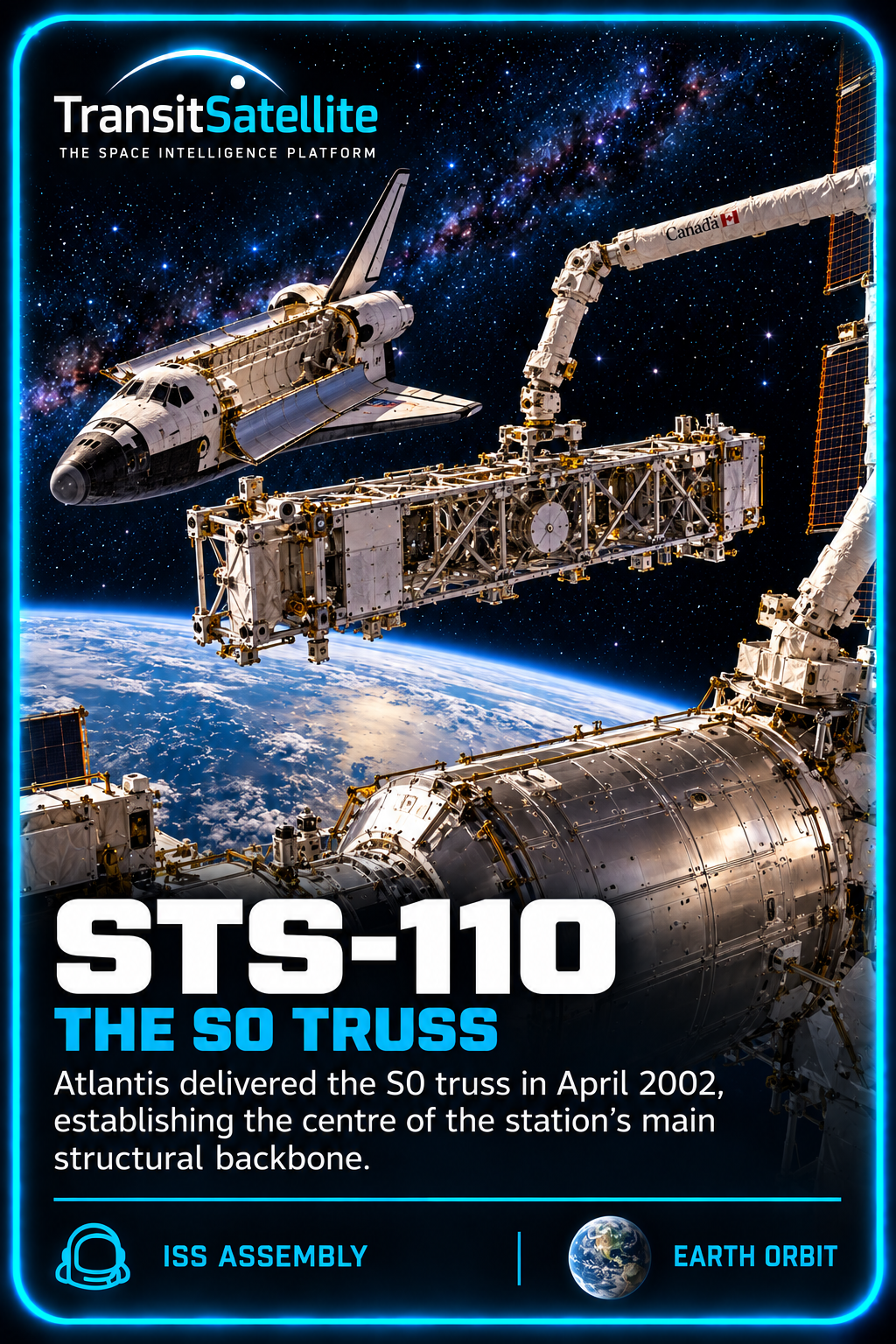
STS-110 installed the S0 truss above Destiny and prepared the Mobile Transporter, establishing the central structural backbone for the ISS's long truss system.
S1 Truss, Thermal Control and the Starboard Backbone
STS-112
Missions
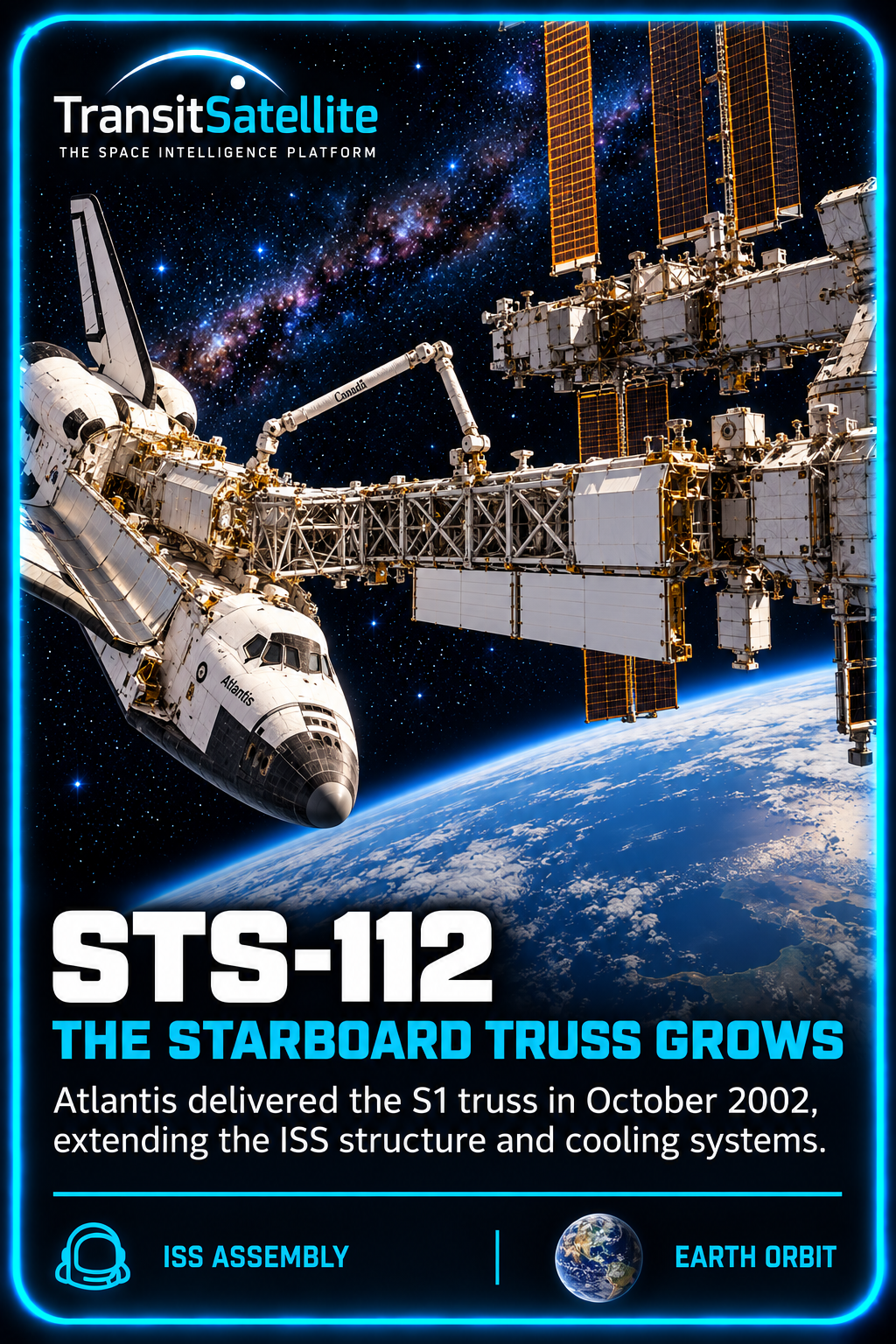
STS-112 delivered the S1 truss, expanding the station's starboard structure and adding thermal-control equipment plus a Crew and Equipment Translation Aid cart.
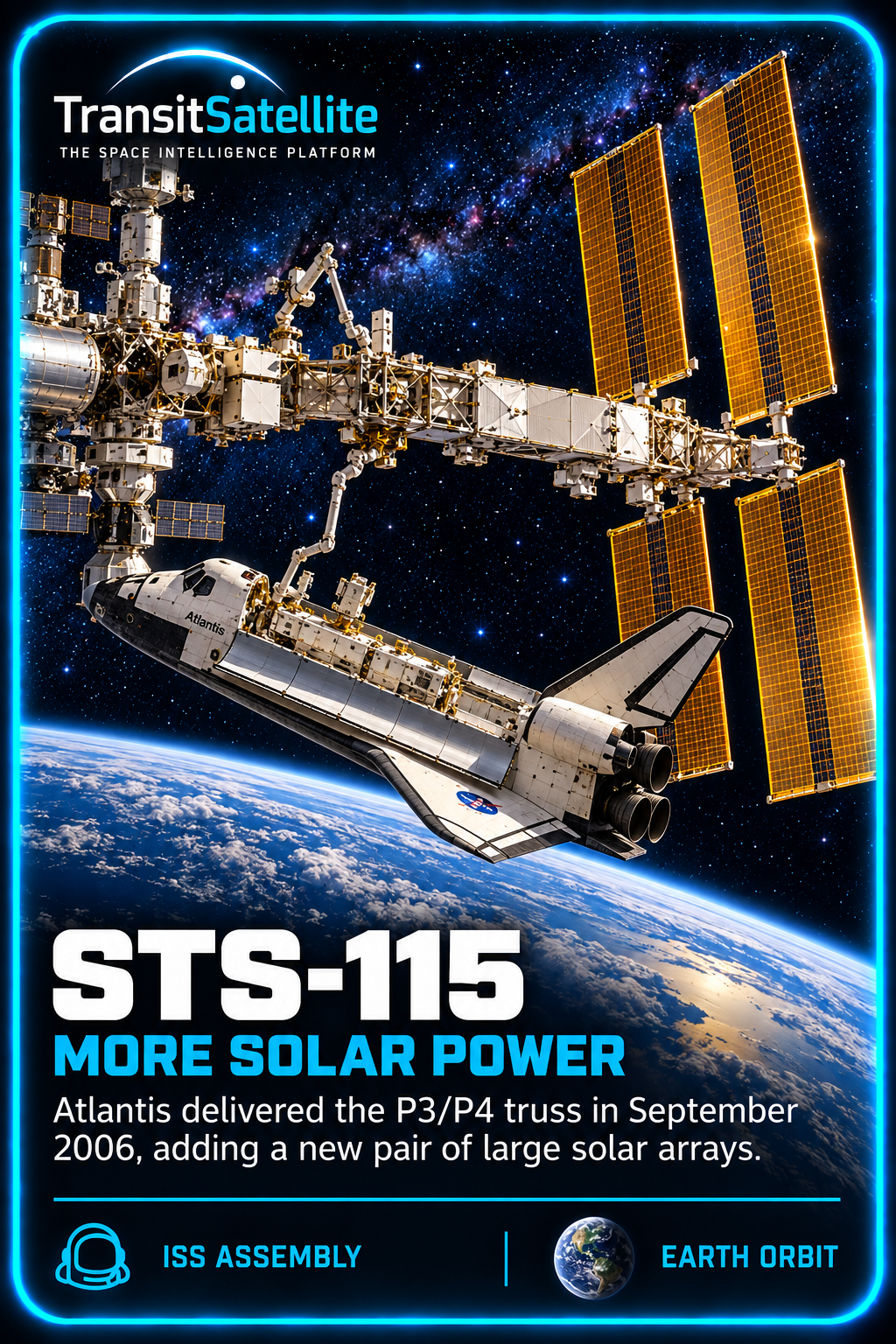
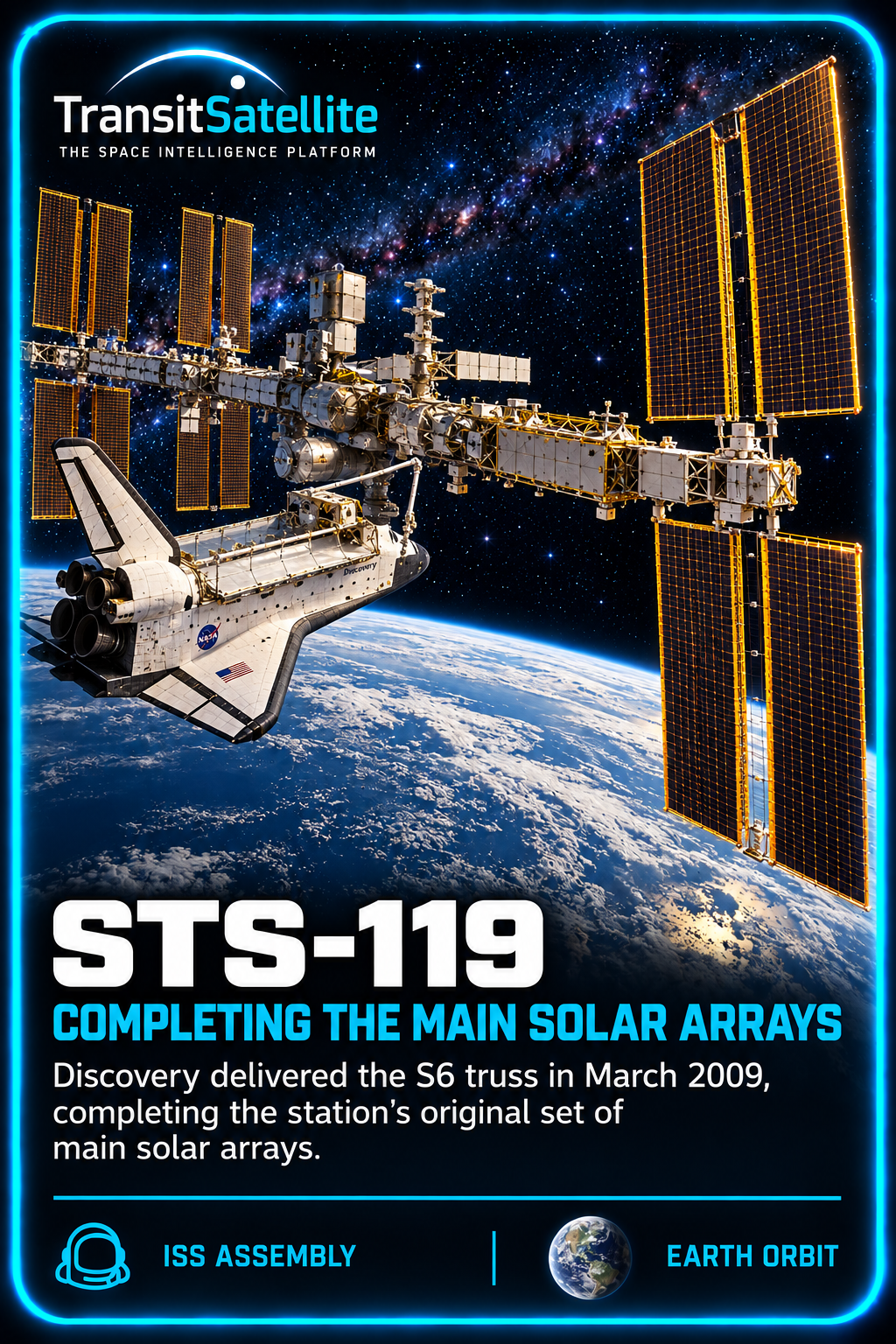
STS-115 resumed major ISS construction after a multi-year hiatus, installing the P3/P4 truss, a Solar Alpha Rotary Joint, and another large photovoltaic array set.
Harmony Node, P6 Relocation and a Difficult Solar-Array Repair
STS-120
Missions
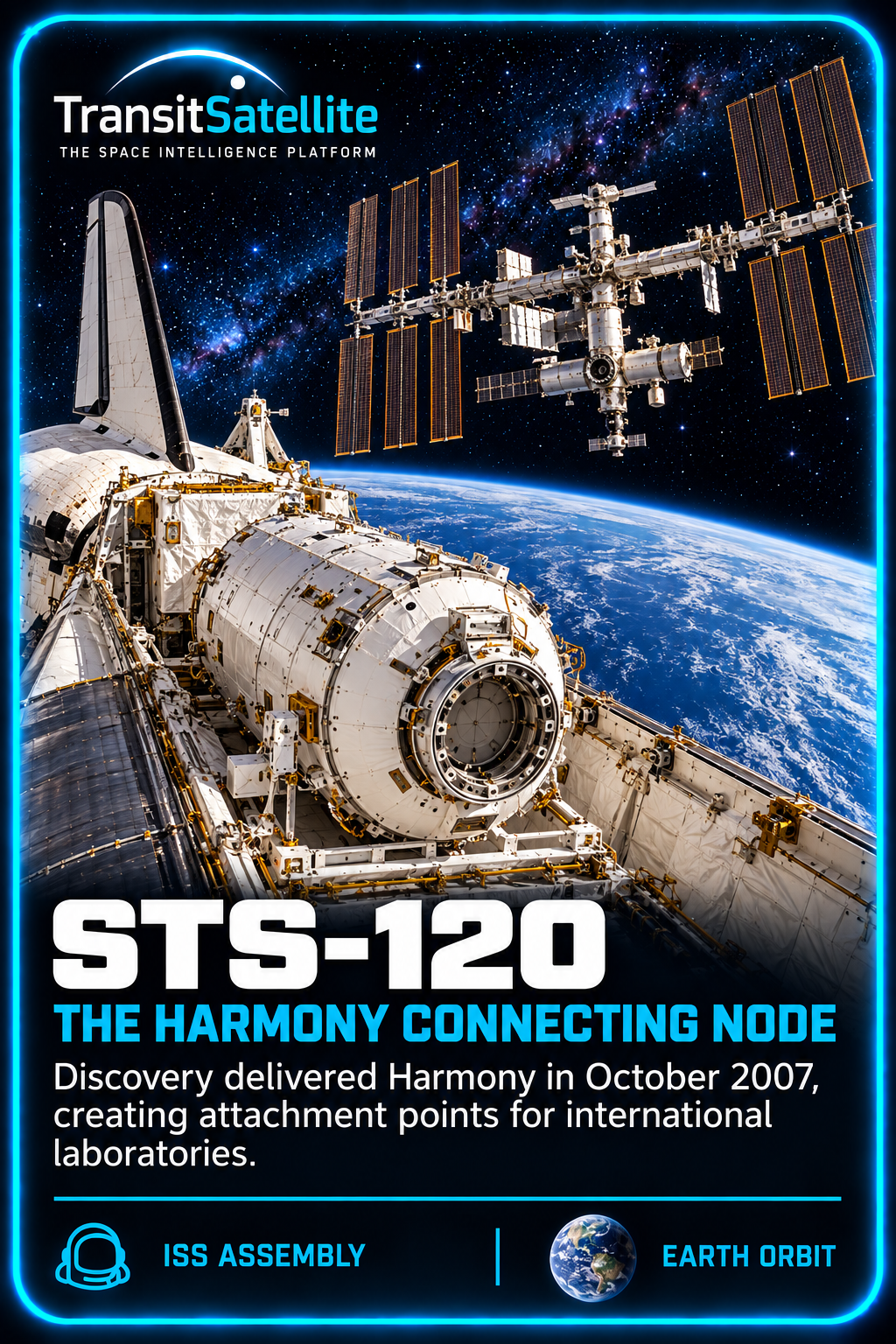
STS-120 delivered Harmony, temporarily attached the new node to the station, relocated the P6 truss to its permanent port-side position, and repaired a torn solar array during deployment.
Columbus: Europe's Permanent Laboratory Joins the ISS
STS-122
Missions
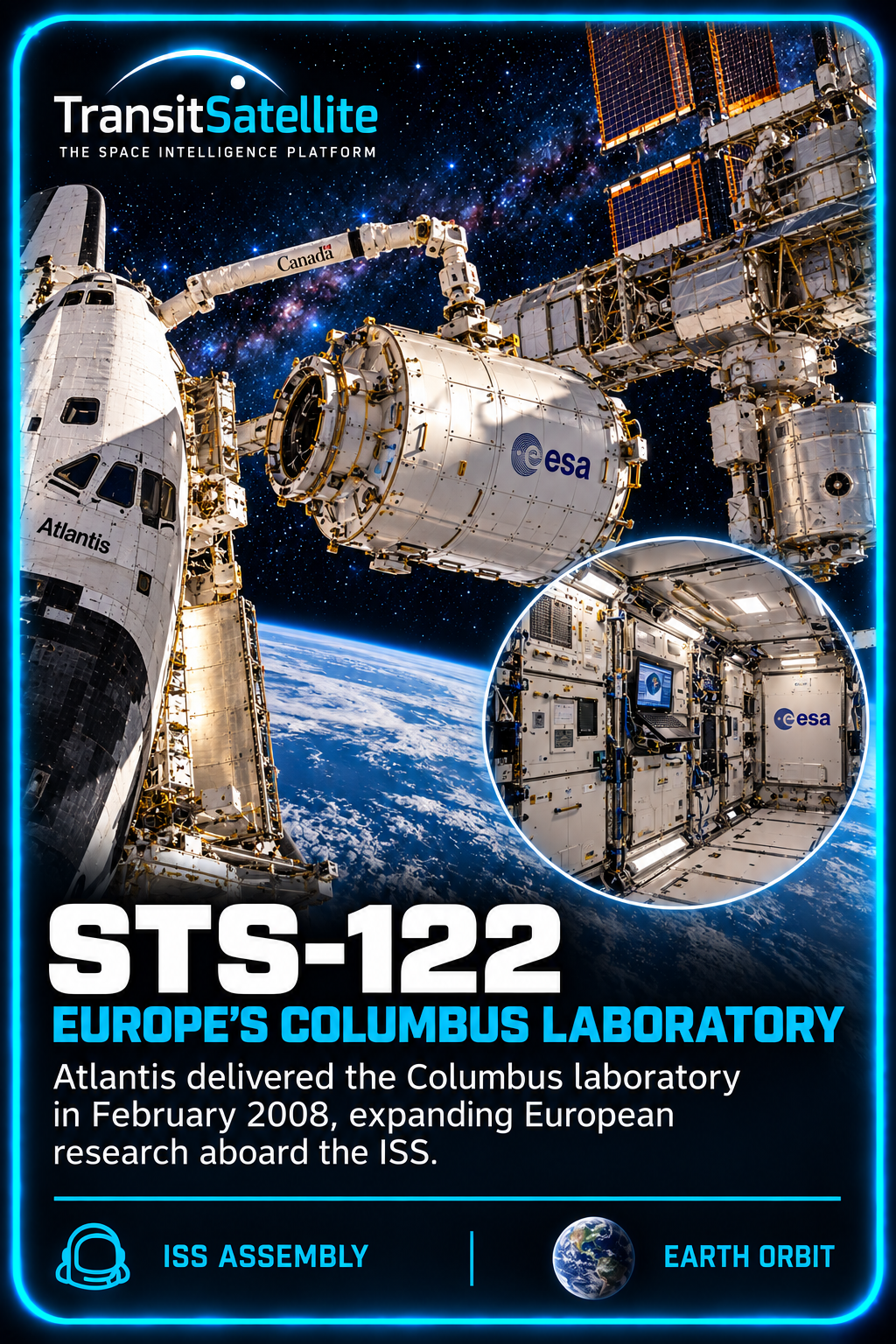
STS-122 delivered the European Space Agency's Columbus laboratory and installed it on Harmony, creating a permanent European research facility aboard the station.
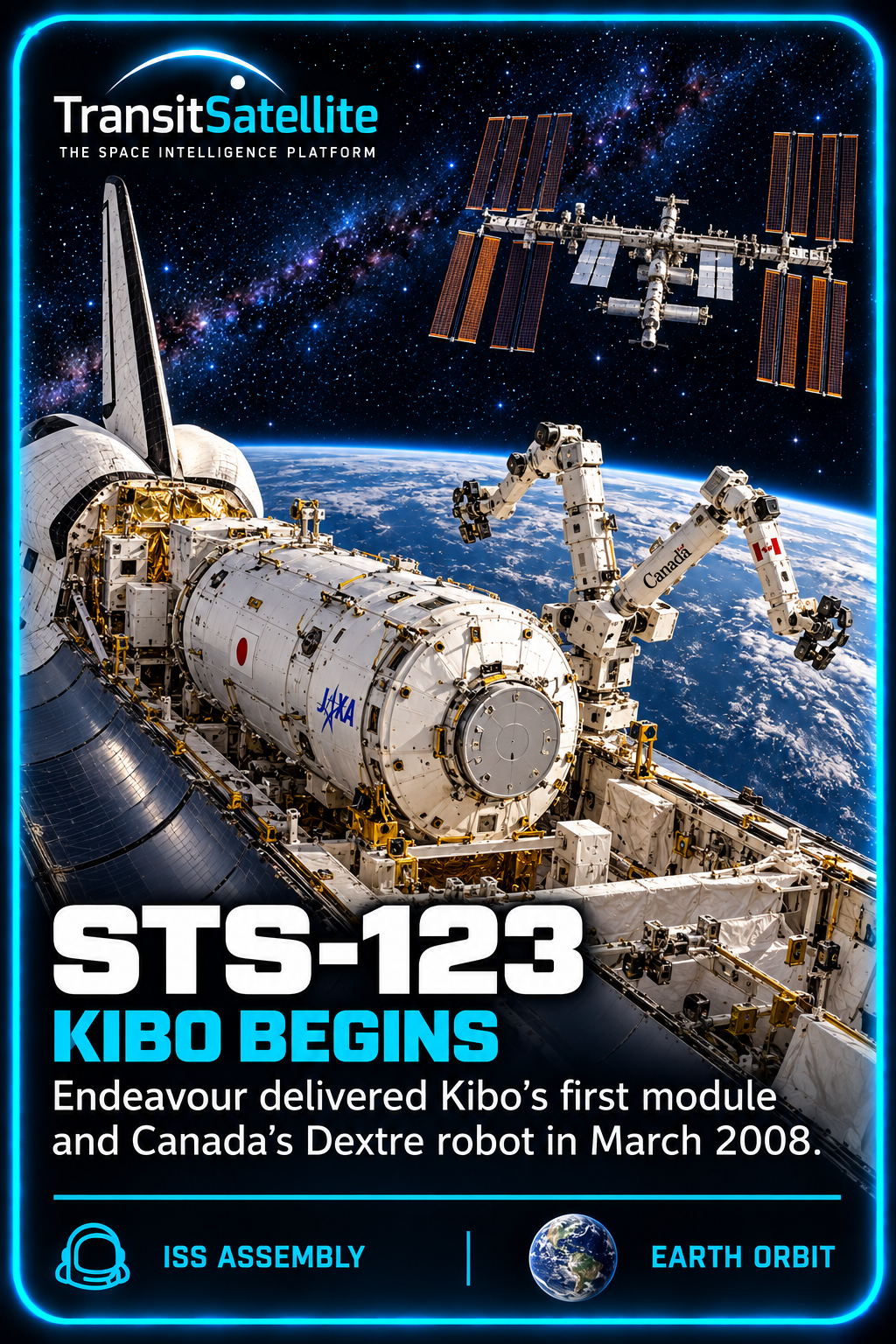
STS-123 delivered the first pressurized Kibo element and Canada's Dextre robotic manipulator, beginning Japan's multi-flight laboratory assembly sequence.
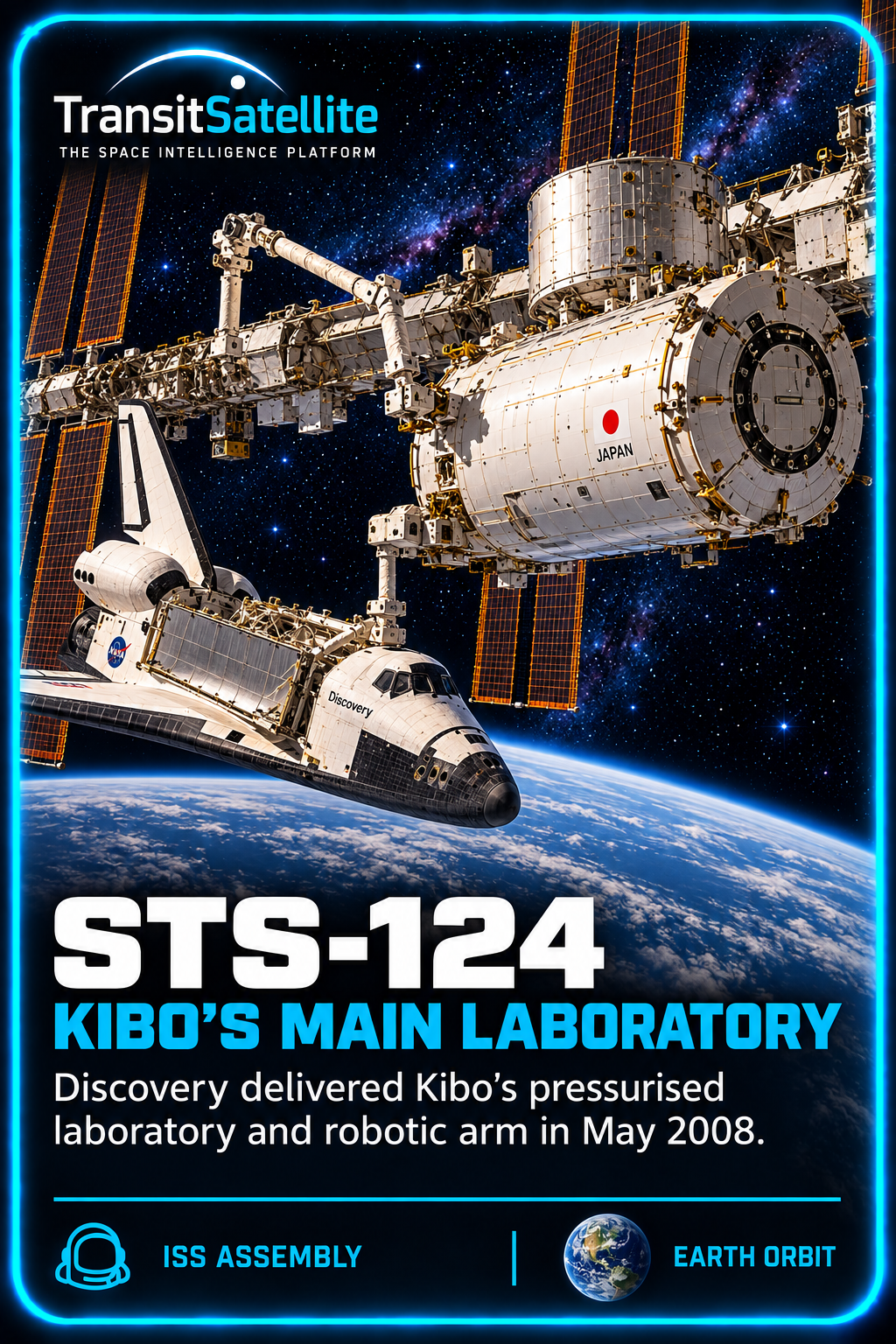
STS-124 delivered Kibo's large Pressurized Module and Japanese Remote Manipulator System, creating the main laboratory volume of the Japanese Experiment Module.
Kibo Exposed Facility and Completion of Japan's Laboratory Complex
STS-127
Missions
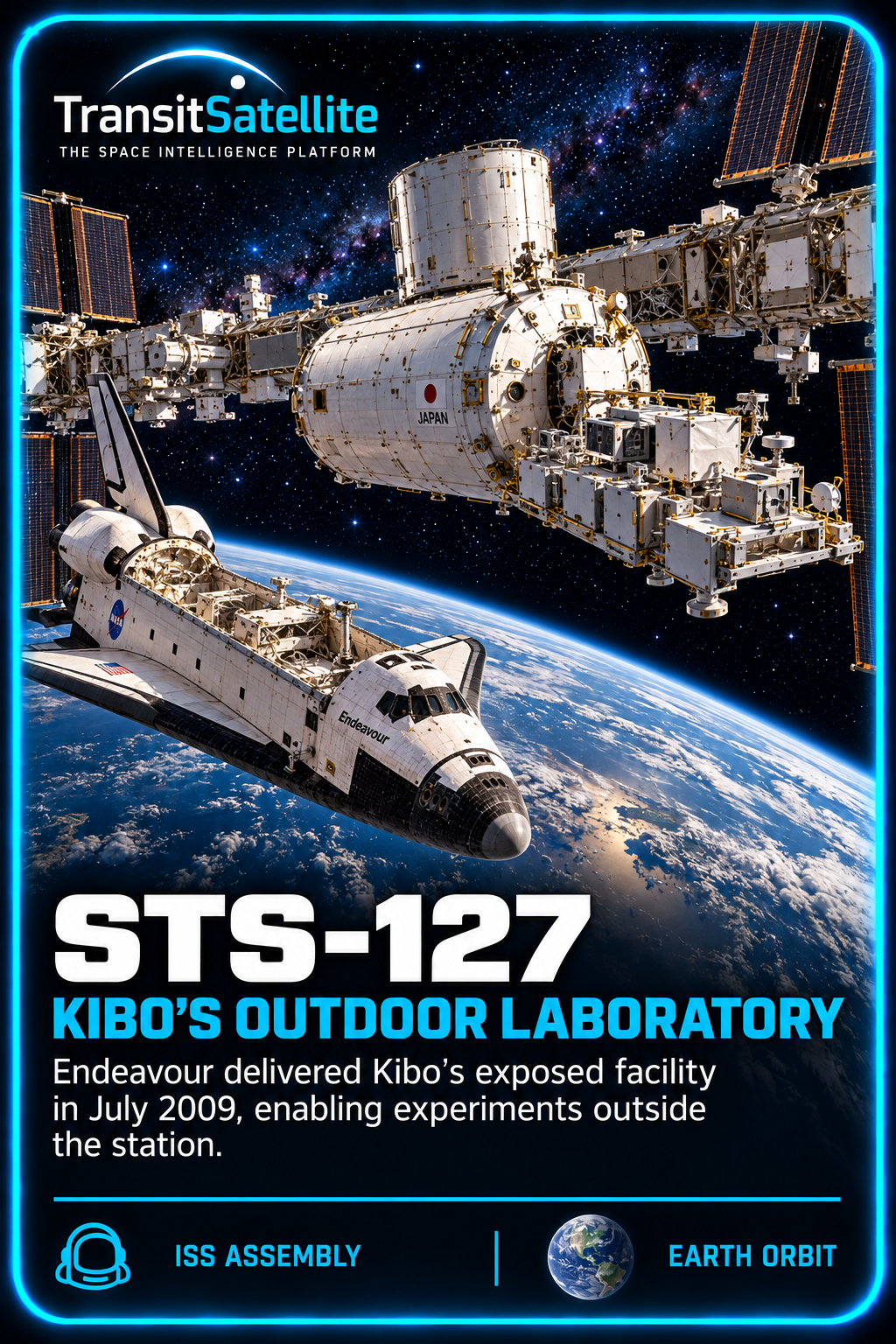
STS-127 delivered Kibo's Exposed Facility and exposed logistics section, extending Japanese research outside the station and completing the main Kibo assembly sequence.
Tranquility and Cupola Complete a Major U.S. Assembly Phase
STS-130
Missions
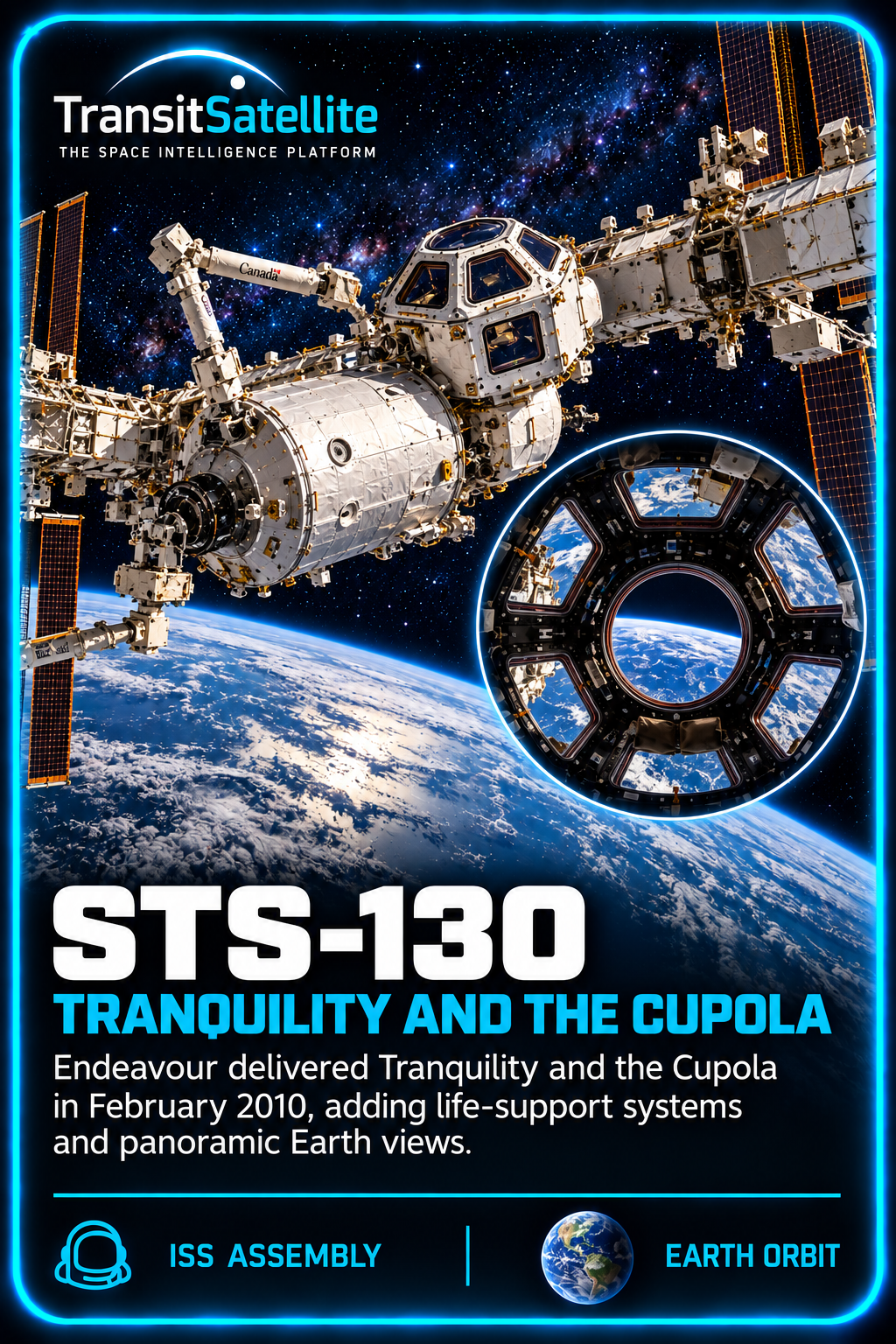
STS-130 delivered Tranquility and the seven-window Cupola, adding life-support volume, exercise and utility space, and the station's iconic panoramic robotics workstation.
Leonardo Becomes Permanent on Discovery's Final Flight
STS-133
Missions
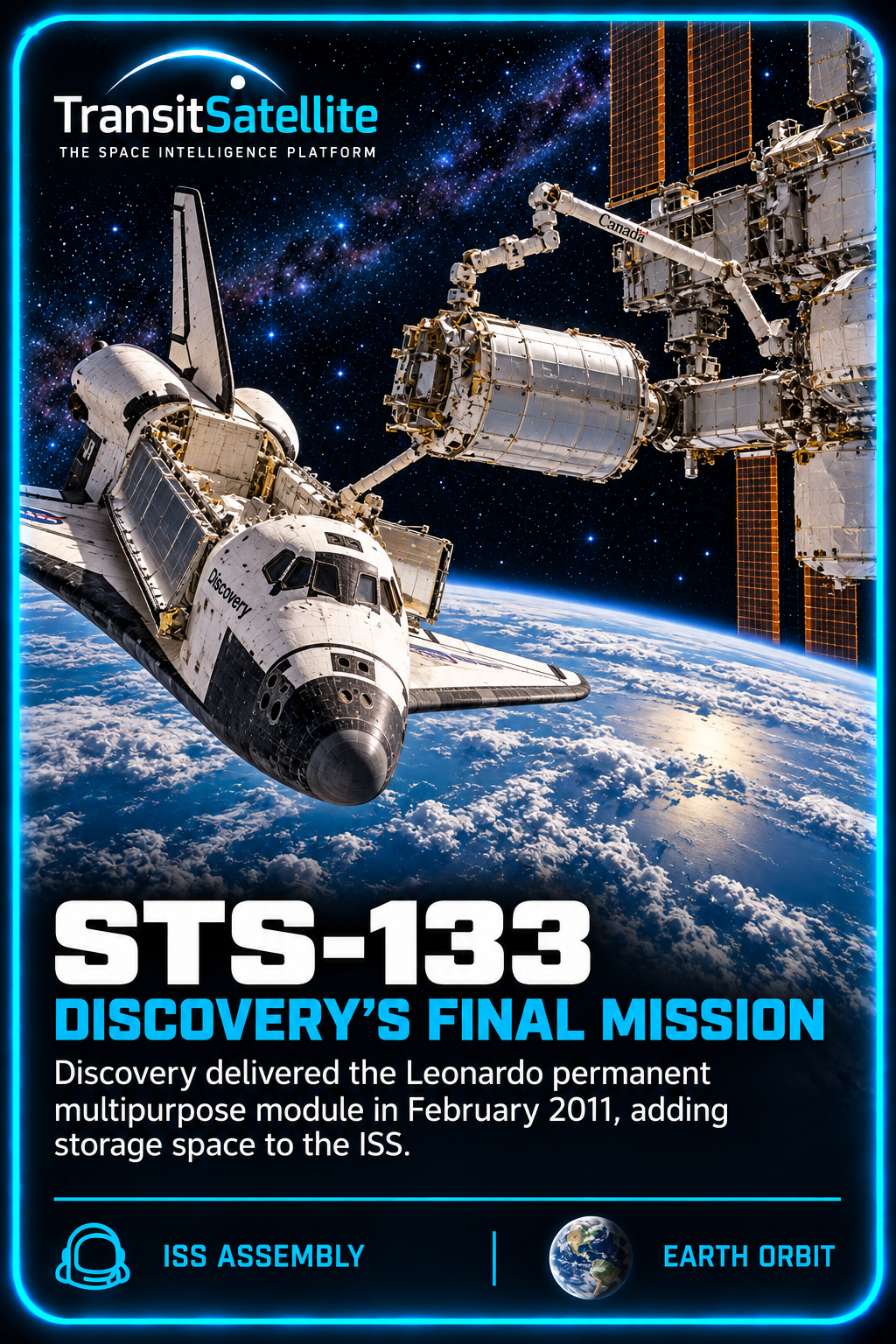
STS-133 carried the Permanent Multipurpose Module Leonardo, supplies, Robonaut 2, and an external logistics carrier to the ISS on Space Shuttle Discovery's final mission.
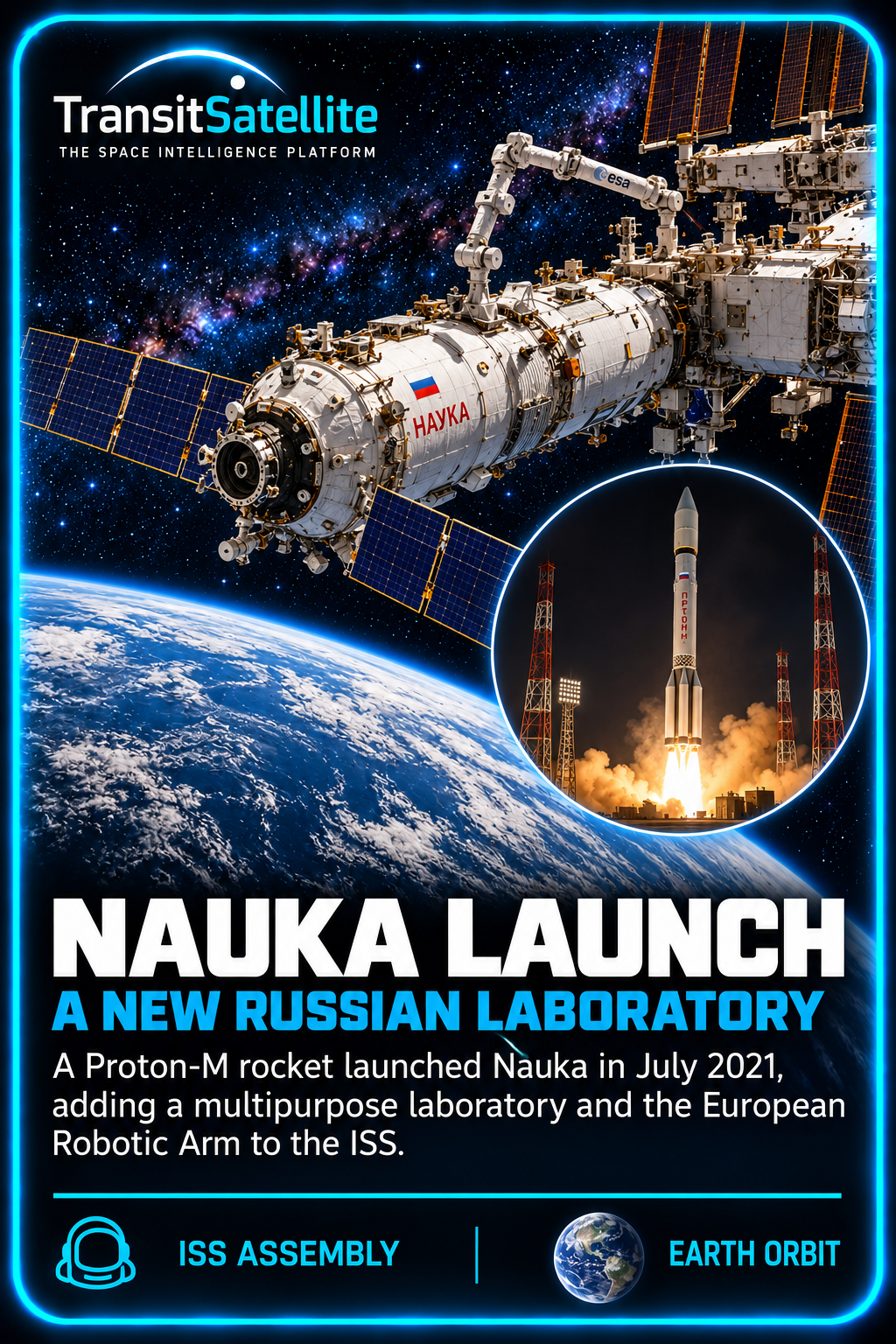
Nauka launched from Baikonur on July 21, 2021, completed an eight-day rendezvous, and docked to the Russian segment on July 29 to add laboratory, docking, airlock, and crew-support capability.
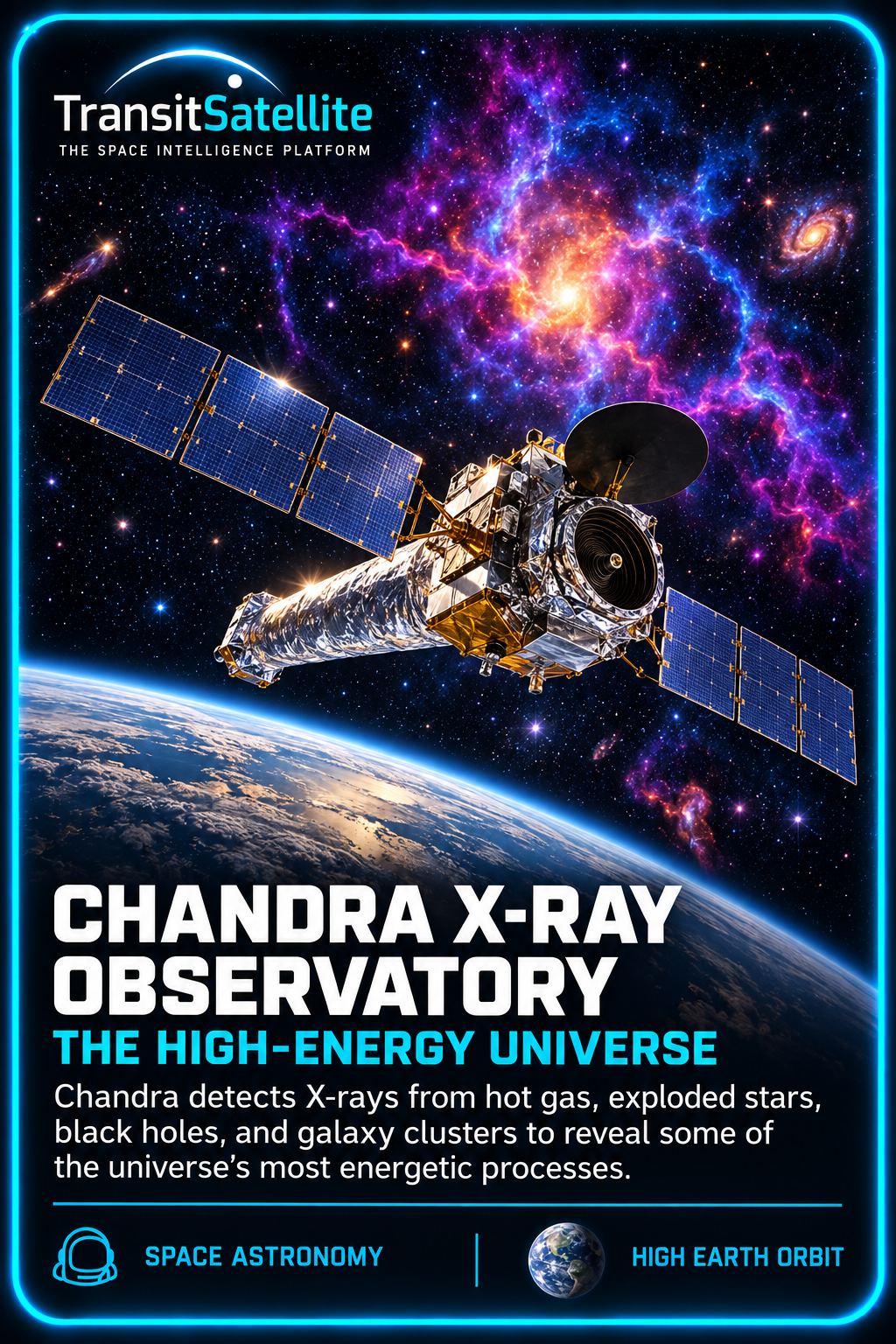
Chandra observes X-rays from black holes, supernova remnants, hot gas, neutron stars, and galaxy clusters, revealing energetic processes that are difficult or impossible to study in visible light.
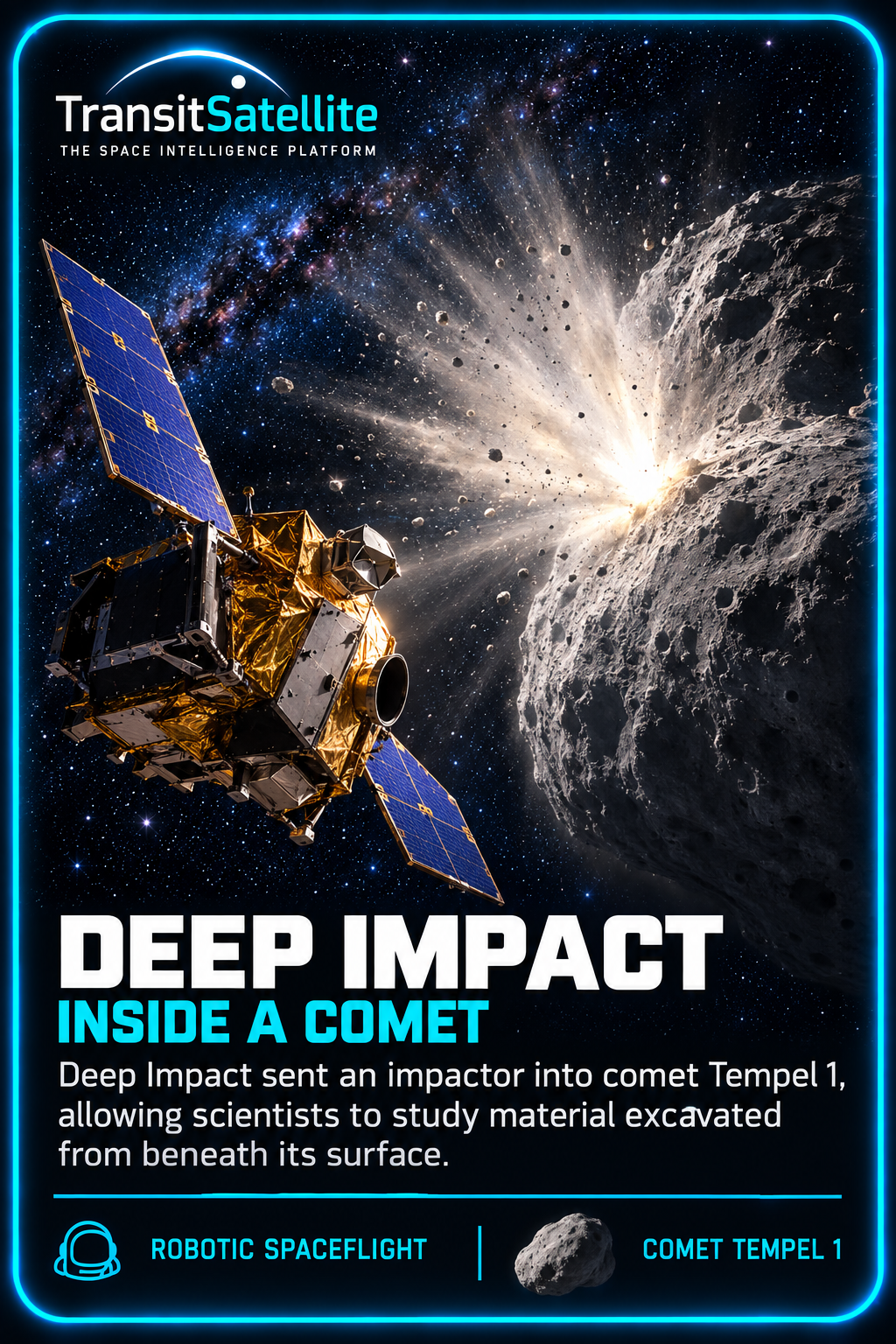
Deep Impact sent an impactor into comet Tempel 1 in 2005 so the flyby spacecraft could observe freshly exposed material and investigate the comet's interior composition and structure.
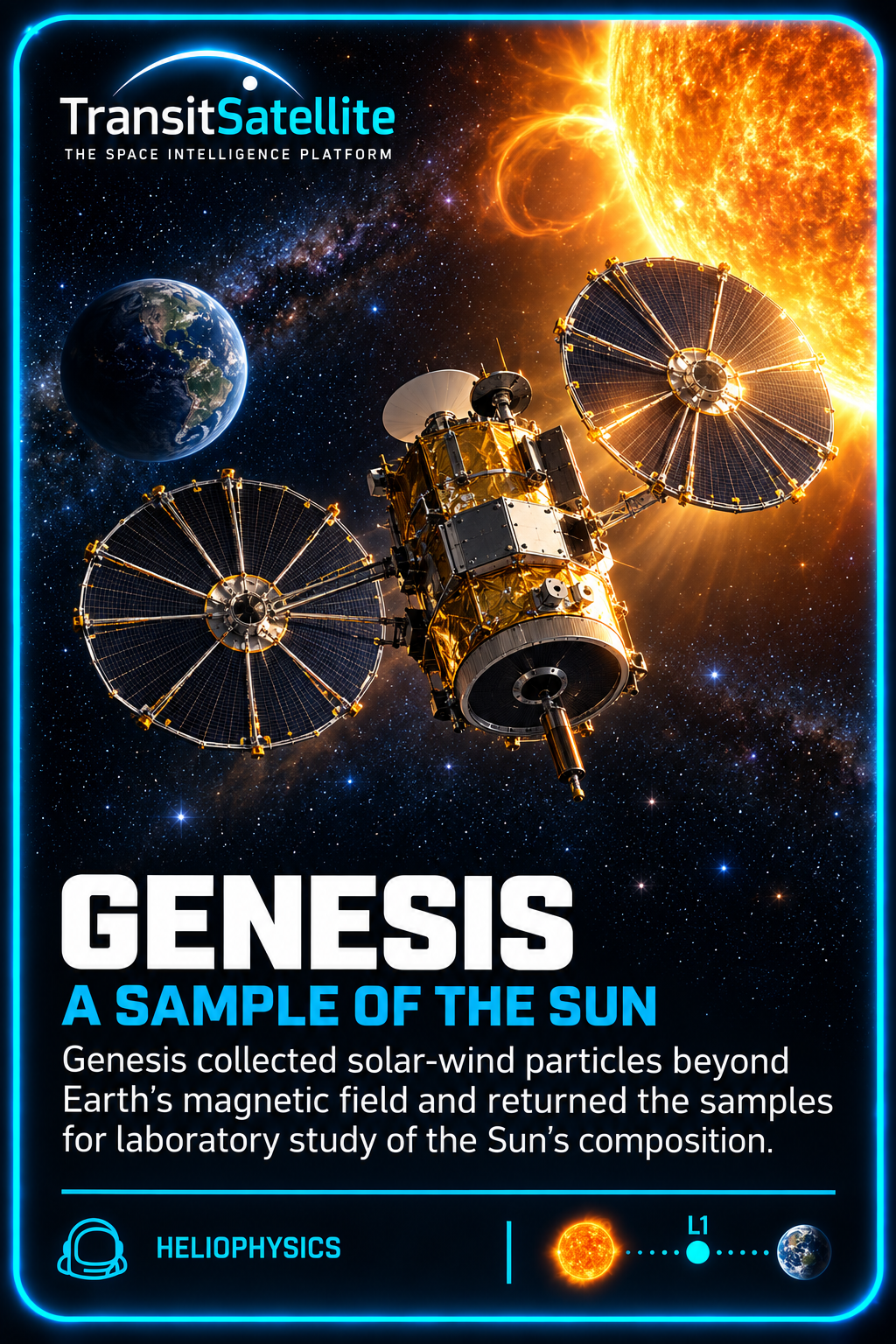
Genesis collected solar-wind particles near the Sun-Earth L1 region and returned them to Earth for laboratory analysis, preserving a direct sample of material flowing from the Sun.
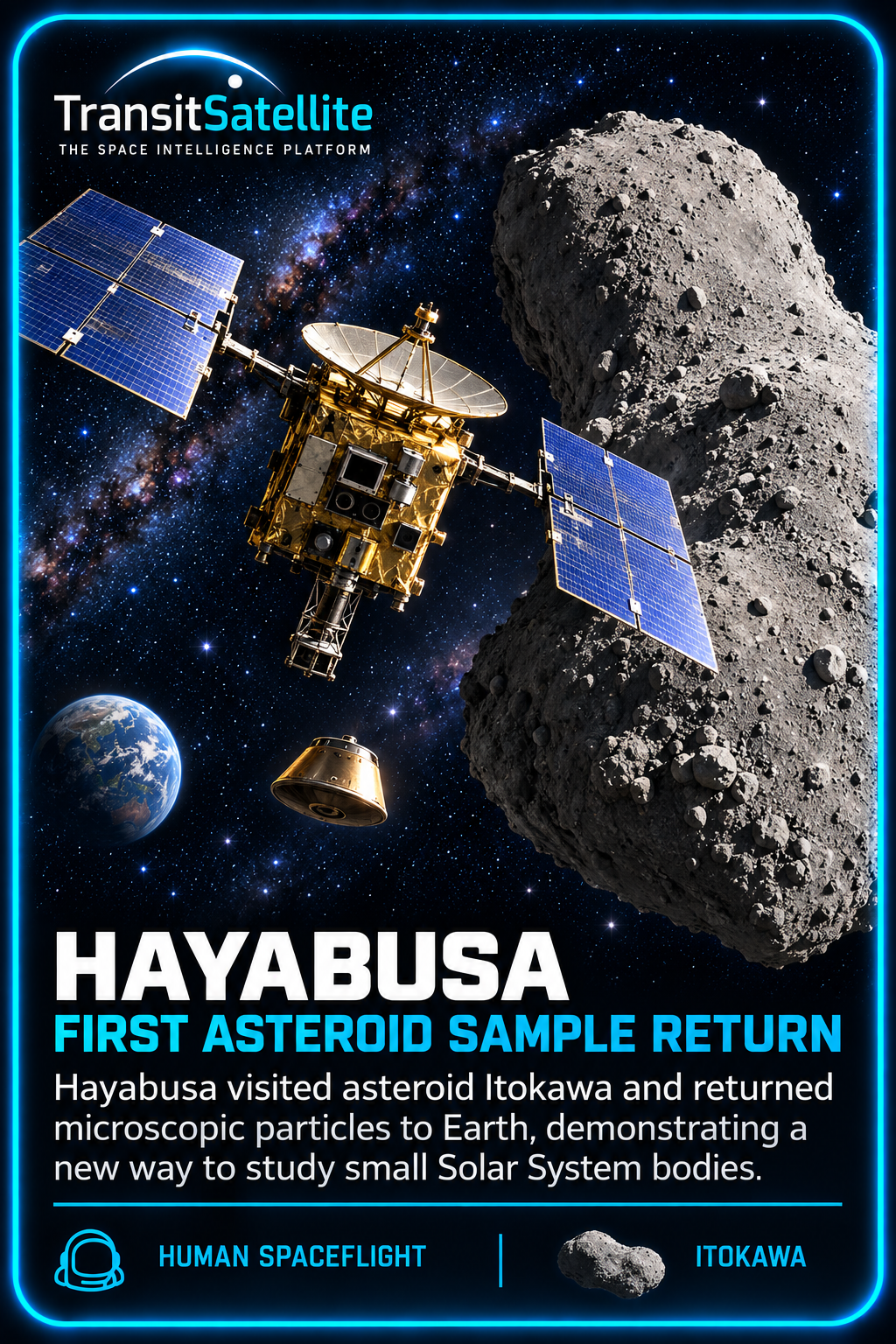
JAXA's Hayabusa visited asteroid Itokawa and returned microscopic asteroid particles to Earth in 2010, demonstrating technologies that shaped later sample-return missions.
Building and Operating a Permanent Laboratory in Orbit
International Space Station
Missions
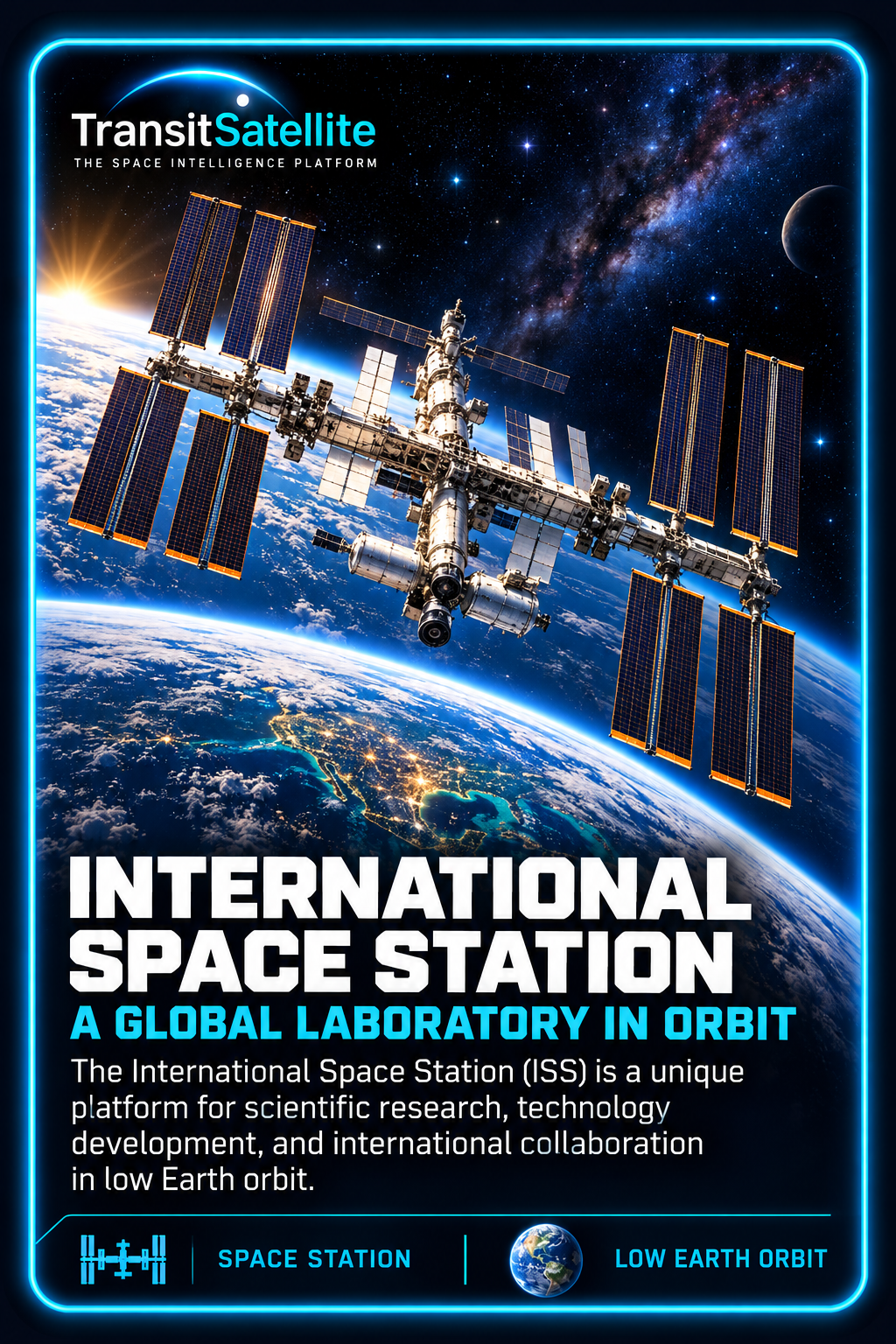
The International Space Station is a continuously inhabited orbital laboratory assembled through an international campaign of module launches, Space Shuttle flights, robotic operations, and long-duration expeditions.
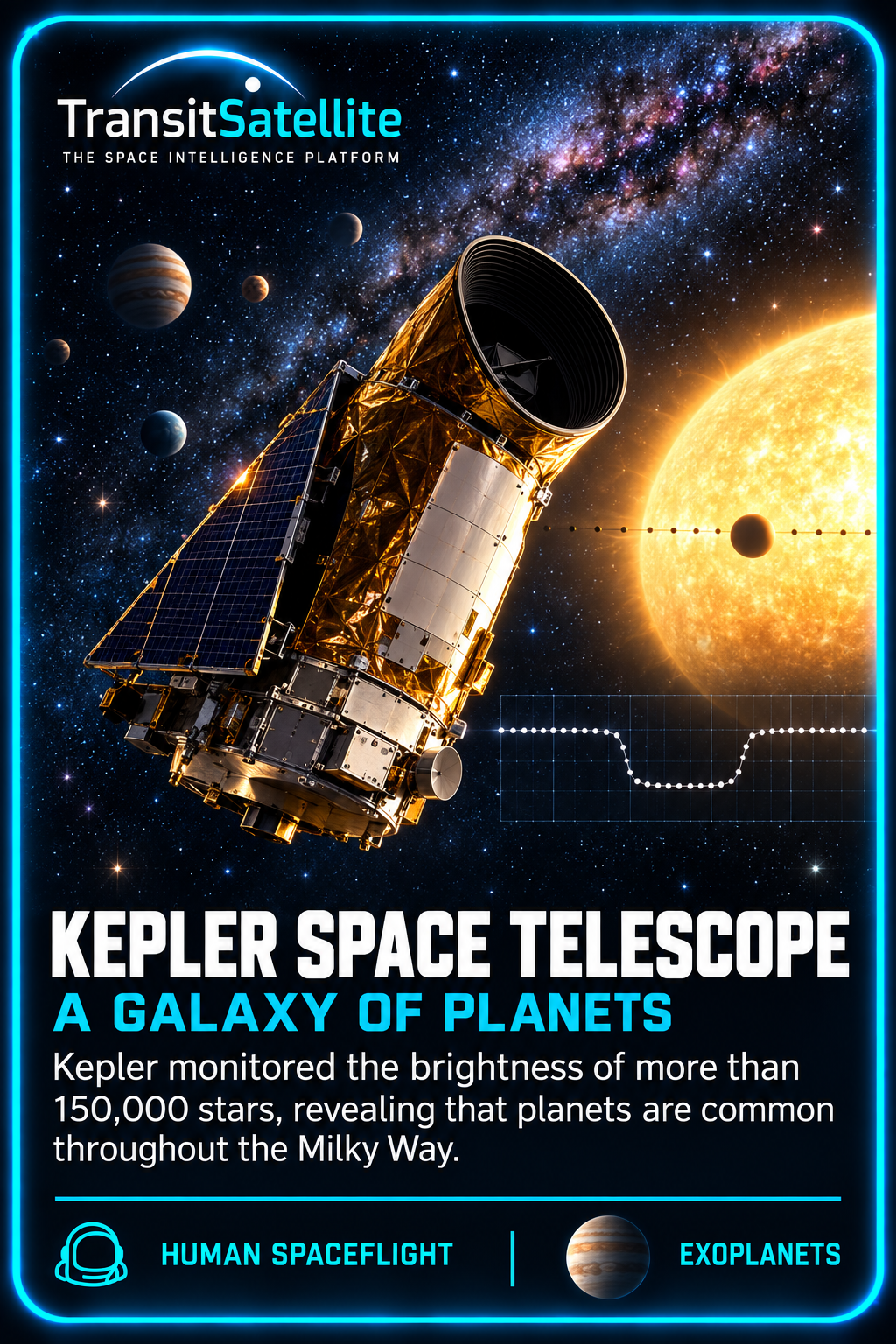
Kepler monitored the brightness of large numbers of stars to detect planetary transits, transforming estimates of how common planets are across the Milky Way.
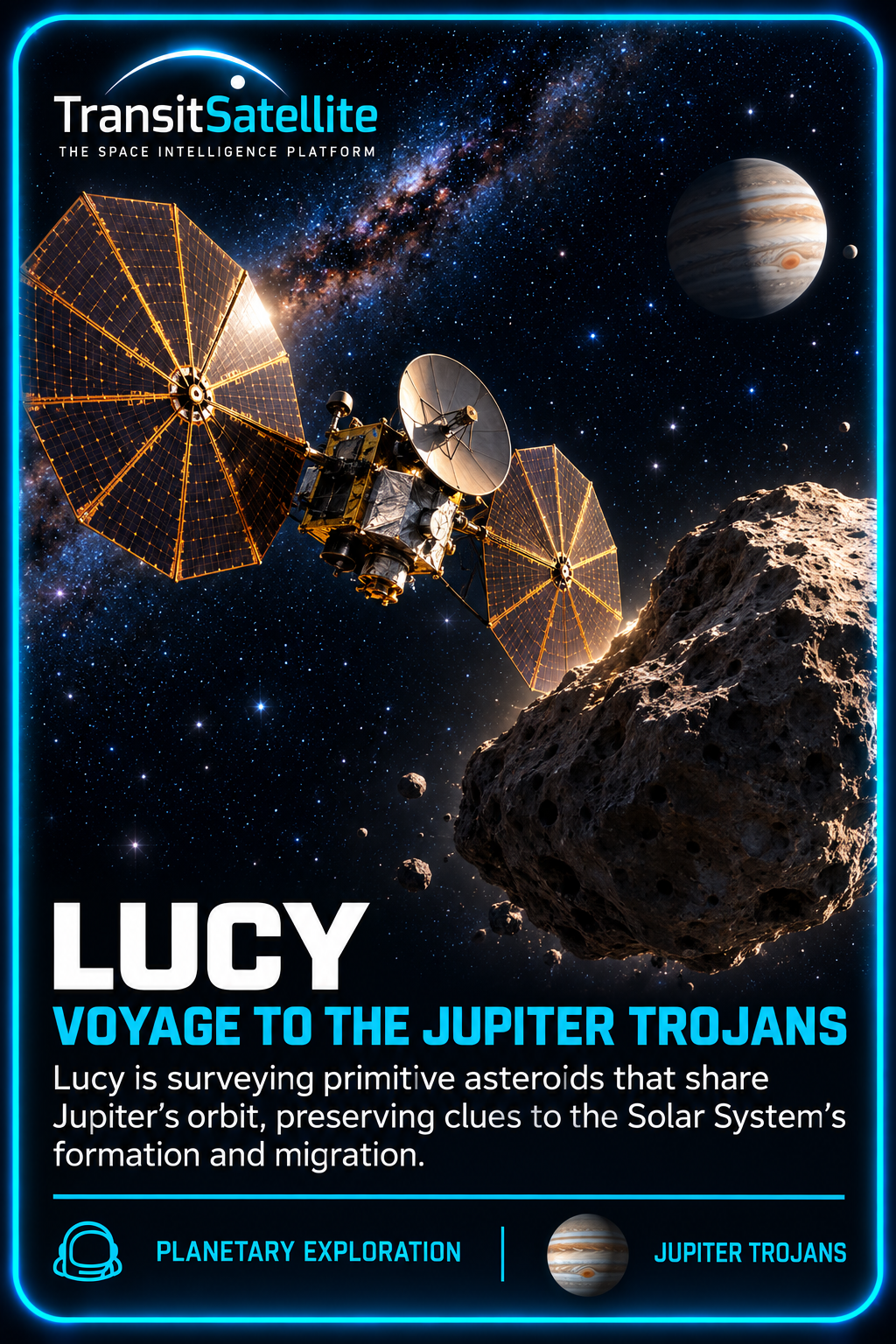
Lucy is the first mission dedicated to exploring Jupiter's Trojan asteroids, using a sequence of flybys to investigate primitive bodies that preserve clues to the Solar System's formation.
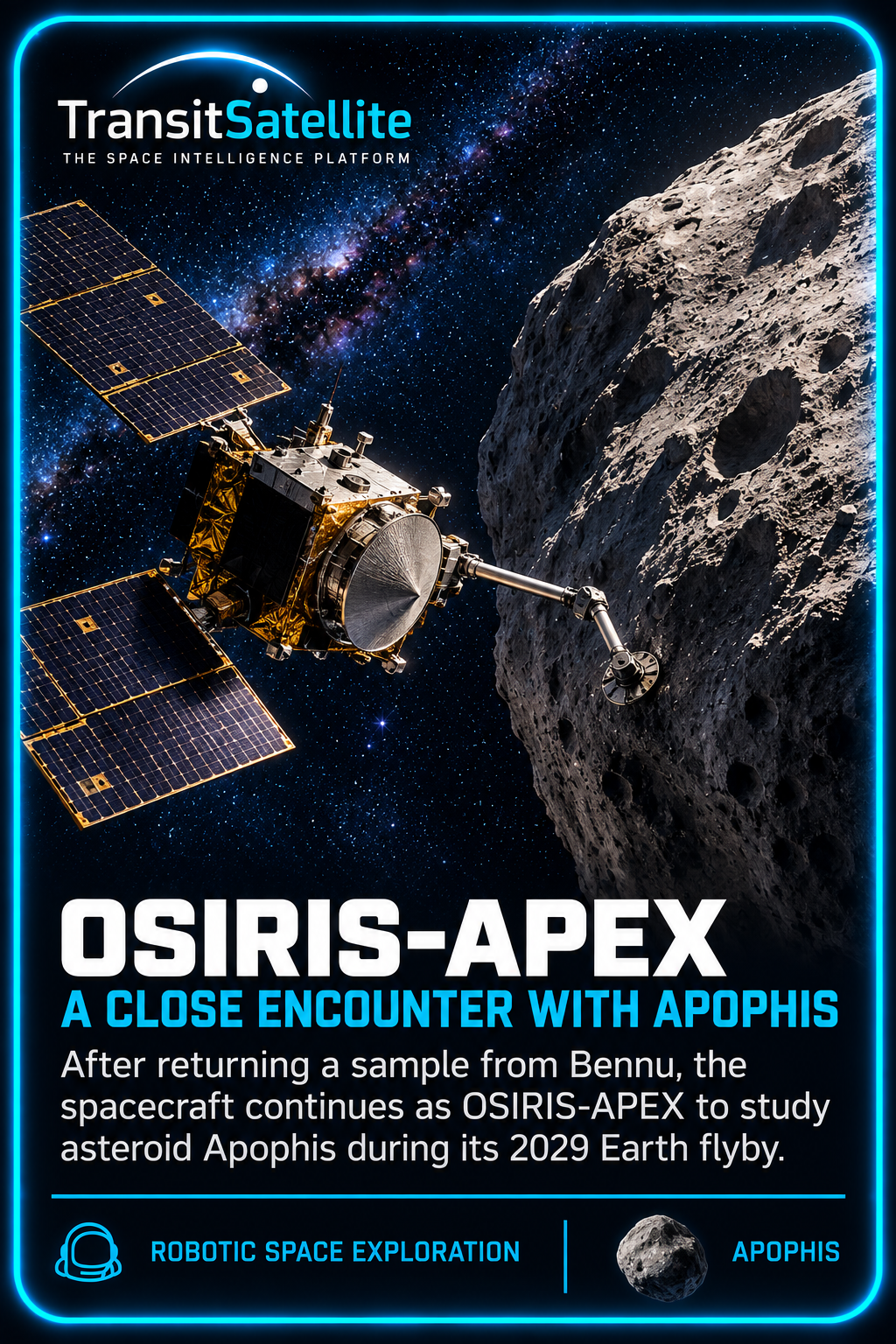
After returning a sample from Bennu, the OSIRIS-REx spacecraft continued as OSIRIS-APEX to study asteroid Apophis after its exceptionally close Earth encounter in 2029.
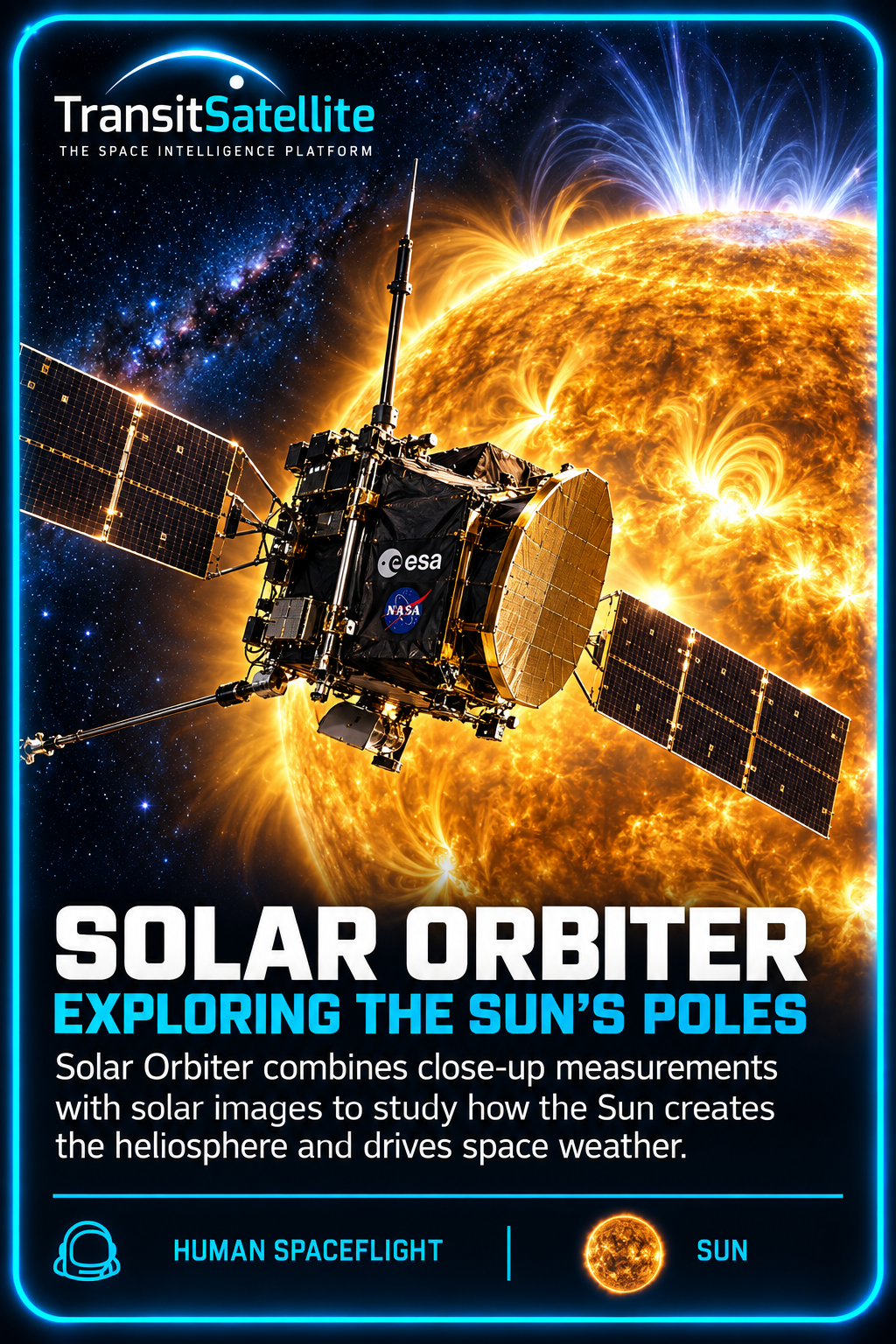
Solar Orbiter combines remote imaging and in-situ measurements to study the Sun, solar wind, heliosphere, and high-latitude regions, progressively viewing the Sun from outside the ecliptic plane.
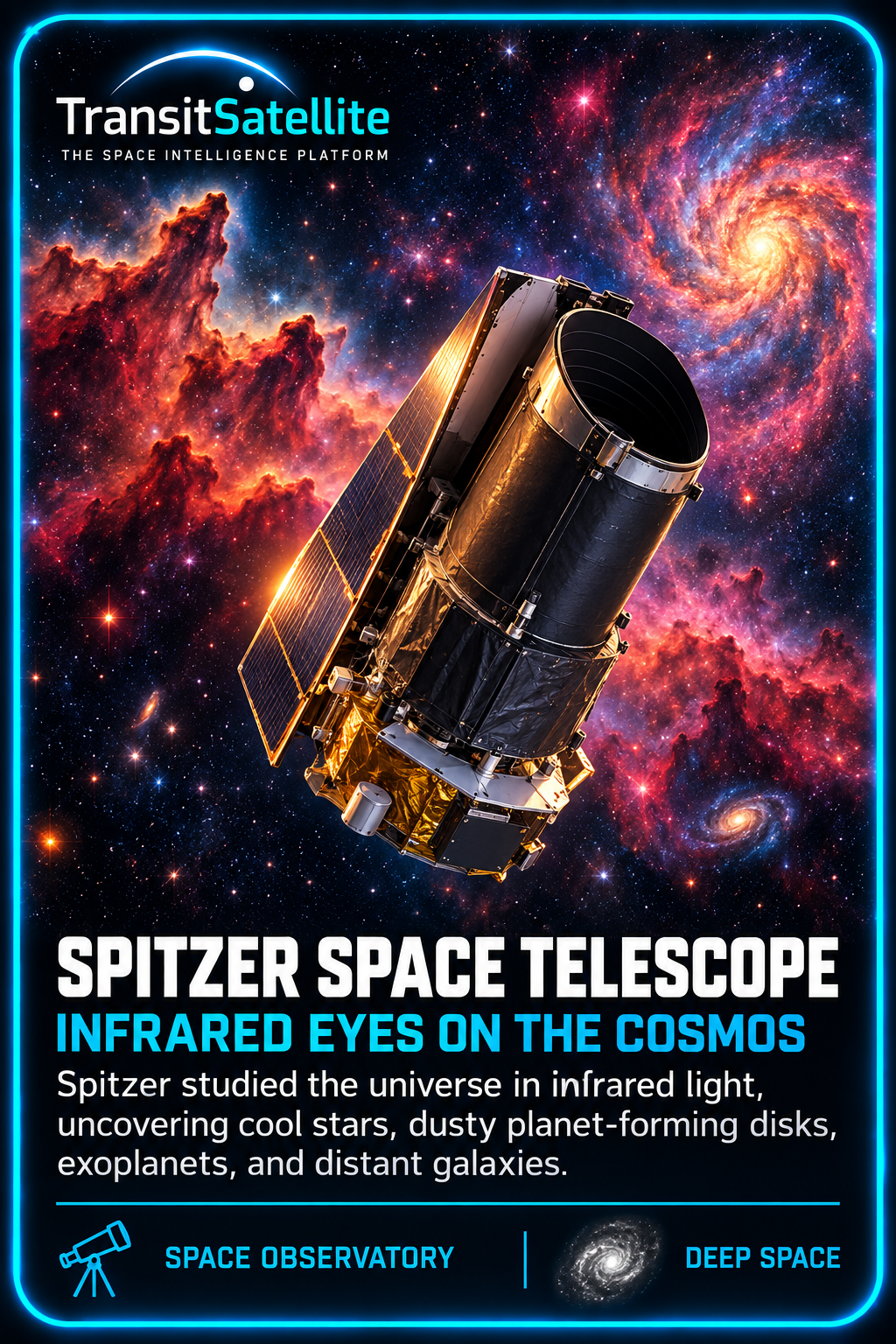
Spitzer observed the universe in infrared light, studying cool stars, dusty star-forming regions, exoplanets, distant galaxies, and structures that are difficult to see at visible wavelengths.
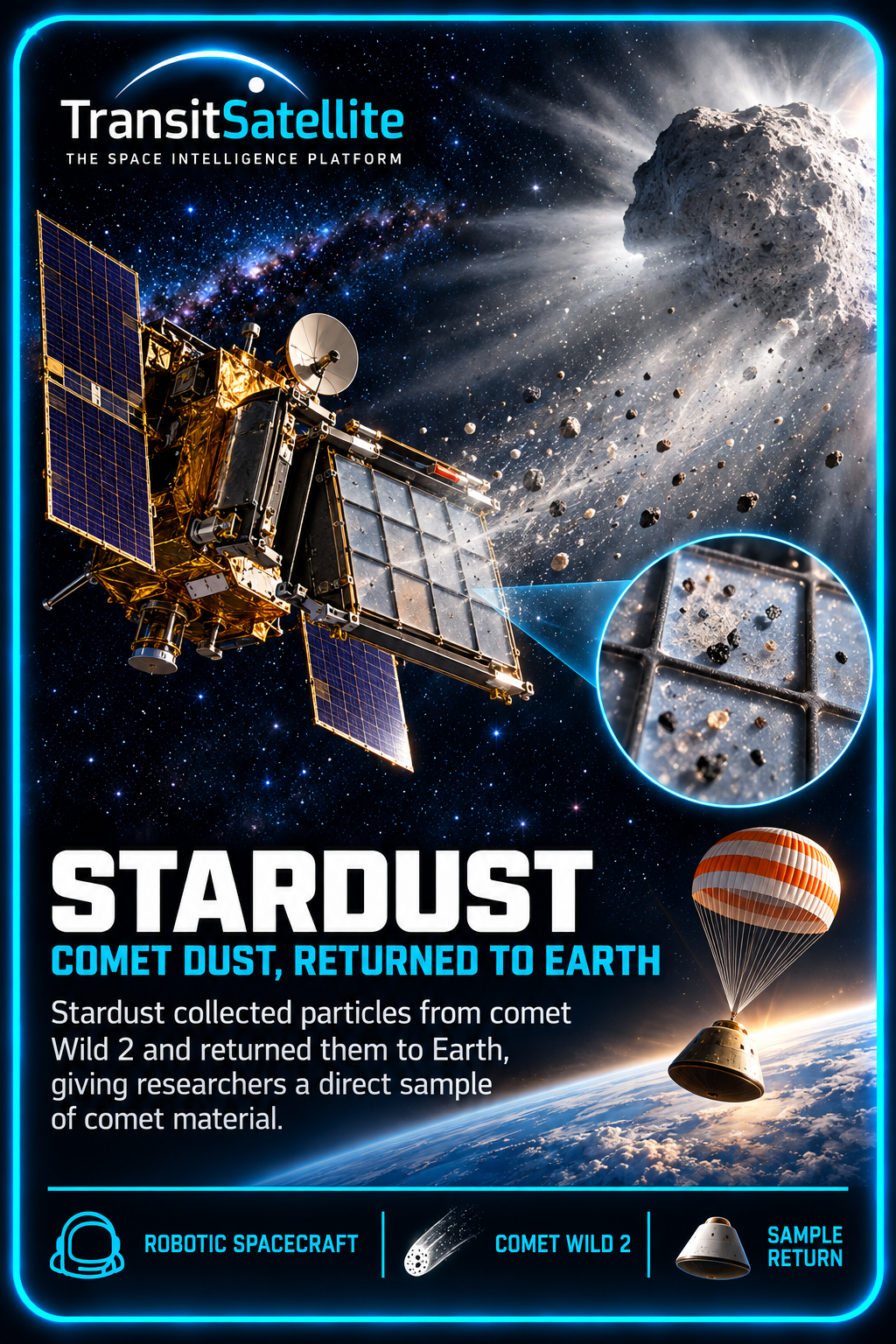
Stardust flew through the coma of comet Wild 2, captured particles in aerogel, returned them to Earth, and later revisited comet Tempel 1 during the Stardust-NExT extension.
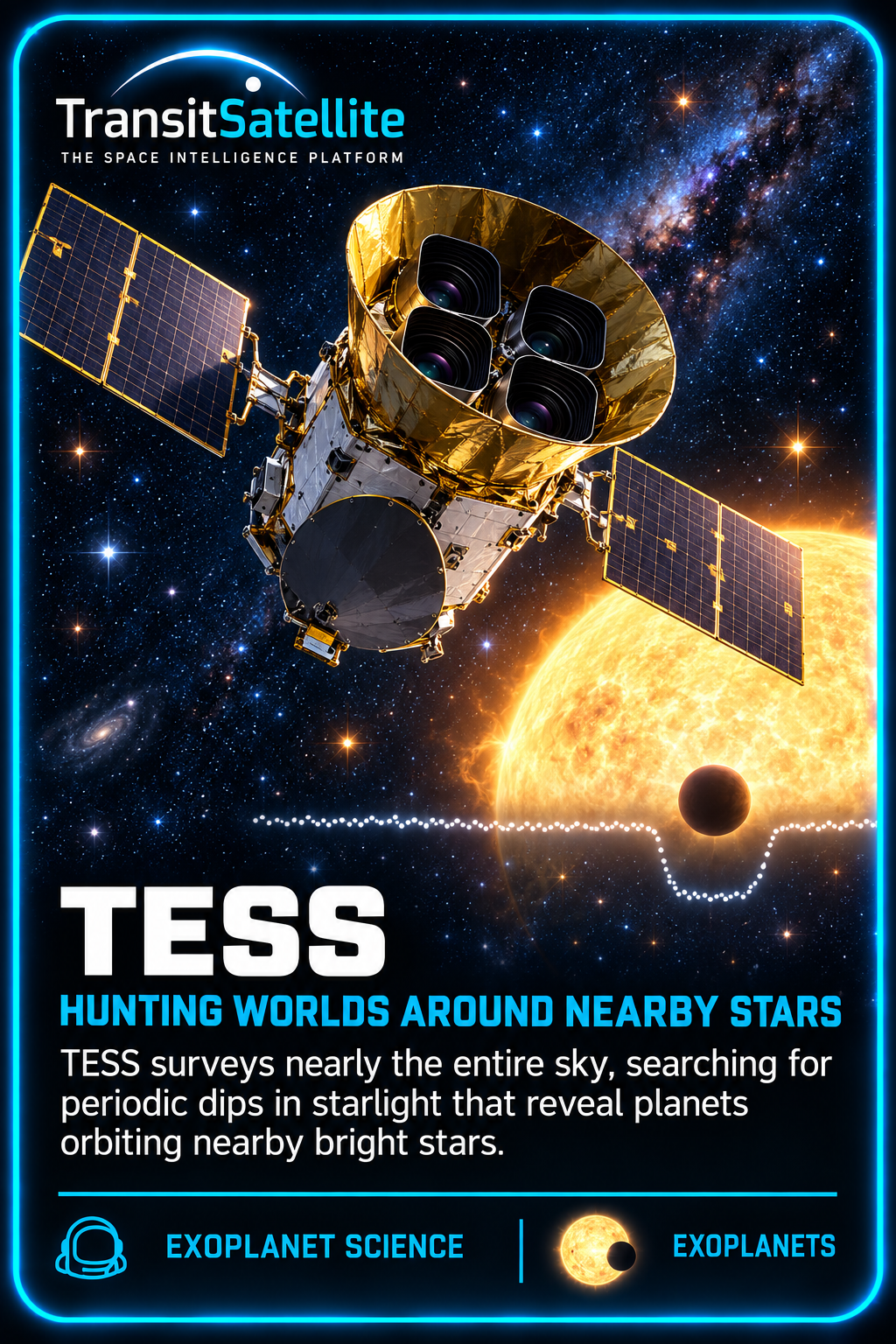
TESS searches broad regions of the sky for periodic dips in stellar brightness, identifying nearby transiting exoplanets that can become targets for detailed follow-up observations.
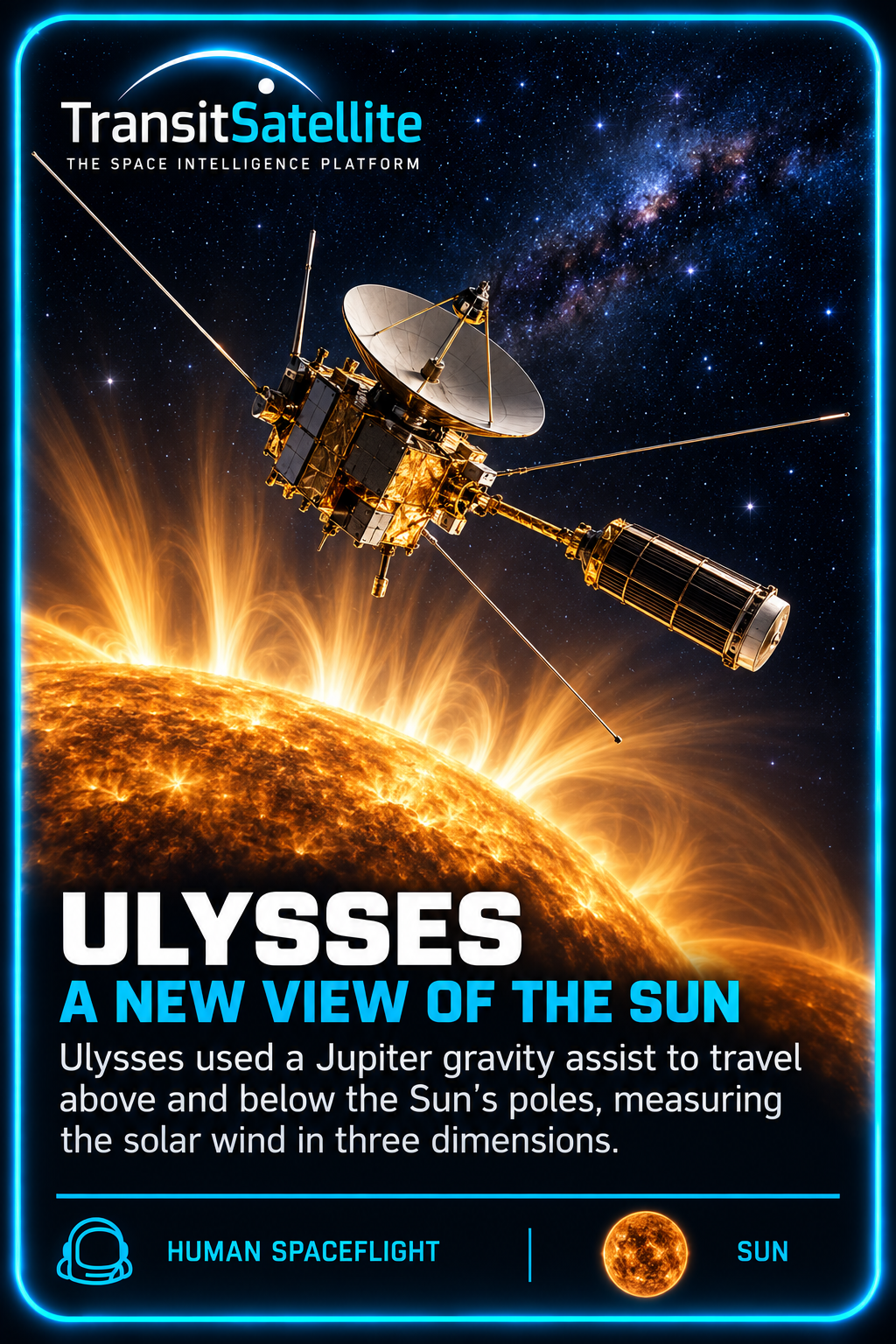
Ulysses used a Jupiter gravity assist to leave the ecliptic plane and become the first spacecraft to study the heliosphere from high solar latitudes above and below the Sun's poles.
Mission stories connect the scientific questions, spacecraft designs, launches, and people behind space exploration to the orbital and astronomical systems you can explore across TransitSatellite.
Continue exploring
Keep exploring after the story
Read a mission history, listen to an astronaut's account, follow a scientist's life, or build a spacecraft display connected to the published Library.
Affiliate links. As an Amazon Associate I earn from qualifying purchases. TransitSatellite may earn a commission when you buy through these links.
$Books & audiobooksGeneric photo$BookOpen represents this product category. Photo may not show the exact linked item.
Read or listen
A Man on the Moon
Andrew Chaikin
An account of the Apollo lunar missions built from interviews with the astronauts and people behind the program. It connects individual flights with the training, engineering and decisions that made the journeys possible.
$Books & audiobooksGeneric photo$BookOpen represents this product category. Photo may not show the exact linked item.
Read or listen
Apollo 8: The Thrilling Story of the First Mission to the Moon
Jeffrey Kluger
A focused history of the decision to send Frank Borman, Jim Lovell and Bill Anders into lunar orbit in 1968. The narrative follows mission preparations and the flight while placing the achievement in its political and social setting.