
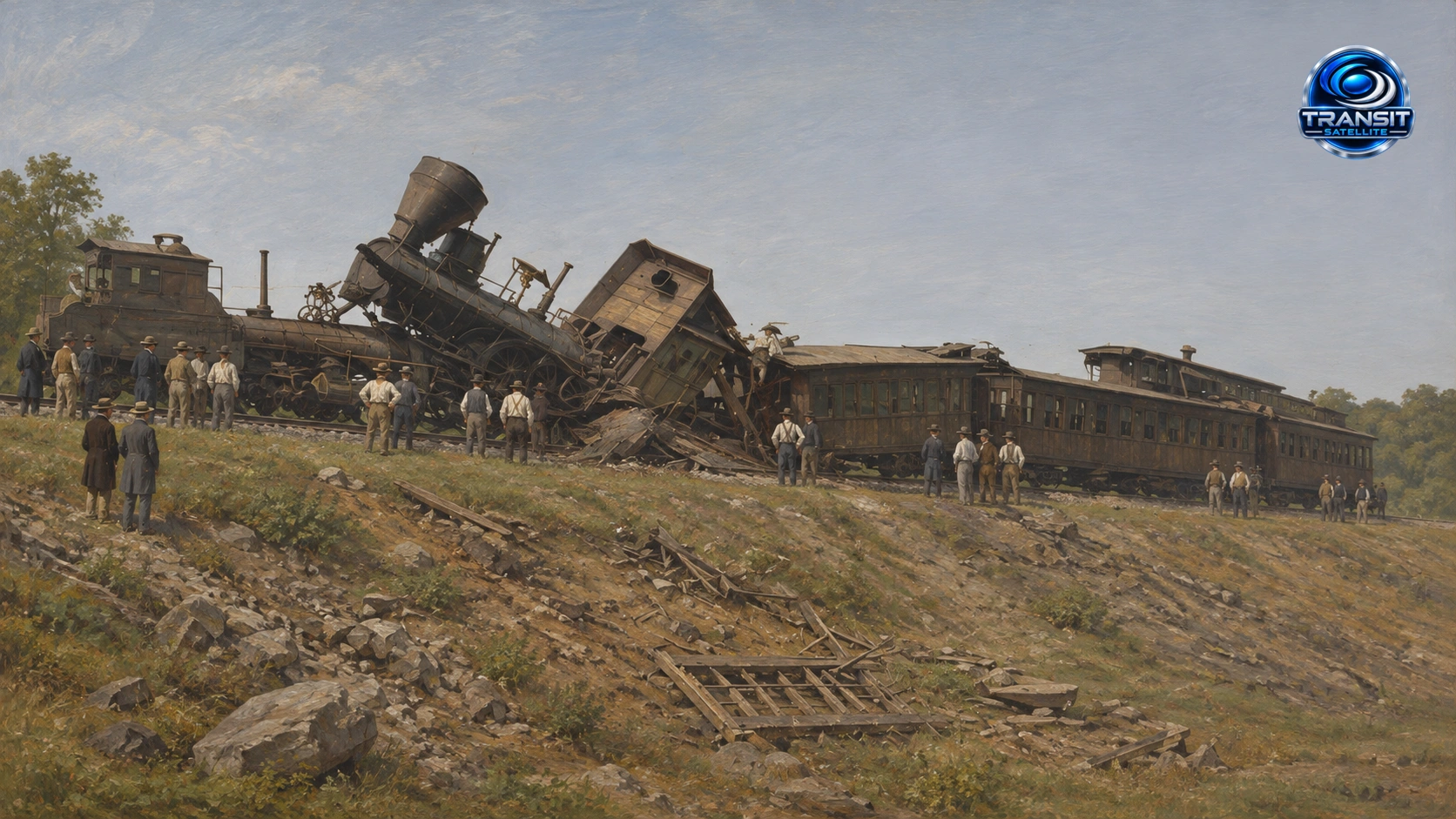
On August 12, 1853, an excursion train carried passengers south on the Providence and Worcester Railroad. Another train was traveling north. Near Valley Falls, Rhode Island, both trains needed to use the same stretch of track, so their crews depended on the timetable to pass safely.
Frederick W. Putnam was the conductor of the excursion train. A later account says he checked his watch and asked engineer Ephraim Gates whether they could reach a switch before the other train arrived. Gates thought they could, and the train continued. Putnam’s watch was later found to be about two minutes slow.
The trains met near a curve and collided head-on. The Smithsonian reports that fourteen people died, while The Henry Ford’s description of a historic engraving gives thirteen. The reports differ, but the collision was a tragedy for the passengers, their families, and the railroad workers.
People wanted to know how the crash had happened. Investigators and later writers examined Putnam’s actions, his experience, and the railroad’s responsibility for its watches and operating rules. Some New England railroads responded by ordering better timepieces and strengthening their rules. Safe travel depended on accurate clocks as well as training, signals, and communication.
Putnam’s story is also connected to a bigger change. In 1883, thirty years after the collision, railroads adopted broad standard time zones. The crash itself was not caused by a disagreement between those later zones. It shows an earlier problem: trains sharing a track needed crews to trust their watches and schedules.
Historical note: One local account says Putnam was 25 in 1853. If correct, he was born around 1827 or 1828, but his birth record and a matching census entry have not been verified. Sources differ about the watch and casualty count. His family, appearance, thoughts, and later life remain unknown.